


Introduction
Concept and Mechanisms of Direct AI Delivery
Overview of Direct Delivery Platforms
TI Platforms: Applications and Case Studies
MN Platforms: Applications and Case Studies
Limitations and Challenges
Future Directions
Conclusion
Introduction
Plants face a range of environmental stressors that impact their growth and productivity, which are broadly categorized into abiotic and biotic stressors (Ahmad et al., 2019). Abiotic stressors, such as inconsistent soil moisture, nutrient deficiencies, pollutant exposure, and extreme weather events, contribute to non-infectious diseases and hinder plant growth. According to a report, they can increase the crop yield loss ranging from 50% to 70% (Francini and Sebastiani, 2019). In contrast, biotic stressors such as insects, pests, bacteria, fungi, and viruses lead to infectious plant diseases, compounding global agricultural losses of about 64% (Hegde et al., 2024). As a result, global crop yields face substantial declines, with fruit production dropping by 78%, vegetable yields by 54%, and cereal crops by 30% (Tudi et al., 2021).
To address these challenges, farmers have relied heavily on active ingredients (AI) including fungicides, herbicides, insecticides, and plant hormones to boost crop productivity (Akhiyarova et al., 2024). However, traditional methods for applying AIs, such as foliar sprays and soil treatments, are frequently inefficient (Adisa et al., 2019). For example, foliar sprays are effective for rapid pest control but suffer from off-target deposition due to drift, leaching, and runoff. Studies suggest that only 0.1% of foliar-applied AIs reach the target (Reichenberger et al., 2007). Soil applications, while capable of delivering nutrients and pesticides directly to the root zone, face issues such as uneven distribution, volatilization, and the potential for groundwater contamination (Padhye et al., 2023). Overuse of these methods also accelerates resistance development among pests and pathogens, creating sustainability challenges for agriculture (Mahmoud et al., 2022; Singh et al., 2024).
In response, the field has increasingly adopted nanotechnology-based strategies to improve AI delivery (An et al., 2022). Nanocarriers, such as polymeric nanoparticles, carbon-based materials, silica nanomaterials, and metal-organic frameworks (MOFs), have demonstrated benefits like improved stability, controlled release over extended periods, and reduced environmental impact (Karimi-Maleh et al., 2024). Encapsulating AIs at the nanoscale has aimed to overcome the limitations of traditional foliar and soil-based applications, enhancing bioavailability and minimizing the chemical footprint (Wahab et al., 2024). Yet, despite these advancements, nanocarriers still rely on surface applications, which do not always ensure efficient delivery at the plant interface. Surface-based applications often result in substantial AI losses due to environmental factors such as runoff and evaporation.
To overcome these challenges, direct delivery platforms such as MNs and TIs are emerging as more precise alternatives that target internal plant systems directly (Ece et al., 2023). As mentioned earlier foliar spraying and soil application often suffer from inefficiency due to the plant barriers like the waxy cuticle which restricts AIs retention on leaf and subsequent absorption, resulting in poor translocation. Additionally, much of the AI is applied via foliar spray, and drifts due to rainfall and wind, leading to increased chemical waste. On the other hand, MNs bypass the plant’s natural barriers, allowing AIs to penetrate effectively and target specific sites within the plant (Zheng and Xu, 2023). In addition, TIs facilitate the injection of AIs directly into vascular systems, enhancing systemic distribution. This reduces the need for repeated applications and minimizes associated losses. Since AIs are delivered directly to the plant’s vasculature, translocation is significantly improved, ensuring that AIs reach their intended targets more rapidly and effectively. This precision in delivery offers practical solutions such as reduced chemical usage, reduced off-target effects, faster plant responses, cost efficiency, and minimizing environmental impact. Thus, in the present review, we intend to provide information on direct delivery platforms such as MNs and TIs for AI delivery applications. Our review focuses on the comparative advantages of MN and TIs over traditional application methods. Also, the review offers a comparative, sustainability-focused, and forward-looking perspective on MNs and TIs. It integrates insights from traditional methods, emerging applications, and precision agriculture, making it more comprehensive compared to previous reviews that have covered only one aspect of AI delivery.
Concept and Mechanisms of Direct AI Delivery
Direct delivery of AIs into plants through platforms such as MNs and TIs represents a transformative approach, improving both the efficiency and precision of AI applications (Li and Nangong, 2022; Cao et al., 2020b). This technique involves injecting AIs directly into the plant’s vascular system, which consists primarily of the xylem and phloem (Berger and Laurent, 2019) (Fig. 1). These vascular components act as the plant’s internal distribution network, transporting water, nutrients, and other essential molecules to various parts of the plant (Lucas et al., 2013). Direct targeting of this system enables systemic absorption and efficient transport of AIs, reaching plant areas inaccessible to foliar applications. The process begins with MNs or TIs penetrating the plant’s outer layers, such as the epidermis or woody bark. While MNs are optimized for smaller crops with thin epidermal layers, TIs are better suited for larger plants and trees requiring deeper penetration. Once they pass through these external barriers, the AIs are released directly into the vascular bundles, where they integrate with the plant’s natural transport flow, moving alongside water and nutrients. This internal delivery system is particularly beneficial for addressing issues like certain pests, pathogens, or nutrient deficiencies that affect internal plant tissues and cannot be effectively treated with external applications alone. For instance, vascular wilt diseases, which damage the internal transport tissue of plants, are notoriously difficult to manage with surface sprays due to the inability of chemicals to penetrate deeply enough (Yadeta and Thomma, 2013). Direct delivery overcomes this limitation by positioning the chemical precisely within the plant’s transport system, allowing for more effective treatment. Additionally, this method has significant potential in reducing the development of resistance among pests and pathogens. Because the AIs are distributed uniformly within the plant and persist for extended periods, the likelihood of pests receiving sub-lethal doses often a problem with inconsistent surface applications is minimized. Consequently, pests and pathogens are less likely to survive and develop resistance, making this a promising strategy for sustainable pest management. This innovative direct delivery mechanism has the potential to transform plant health management by providing targeted, efficient, and durable treatments while minimizing environmental impact. Studies have shown that direct delivery methods can achieve uptake efficiencies exceeding 90%, compared to 20–40% for conventional sprays. Pesticide use can be reduced by up to 70%, significantly decreasing chemical runoff into the environment. Furthermore, these methods extend the persistence of AIs within plants, reducing the frequency of applications and cutting costs by 30 to 50% over time.
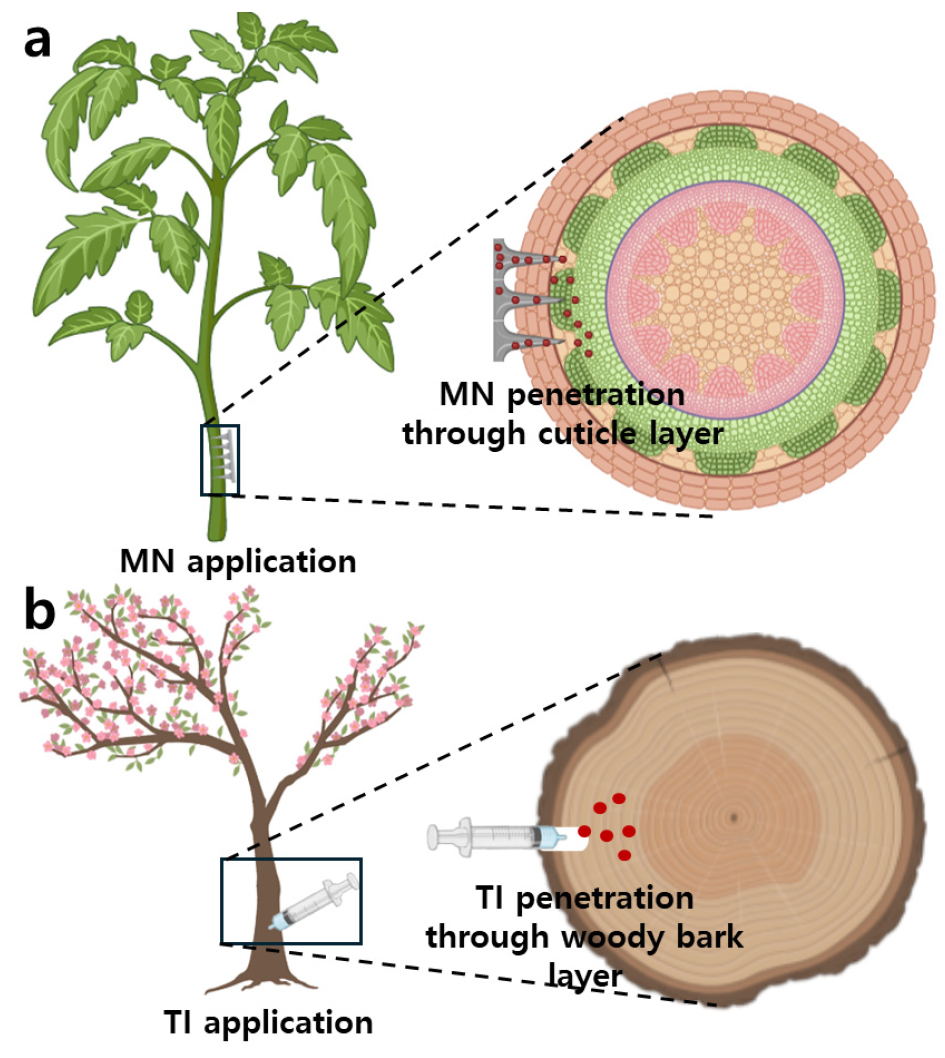
Fig. 1.
Schematic representation of the application of MN and TI systems. a) MN penetration through the cuticle of the soft stem. Once applied, MNs will release loaded AIs into vascular bundles through needle degradation or AI diffusion. b) TI penetration through the woody bark of the tree. Once Injectors are inserted, the loaded AI will be released via pressure gradient or capillary action.
Overview of Direct Delivery Platforms
TI Platforms: Applications and Case Studies
The practice of chemical injection into tree trunks has a long and varied history, with origins dating back centuries. One of the earliest known examples is from the 15th century when Leonardo da Vinci reportedly injected arsenic and other toxic solutions into apple trees via drilled holes to make the fruit poisonous (Roach, 1939). These foundational advancements laid the groundwork for modern TI techniques, emphasizing precision and efficiency in pest and nutrient management. By the 19th century, tree injection methods had evolved considerably. In 1853, Hartig pioneered injecting liquid solutions into trees through drilled holes from an external container, using iron salts to treat deficiency diseases (Stoddard and Dimond, 1949). In 1894, Ivan Shevyrez advanced this technique for pest control in the United States, establishing a foundation that researchers and practitioners would later refine (Rumbold, 1920). The 20th century brought significant advances in plant physiology, agriculture, and forestry, leading to more sophisticated applications of trunk injection. In the 1940s, renewed interest emerged due to the spread of Dutch elm disease (Ophiostoma ulmi) in the United States, where researchers used trunk injection to study and manage the disease (Rumbold, 1920). In subsequent decades, researchers like Kozlowski utilized trunk injection to introduce dyes into tree stems, enabling the study of water conduction pathways (Kozlowski et al., 1967). By the 1990s and 2000s, the rise of invasive pests and diseases renewed focus on trunk injection as a practical solution. In the United States, it became a widely used tool against destructive insects like the emerald ash borer (Agrilus planipennis) (Grimalt et al., 2011), longhorn beetle (Anoplophora glabripennis) (Ugine et al., 2013) and hemlock woolly adelgid (Adelges tsugae) (Doccola and Wild, 2012). In Europe and Asia, it effectively controlled pests like the horse-chestnut leaf miner (Cameraria ohridella) (Kobza et al., 2011), the pine wilt nematode (Burhus xylophilus) (Sousa et al., 2013), and the red palm weevil (Rhynchophogineus ferrugineus) (Burkhard et al., 2015). Trunk injection of phosphite for manage Phytophthora sp. is now also common in forest and orchard management (Akinsanmi and Drenth, 2013).
Trunk injection mechanisms can be grouped into two main categories: drill-based and drill-free systems. While drill-based methods offer precision and control, drill-free techniques are preferred for minimizing plant tissue damage and expediting the injection process. Unlike trunk infusion, which relies on atmospheric pressure and sap flow for uptake, trunk injection uses external pressure to drive chemicals directly into the stem (Sachs et al., 1977). Trunk injection involves two primary steps: creating an entry point and delivering the injectate. The technique varies depending on the method of entry, the delivery system, and the pressure mechanism used. Drill-based injection methods involve creating an injection port using a drill and applying the therapeutic material with a nozzle, needle, or injection screw. These methods offer flexibility in hole depth and diameter based on different drill bit sizes and are among the most widely used trunk injection techniques. Drill-free injection methods, on the other hand, avoid drilling altogether by inserting a needle, blade, or injector directly into the stem. A notable drill-free device was developed by Jones and Gregory in 1971, designed to allow the pressurized injection of solutions into the outermost xylem tissues (Jones and Gregory, 1971). In the trunk injector system, the method of injectate application can vary depending on the injection mechanism and purpose. Table 1 explains the primary methods of injection.
Table 1.
Summary of injection methods and their description.
Recent studies have explored the potential of trunk injections as an effective, sustainable alternative to traditional pest management methods in various tree crops M. Husain and colleagues investigated the movement and persistence of the entomopathogenic fungus Beauveria bassiana in date palm trees (Phoenix dactylifera) for controlling pests like the red palm weevil (Rhynchophorus ferrugineus) (Akinsanmi and Drenth, 2013). Using a balloon injector, B. bassiana mixed with food coloring was injected into healthy date palm trunks. Trunk sections were sampled 2, 20, and 86 days post-injection to monitor fungal spread and survival. Fungal presence was confirmed by culturing samples on PDA media, with results showing B. bassiana survival rates of 70.5%, 34.9%, and 13.9% in samples taken on days 2, 20, and 86, respectively. These findings suggest that B. bassiana could be a valuable component of integrated pest management strategies for date palms, offering a biological alternative to chemical treatments.
In Southern Europe, chestnut cultivation has historically supported mountain communities but now faces a serious threat from Gnomoniopsis castaneae, a fungal pathogen that causes brown or chalky nut rot. Due to the endophytic nature of the fungus and regulatory restrictions on fungicide use, chemical control options are limited. A. Benigno and colleagues examined three species of Trichoderma (T. viride, T. harzianum, and T. atroviride) as biocontrol agents against G. castaneae (Benigno et al., 2024). Over two years, Trichoderma strains were injected into chestnut trunks across four groves using the BITE® endotherapy tool (Fig. 2(a)). Field trials showed a significant reduction in nut rot, especially when cumulative treatments were applied in the second year. This study highlights the promise of Trichoderma species as a sustainable biocontrol option for managing fungal pathogens in chestnut groves, potentially reducing the need for fungicides and expanding the use of biopesticides in forestry.
Liang et al. (2024) investigated trunk injection of emamectin benzoate for pest control in pecan (Carya illinoinensis) trees, focusing on both insecticidal effectiveness and food safety (Liang et al., 2024). Injections were administered at varying doses of 0.4, 0.8, 1.6, and 2.4 mL per centimeter of trunk diameter measured at breast height. Emamectin benzoate concentrations were analyzed using ultra-performance liquid chromatography-mass spectrometry (UPLC-MS). Results indicated higher insecticide concentrations in leaves than in nuts, ensuring effective pest control while maintaining low residue levels in nuts. At harvest, residue levels from the 0.4 and 0.8 mL/cm treatments met European Union safety standards. Additionally, leaf-feeding tests showed high mortality rates in Hyphantria cunea larvae soon after injection, gradually decreasing over time. These findings validate trunk-injected emamectin benzoate as a safe and effective method for managing foliar pests in pecans, ensuring adherence to food safety standards.
R. Gyuris and colleagues evaluated trunk injection as an alternative to foliar spraying for controlling the cherry fruit fly (Rhagoletis cerasi), a major pest of cherry orchards in Europe (Gyuris et al., 2024) (Fig. 2(b)). Four pesticides, namely, abamectin, acetamiprid, flupyradifurone, and cyantraniliprole were tested, with acetamiprid proving most effective at a minimum dose of 0.56 g/tree, achieving over 95% pest control while maintaining fruit pesticide residues within permissible limits. Trunk injections of acetamiprid provided pest control comparable to foliar sprays but required significantly less water (10 L per hectare versus 2500–3000 L for sprays) and reduced pesticide use throughout the season. While the other three pesticides were unsuitable for trunk injections, the findings suggest that acetamiprid-based endotherapy could improve sustainable pest management in cherry orchards by reducing resource use and environmental impact. Future optimizations may include robotic technology for large-scale applications and the possibility of multi-pesticide injections.
Li et al. (2024) explored an innovative approach to managing pine wilt disease (PWD), a severe threat caused by the Bursaphelenchus xylophilus nematode. Current trunk injection agents face limitations in regions with high temperatures and active resin flow, such as southern China. Researchers developed an ordinary temperature trunk injection agent (OTTIA) optimized for year-round application under these challenging conditions (Fig. 2(c)). Laboratory and field tests identified N,N-Dimethylformamide (DMF) and benzyl acetate as effective solvents, with Tween-40 as a suitable emulsifier. The OTTIA formulation was absorbed within just 3 h by Pinus massoniana trees at temperatures above 30°C, outperforming conventional TIAs. Trees treated with OTTIA maintained effective levels of emamectin benzoate (EB) for up to 360 days, with low doses achieving effective nematode control (LC90 of 27.65 mg/L). This advance presents a sustainable solution for PWD management, enabling effective protection in high-temperature areas and supporting continuous forest health.
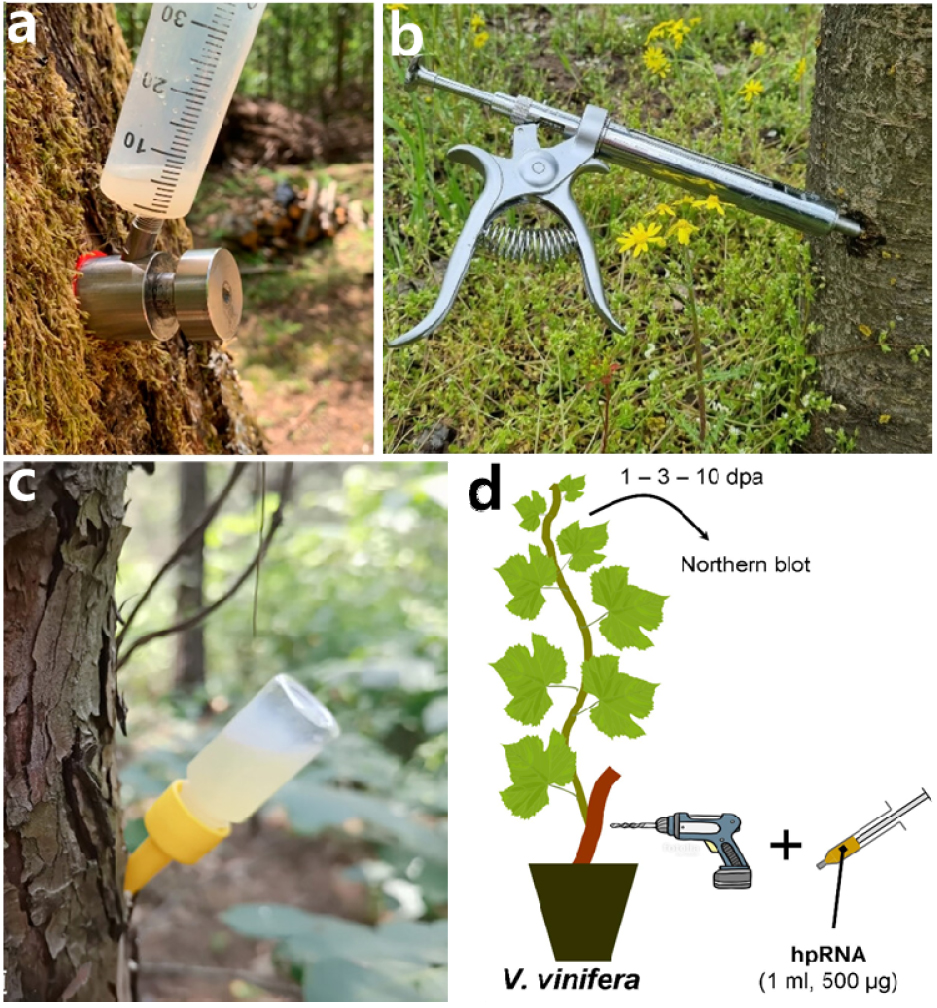
Fig. 2.
Illustration of various trunk injection methods and their applications. a) Biocontrol agent Trichoderma spp. injected into chestnut stems using the BITE® tool for nut rot suppression (Benigno et al., 2024), b) Acetamiprid injection for cherry fruit fly management, demonstrating effective pest control with reduced water usage (Gyuris et al., 2024). c) Emamectin benzoate trunk injection for pest control in pecan trees, highlighting food safety compliance (Li et al., 2024). d) Delivery of hpRNA by trunk drilling and injection (Dalakouras et al., 2018).
In apple orchards, S. G. Aćimović et al., investigated trunk injection as a method to minimize pesticide drift and environmental contamination by applying pesticides more precisely (Aćimović et al., 2014). Their study analyzed the spatial and temporal distribution of trunk-injected imidacloprid in apple tree crowns, comparing setups with 1, 2, 4, or 8 injection ports per tree. Increasing the number of ports enhanced uniform distribution, with four ports achieving consistent imidacloprid levels across the crown. Imidacloprid concentrations remained steady between upper and lower crown regions, displaying radial diffusion and spiral vertical movement within the trunk. While the findings underscore the potential for more sustainable pesticide use, they also reveal key knowledge gaps. Additional research is necessary to evaluate the long-term impacts of injection wounds on xylem functionality, sap flow dynamics, and the viability of endophytic microorganisms. The adoption of less invasive needle-based systems could enhance the sustainability and long-term feasibility of trunk injection methods. Additionally, advancements in automated technology may facilitate a shift from traditional topical sprays to trunk injection, potentially reducing environmental impact in commercial orchards.
Meanwhile, Wheeler et al. (2024) evaluated emamectin benzoate and azadirachtin trunk injections for controlling Xylosandrus germanus, an invasive ambrosia beetle that threatens apple trees, especially during grafting (Wheeler et al., 2024). Both insecticides effectively reduced beetle infestations, though effectiveness varied with injection timing. Spring applications of azadirachtin, in particular, showed higher efficacy than fall applications. Residue analysis confirmed that both insecticides permeated woody tissues and leaves at comparable levels, indicating effective systemic distribution within the trees. These findings suggest that azadirachtin trunk injections, especially in spring, may serve as a viable strategy for managing X. germanus in apple orchards.
To assess the effectiveness of trunk injection for controlling citrus huanglongbing (HLB), a field trial was conducted where various plant defense activators and antibiotics were injected into the trunks of both young and mature sweet orange trees (Hu et al., 2018). The results demonstrated that trunk injections significantly reduced Candidatus Liberibacter asiaticus levels and slowed HLB progression. Previous studies have shown that traditional methods for applying these plant defense activators only provided limited moderate control of HLB, as they struggled with issues like inconsistent uptake and uneven distribution. In contrast, the trunk injection method circumvented these limitations, showing notable promise for managing HLB.
Delivering hairpin RNAs (hpRNAs) and small interfering RNAs (siRNAs) to woody plants has historically been challenging with traditional delivery methods (Fig. 2(d)). Dalakouras et al. (2018) developed an innovative technique for introducing RNAs into Malus domestica (apple), Vitis vinifera (grapevine), and Nicotiana benthamiana (tobacco). Their approach involved drilling a hole in the trunk and using an insulin syringe to inject the RNAs or delivering RNAs through a cut stump of the petiole after removing a leaf. These strategies achieved high levels of RNA delivery with rapid uptake and systematic transport throughout the plant, highlighting the potential of these methods for gene silencing and other RNA-based applications in plant protection.
Recently, nanotechnology has been explored as a way to protect AIs from degradation and to provide controlled release by encapsulating them within nanoparticles. However, the use of micrometer-sized nanoparticles in sprays can be challenging due to difficulties with uptake. In response to these challenges, Beckers et al. (2021) developed a series of polymeric nanocarriers, including polystyrene, lignin, and polylactic-co-glycolic acid (PLGA) nanoparticles. These were then injected directly into the trunk of grapevines via a small, drilled hole. This trunk-injection approach allowed nanocarriers to travel through the plant’s xylem, demonstrating enhanced stability and minimal aggregation within the plant tissue (Fig. 3). In contrast to spraying, which disperses chemicals indiscriminately, trunk injection localized nanoparticles within plant tissues, minimizing losses from weather exposure and other environmental factors. This technique not only improves the efficacy of nanocarrier delivery but also offers a more sustainable alternative for protecting crops in various environmental conditions.
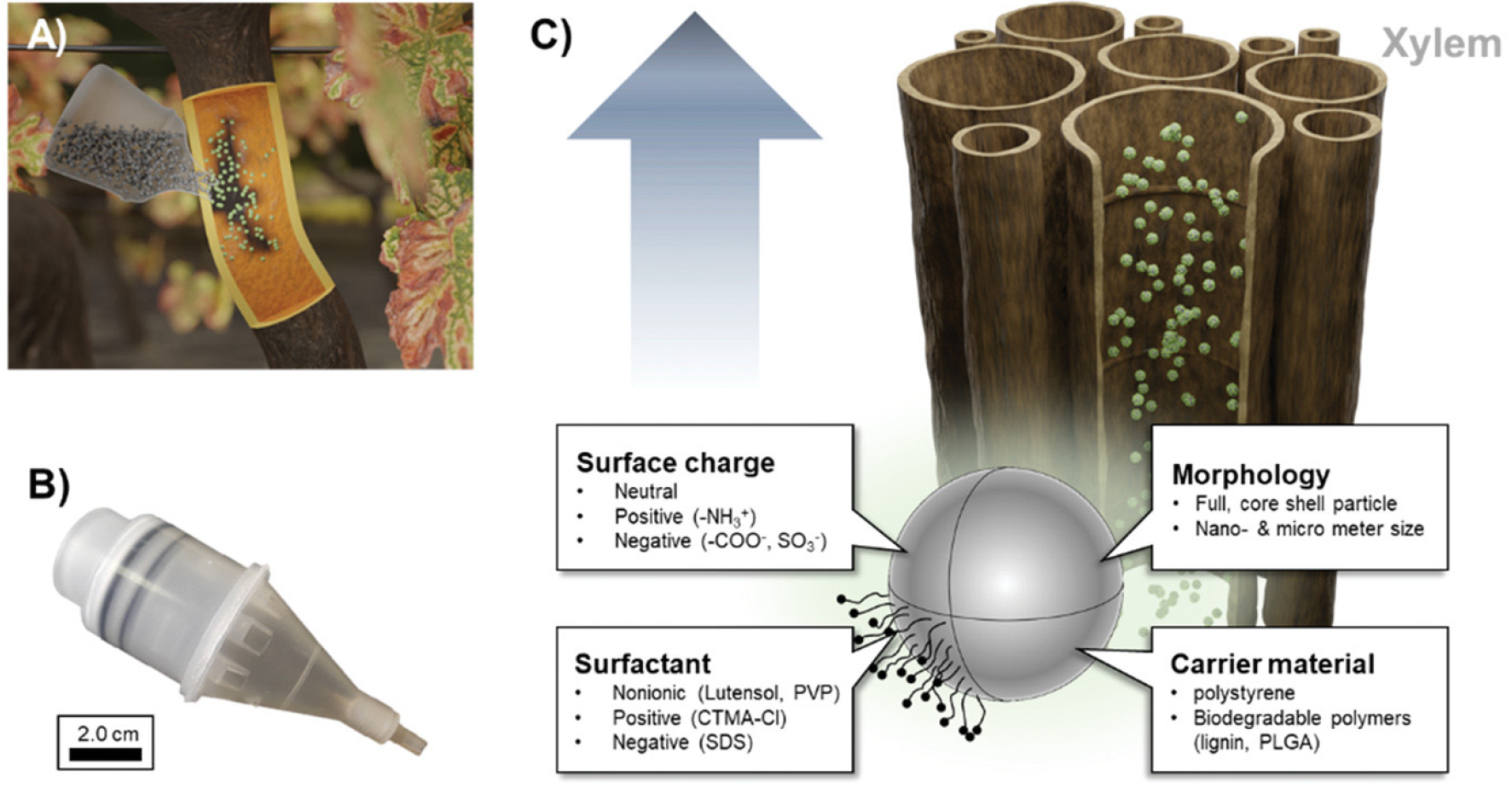
Fig. 3.
Trunk injection of polymeric nanocarriers in grapevines for crop protection. a) Schematic representation of trunk injection of a nanocarrier suspension. b) Commercial injector supplied from Tree Tech Microinjection Systems (FL, US). c) Transportation of nanocarrier after the injection into the xylem and possible factors that affect the stability and transport of nanocarrier (Beckers et al., 2021). This method enhances precision delivery and reduces environmental losses compared to traditional spraying.
These reports focus on the development and application of TIs as a method for delivering AIs into trees for pest control, disease management, and crop protection. The TIs method was found to be effective in managing these diseases, offering a more controlled and precise way to deliver treatments compared to traditional methods. Overall, these studies highlight the potential advantages of TIs, including more efficient and targeted delivery of treatments, reduced environmental impact, and improved sustainability in agriculture. However, these strategies are difficult to adopt for small plants as they cause tissue damage which may affect the plant’s health. In this context, MNs with a minimal invasive delivery strategy would be more efficient.
MN Platforms: Applications and Case Studies
Previous research has shown that plants possess sensing mechanisms that allow them to detect their surroundings in ways that resemble the sensory processes in humans and animals. Plants can perceive over 20 chemical and physical parameters, including pathogens, light, magnetic fields, and gravity (Kundu et al., 2019). Given these capabilities, strategies, and platforms initially developed for human medicine could potentially be adapted for plant treatment. One promising platform is MNs, originally conceptualized and patented in the 1950s for biomedical applications. Although they gained attention in 1998 after being successfully used for vaccine delivery (Avcil and Çelik, 2021), recent years have seen their adaptation for AI delivery. MNs are typically categorized into five types: coated, hollow, solid, dissolving, and hydrogel-forming polymer MNs (Make it, Rad, 2023). Each type has unique properties for delivering AIs. Coated MNs feature an AI layer on the needle surface, with dosage controlled by the thickness of the coating (Gill and Prausnitz, 2007). Hollow MNs, like hypodermic needles, use an internal channel for pressure-driven AI delivery (Make it, Rad et al., 2021)0. Solid MNs create micropores in tissue for later AI infusion (Oliveira et al. 2024) while dissolving MNs use biodegradable polymers that release AIs as they dissolve on contact with plant fluids (Sartawi et al., 2022). With this breakthrough, in recent years, these platforms have been adapted beyond biomedical uses and are now being explored in AI delivery applications (Ece et al., 2023).
One challenging target for MN-based delivery systems is citrus HLB, a disease that invades the phloem tissue and resists conventional foliar sprays due to poor uptake efficiency and environmental drift. To address these challenges, stainless steel micro-milled MNs (µMMNs) were designed for direct delivery of zinc-based therapeutic cargo, specifically Zinkicide™ (Kundu et al., 2019). The µMMNs were arranged in a 5 × 5 array on a 100 µm thick stainless steel sheet, in a “Washington Monument” design (Fig. 4(a)). After bending into a 3D configuration, the MNs (500 µm in base width and height) were used to puncture the stem of citrus seedlings (Fig. 4(b)). Once punctured, a plastic container holding Zinkicide™ was placed over the stem. Compared to traditional methods, µMMNs significantly increased Zinkicide™ uptake (Fig. 4(c)), likely due to their ability to penetrate plant tissue and create micropores, which facilitated the translocation of the therapeutic agent. However, the production of these stainless steel MNs requires advanced micro-milling equipment, limiting their accessibility for large-scale agricultural applications.
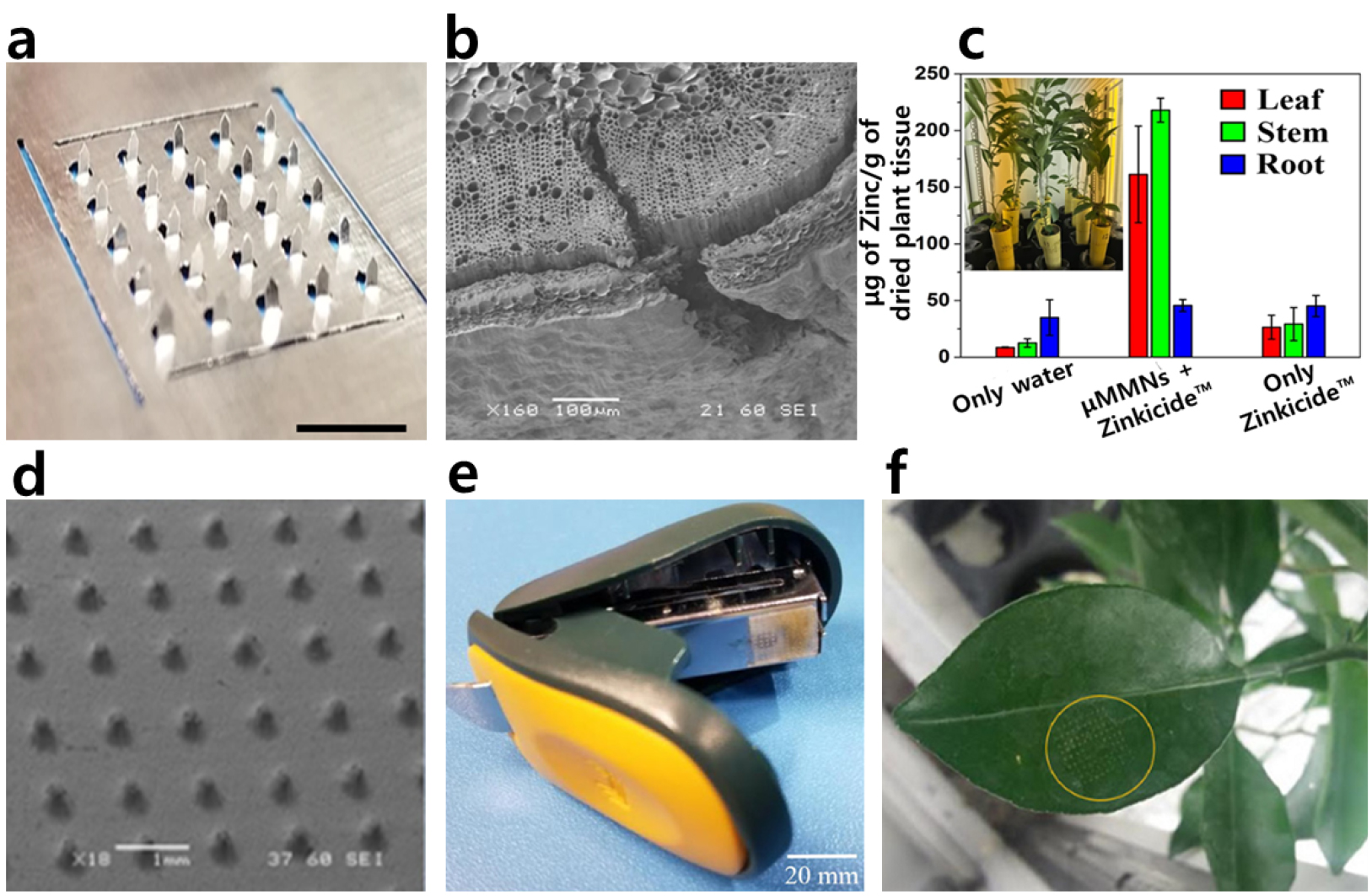
Fig. 4.
a) Photograph showing 5 × 5 arrays of µMMNs. b) SEM image displaying the cross-section of stem at µMMN puncture site. c) Bar graph showing the Zn concentration in leaf, stem, and root after the applications (Kundu et al., 2019). d) The MN patch. e) Mini stapler fixed with MN patch, creating µNAAS. f) Leaf showing partial puncture made from µNAAS (Santra et al., 2021b).
To simplify and potentially scale up this technique, a mini-stapler equipped with a 3D-printed MN array (µNAAS) was developed for citrus leaves (Santra et al., 2021b) (Fig. 4(d)-(f)). The µNAAS device, consisting of domed needles measuring 1 mm in height, effectively punctured the waxy leaf surface, thereby facilitating improved therapeutic delivery. After puncture, manganese-doped cadmium sulfide quantum dots (Qdots) were sprayed on the treated leaves, achieving a 45% increase in therapeutic uptake compared to untreated controls. This design enabled the therapeutic agent to move efficiently from the leaf’s vascular system down to the petiole. However, the µNAAS device faces practical challenges. Applying consistent force to puncture leaves uniformly can be difficult in field conditions, particularly over large areas. Mechanized adaptations might help standardize applications but could add complexity and cost. Additionally, the necessity of foliar spraying post-puncture limits its effectiveness in mitigating off-target effects and reducing environmental exposure losses. As research continues, optimizing these devices for field conditions could expand their potential for sustainable agrochemical delivery.
To address challenges in delivering diverse payloads into specific plant tissues, a silk fibroin-based MN device was developed, featuring tip diameters of less than 35 µm and 10 µm to match the dimensions of plant vasculature (Cao et al., 2020) (Fig. 5(a)-(e)). This design enables the precise delivery of payloads such as plant hormones, micronutrients, siRNAs, and even self-replicating microorganisms to targeted plant regions, including leaves, shoot apical meristem (SAM), and stems (Fig. 5(f)-(h)). The MN device can deliver tens of nanograms of these molecules per injection, which is sufficient for many applications in plant biology. Once delivered, the payloads are transported through the plant’s vascular system, with more efficient movement observed in the xylem due to its larger conduit diameters.
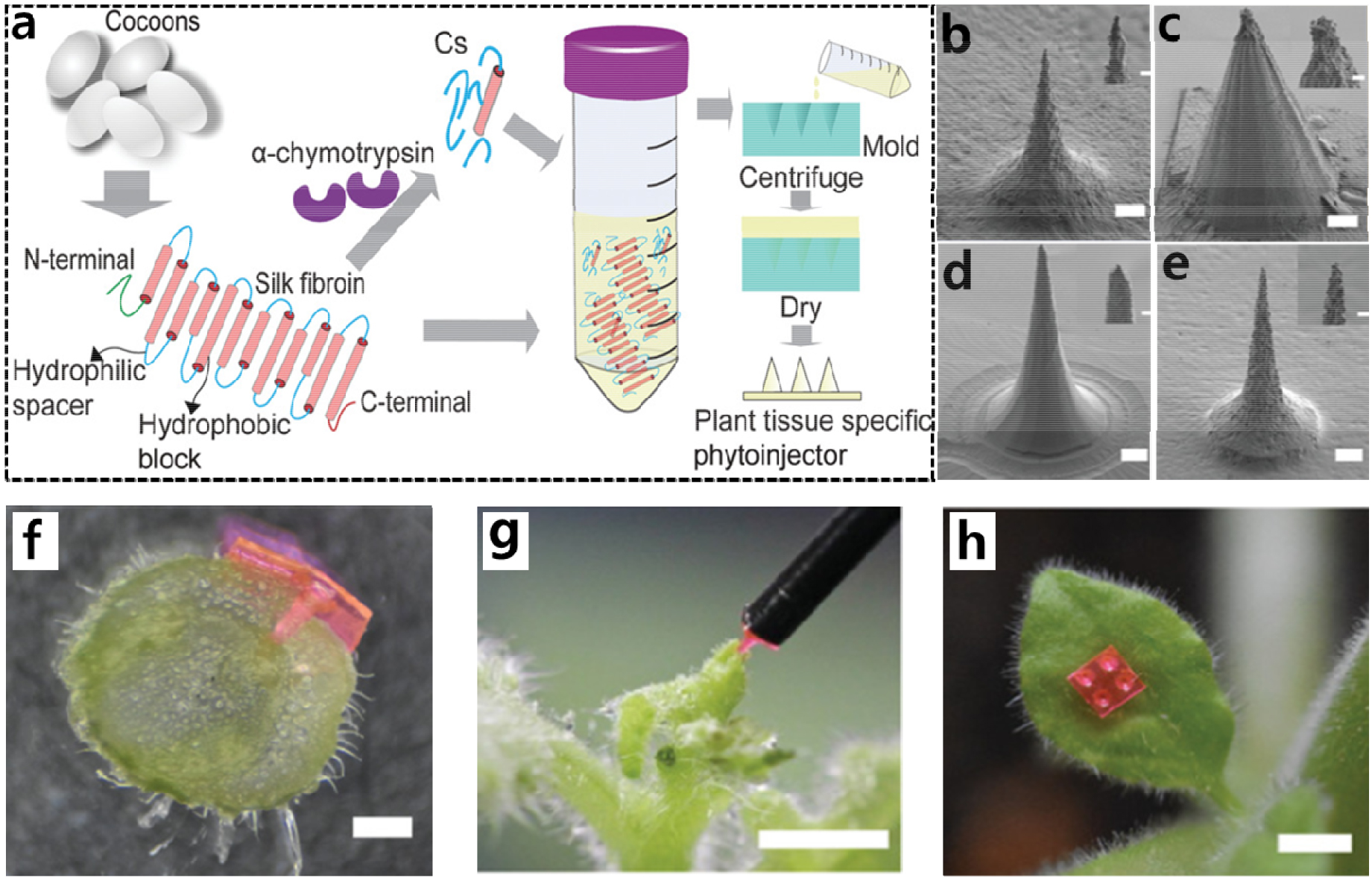
Fig. 5.
Precision delivery using silk fibroin microneedles (MNs) for plant treatments. a) Schematic representation of MNs fabrication. SEM images of MNs designed for delivery to b) SAM, c) leaf, d) xylem, e) phloem. Photography showing different injection site f) stem, g) SAM, h) leaf (Cao et al., 2020).
In another study, MNs were fabricated using digital light processing (DLP) 3D-printing technology to deliver copper nanoparticles (Cu NPs) directly to stem tissue (Santra et al., 2021a). This MN design maximizes exposed surface area (163.449 mm²), optimizing the coating of Cu NPs. These nanoparticles, coated with hydrophobic phosphate ester and emulsified with sodium oleate, were tailored to adhere to the hydrophobic resin of the MNs and dissolve in the plant's vascular water. This setup allowed Cu NPs to be gradually released into the vascular tissue over a 24 h period, maintaining therapeutic copper levels in the phloem essential for disease treatment. However, during coating, the viscous Cu NP emulsion tended to collect near the MN base, limiting the concentration at the needle tips, which could affect therapeutic efficacy by reducing the amount of copper reaching the initial contact points.
A novel MN array has also been designed to enhance the precision and efficiency of delivering genome-editing proteins directly into plant tissues (Viswan et al., 2022). This MN array features horizontally aligned, comb-like needles, allowing precise delivery of genome-editing tools, including Cre recombinase and Cas9 ribonucleoprotein (RNP) complexes, to targeted tissue layers within plants. In trials with Arabidopsis thaliana and soybean showed successful direct delivery to the inner leaf tissue and the subepidermal L2 layers of the SAM. The system achieved 100% beta-glucuronidase (GUS) expression efficiency per insertion in Arabidopsis thaliana plants, with each event reliably triggering GUS protein expression, demonstrating its potential as an effective tool for genome editing in plants. These results underscore the potential of the MN array as a highly effective tool for delivering genome-editing proteins in plants, minimizing off-target effects, and improving delivery accuracy within plant tissue layers. However, the limited surface area and density of the MN array restrict the amount of material it can deliver at one time. Scaling up the system for broader applications would likely require modifications to increase its capacity, potentially raising production costs and complexity.
Silk-based MNs, a recent advancement in plant science, have been engineered to deliver gibberellic acid (GA3) to a range of crops, including soybean, maize, spinach, rice, barley, lettuce, and tomato (Cao et al., 2023). These MNs feature a cone-shaped structure with a height of approximately 531 µm and a base diameter of 226 µm, ensuring robust adhesion to plant tissue, effective penetration, and minimal damage upon insertion (Fig. 6(a)-(b)). The delivery profile of the GA3-loaded MNs shows a rapid initial release followed by a sustained dissolution over time. Within the first 10 min of injection, the MNs lose approximately 57% of their height, indicating a quick initial release of the hormone. Over 24 h, this height further decreases by approximately 71%, providing a controlled release that facilitates deeper tissue absorption. The release mechanism relies on the water-soluble silk structure, which dissolves in plant sap upon injection (Fig. 6(c)). This gradual degradation of the silk material also minimizes the plant’s wounding response, which peaks shortly after treatment and significantly decreases within 24 h, making this MN-based delivery method both efficient and minimally invasive.
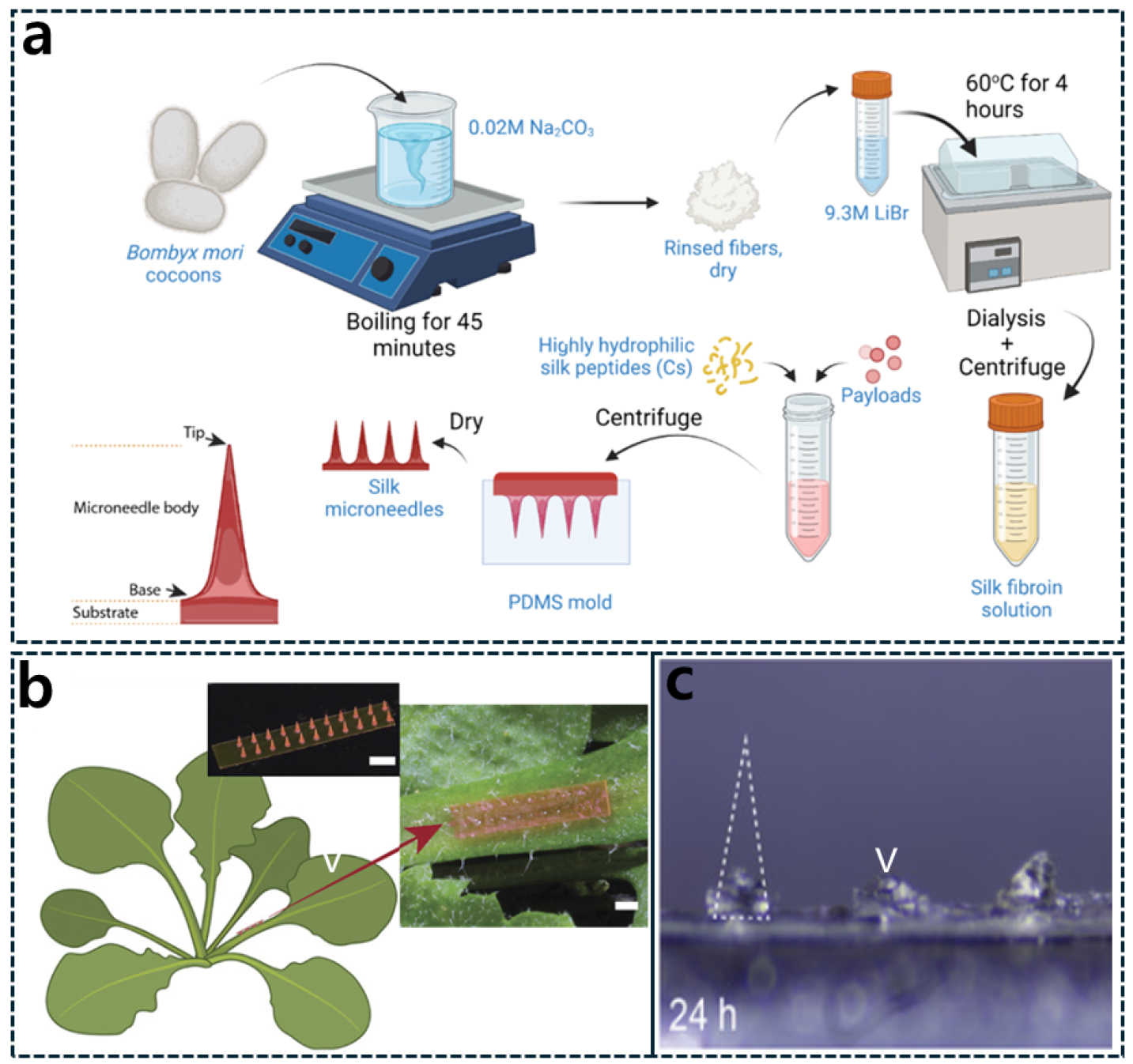
Fig. 6.
Silk-based microneedles for controlled hormone delivery. Schematic representation showing a) fabrication of silk-based MN, b) application of GA3 loaded MNs on Arabidopsis mutant ft-10. c) Image showing dissolved MNs after 24 h of application (Cao et al., 2023).
Related study, salicylic acid (SA)-loaded gelatin methacryloyl (GELMA) MNs were developed as a localized drug delivery system to combat plant diseases (Ipek et al., 2024). The fabrication process utilized a 3D printing technique, layering GELMA with SA and a photo-initiator to form conical MNs measuring 0.95 mm in height, arranged in a 7x7 pattern for uniform drug distribution. The release profile for these MNs displayed an initial burst, with 37% of SA released within the first hour due to surface entrapment, followed by a sustained release over 24 h, which is advantageous for prolonged therapeutic action. However, the MNs demonstrated limited drug-loading capacity, posing potential challenges in delivering the required therapeutic doses across diverse plant structures and sizes. Additionally, ensuring uniform drug distribution on diverse plant surfaces and at varying depths remains complex, potentially limiting the effectiveness of this delivery system for certain plant types. The various types of MNs which are used to deliver numerous AIs are listed in Table 2.
Table 2.
Different MNs types, targeted delivery product, delivery site, and the obtained result.
| MNs type | Delivery product | Part of plant | Observed result | Ref. |
| Stainless steel μMMNs | Zinkicide™ |
Stem of citrus seedling | Uptake of Zinkicide™ was high | (Kundu et al., 2019) |
|
3D MNs supported withprinted Mini-stapler |
Manganese-doped cadmium sulfide quantum dot | Leaf |
An increment in therapeutic uptake of 45% was observed compared to control treatment. | (Santra et al., 2021b) |
| Silk fibroin-based MNs |
Plant hormones, micronutrients, siRNA, self-replicating microorganisms |
Leaf, SAM, and stem |
Allows for the delivery of tens of nanograms of cargo molecules | (Cao et al., 2020) |
|
3D-printed flexible resin MNs |
Copper nanoparticles (Cu NPs) |
Stem of citrus seedling |
Sustained release of copper ions into the plant tissue via shallow penetrations | (Santra et al., 2021a) |
| Silicon-based MNs |
Cre recombinase and Cas9 ribonucleoprotein |
Leaf of Arabidopsis thaliana and Soybean SAM |
Highly effective delivery minimizing off-target effects and improving delivery accuracy | (Viswan et al., 2022) |
| Silk based MNs | Gibberellic acid (GA3) |
Stem of Soybean, maize, spinach, rice, barley, lettuce, and tomato |
Controlled release that allows for deeper tissue absorption within 24 h. | (Cao et al., 2023) |
| GELMA MNs | Salicylic acid (SA) | Disease spot |
Initial burst release of 37% followed by sustained release over 24 hours | (Ipek et al., 2024) |
Recent advancements in MN technology have shown remarkable potential for plant treatment, enabling precise and efficient delivery of various agents including therapeutics, hormones, nanoparticles, and genome-editing tools directly into plant tissues. A range of MN systems has been developed to optimize delivery, including solid, coated, dissolving, hollow, and hydrogel-based microneedles. Key breakthroughs include stainless steel micro-milled MNs and 3D-printed MN arrays, which have demonstrated effectiveness in delivering agents such as Zinkicide™ and quantum dots, significantly enhancing nutrient uptake and disease resistance in citrus plants. Furthermore, biomaterial-based MNs, such as those made from silk fibroin and gelatin methacryloyl, have emerged as promising tools for the controlled and sustained delivery of hormones and drugs, achieving precise treatment outcomes with minimal tissue damage. These innovations underscore the transformative potential of MN technology in modern agriculture, offering sustainable and efficient solutions to enhance plant health and productivity while minimizing environmental impact (Table 3).
Table 3.
Comparison table highlighting key differences between traditional agrochemical delivery methods, MNs, and TI in terms of performance.
Limitations and Challenges
Both TI and the MN method, while promising techniques for delivering AIs, encounter significant challenges and limitations that affect their effectiveness and practical applicability. TI, which delivers chemicals directly into a tree’s vascular system, can be invasive and damage the cambium layer if applied improperly. These wounds provide openings for pathogens, such as fungi, bacteria, and insects, which can infect the tree and lead to decay or disease progression. If the injection is not performed with precision, or if the tree is subjected to repeated treatments, the cumulative damage can weaken its structural integrity and increase its susceptibility to environmental stressors, potentially shortening its lifespan. Additionally, TI requires skilled labor and specialized equipment, making it less accessible for large-scale applications and increasing operational costs. The labor-intensive nature of this method also limits its scalability, as treating thousands of trees individually becomes both time-consuming and logistically challenging. The technique may also have limited efficacy in trees with complex or obstructed vascular structures, as it depends on uniform distribution through the xylem. On the other hand, the MN method, though less invasive, faces challenges in effectively penetrating thick or tough plant tissues, which can hinder the efficient delivery of AI in certain species. Moreover, MNs need to be designed to release chemicals at a controlled rate, which requires precise formulation and design modifications.
Future Directions
The MNs and TIs ensure precise dosage, minimize waste, and reduce environmental contamination, offering a superior alternative to traditional foliar or soil treatments. In the future, the integration of MNs and TIs with automated and precision agriculture technologies presents a transformative opportunity to enhance crop health, optimize resource use, and improve sustainability in modern farming. By leveraging these innovative delivery systems alongside data-driven precision tools, agricultural operations can achieve targeted, efficient, and environmentally friendly solutions for crop treatment and management. Precision agriculture, which relies on advanced technologies such as sensors, GPS systems, machine learning, and automated machinery, can be seamlessly integrated with MNs and TIs. Real-time sensors, including plant health or moisture sensors, can identify stress or nutrient deficiencies in crops and can be integrated with automated MN systems to deliver micro-doses of nutrients or treatments directly to affected plants. Data-driven analytics platforms can determine the exact location, timing, and dosage for interventions, ensuring treatments are applied only where and when they are needed. Looking to the future, the convergence of MNs, TIs, and precision agriculture technologies will become increasingly advanced. Innovations in AI-driven decision-making systems, real-time plant monitoring, and autonomous robotics will optimize the deployment of treatments further. This will lead to a more sustainable, productive, and resilient agricultural sector capable of addressing global food production challenges and environmental stewardship. By aligning these technologies, the future of farming will be defined by precision, efficiency, and sustainability, meeting the evolving needs of farmers.
Conclusion
Direct delivery methods, including MN and TI platforms, represent a transformative advancement in agrochemical application by addressing the inefficiencies and environmental concerns of traditional foliar and soil-based methods. By enabling precise, targeted delivery of AIs to plant vascular tissues, these technologies enhance treatment efficacy, minimize chemical waste, and reduce environmental contamination. Unlike conventional approaches that often suffer from off-target effects, runoff, and environmental contamination, MNs and TIs allow for site-specific delivery, resulting in more effective treatments and minimized impact on non-target organisms. However, several challenges still hinder the widespread adoption of these technologies. MNs can struggle with variability in plant tissue thickness, and potential clogging, limiting their long-term usability. While TIs, effective for larger trees, often deliver agrochemicals too slowly, require high injection pressure, and may create wounds that leave plants vulnerable to infections. Emerging research in microneedle material, such as biodegradable or flexible polymers, can enhance durability and adaptability to different plant tissues. Optimizing the design of TIs to minimize tissue damage, improve injection speed, and incorporate antimicrobial coatings can mitigate infection risks. As these systems evolve, overcoming challenges related to scaling, cost, and application standardization will be critical to their adoption in large-scale agricultural settings, ultimately contributing to more resilient and eco-friendly farming practices.