


Introduction
Scope and components of smart vertical farming systems
Component of smart vertical farm
Remote management technology
ICT structure for automated remote management
Abnormality detection techniques
Conclusions
Introduction
The rate of urbanization is increasing rapidly, with over half of the global population around 4.4 billion individuals now living in urban areas (Ritchie et al., 2024). Nearly 70% of the global population is expected to live in urban areas by 2050, and this trend is expected to persist at a rapid pace (United Nation, 2018). Additionally, the demand for food in cities has increased, leading to higher prices and reduced accessibility for low-income populations (Faraji et al., 2023; Panotra et al., 2024). Moreover, traditional agricultural practices are no longer sufficient to meet the demands of a rapidly growing urban population. Vertical farming has recently gained attention as a potential answer to these issues (Kabir et al., 2023). This innovative approach is growing crops in vertically arranged layers under controlled environments, which frequently use hydroponic, aeroponic, or aquaponic systems (Faraji et al., 2023; Sikka et al., 2024; Singh et al., 2024; Verma et al., 2024). This soilless cultivation offers a promising solution for producing food, requiring less land, lower investment, and reduced resource usage, while also increasing profitability for farmers (Fuentes-Peñailillo et al., 2024; Gunapala et al., 2025).
Advanced sensing and actuating capabilities allow for precise control over the microclimate within vertical farms. However, to maintain and enhance the level of productivity, vertical farming is significantly dependent on the integration of technology (Rathor et al., 2024). Recent vertical farming cultivation utilized technologies such as remote management and automatic abnormal detection to ensuring environmental stability and identify abnormality in real time (Alanazi and Alrashdi, 2023; Kaya, 2025). The implementation of remote monitoring is essential for the maintenance of real-time visibility and control over operational and environmental parameters (Ng et al., 2023). These systems often utilize microcontrollers like Arduino or Raspberry Pi to process sensor data such as adjusting nutrient delivery or environmental controls (Putra et al., 2024; Raju et al., 2022). This is achieved through the use of IoT devices and sensors that transmit real-time data to a central control system (Oh and Lu, 2022). Advanced systems may also incorporate multispectral and hyperspectral imaging to monitor crop health and stress levels (Dili et al., 2024; Wasswa, 2024). These devices communicate through wireless networks, allowing farmers to access data remotely via web platforms or mobile applications (Ng et al., 2023; Pathak et al., 2024).
IoT devices, such as sensors and actuators, play a pivotal role in collecting and transmitting data, which is then analyzed and acted upon using AI algorithms. This integration enables real-time monitoring and decision-making, ensuring crops receive the optimal conditions for growth (Islam et al., 2024). For instance, temperature and humidity sensors can adjust the environment control systems to maintain optimal conditions for plant growth (Zakir et al., 2022). These IoT-enabled systems are capable of being developed and can be integrated with various communication protocols, such as LoRaWAN, to ensure reliable data transmission even in remote areas (Alumfareh et al., 2024). Current research in remote monitoring applications demonstrates an IoT-based smart agricultural monitoring system that integrates Wireless Sensor Networks (WSNs) enhance crop yield, resource efficiency, and environmental sustainability by monitoring key environmental parameters such as soil moisture, temperature, humidity, and light intensity in real-time (Lim et al., 2023; Awasthi et al., 2023; Bhowmick et al., 2019). By utilizing machine learning models for predictive analytics, enables proactive decision-making for farm optimization (Krishnamoorthy et al., 2024; Doshi et al., 2019), resulting in a 40% improvement in resource usage and a 30% increase in crop yield compared to traditional farming methods (Lim et al., 2023). Additionally, wireless sensor networks and microcontrollers help farmers to automate farm processes and remotely shows farm conditions, leading to reduced costs and increased productivity farming practices (Sreekantha et al., 2017).
Despite technological advancement, system failure and component malfunction (e.g., sensors, actuators, communication nodes) can severely impact crop productivity and system efficiency (Malik et al., 2021; Li et al., 2019). Accurate detection of sensors and actuators behaviors can significantly enhance decision-making capabilities in precision farming, leading to improved management of IoT field networks (Chowdhury et al., 2020). Malfunction detection systems can significantly reduce downtime, maintenance costs and improve harvesting efficiency (Li et al., 2019; Moso et al., 2021). Furthermore, anomaly detection is widely used in the smart farming method (Fahim et al., 2018), using signal processing to detect abnormality based on the sensors and actuators power consumption (Ahmed et al., 2025). Machine learning algorithms are essential to anomaly detection in smart vertical farming. These algorithms analyze data from sensors to identify patterns, predict potential issues, and optimize growing conditions. For example, Random Forest and Gradient Boosting classifiers have been used to achieve high accuracy in detecting anomalies and predicting optimal nutrient levels (Gourshettiwar and Reddy, 2024). Deep learning models, such as Convolutional Neural Networks (CNNs) and Recurrent Neural Networks (RNNs), are also employed for tasks like plant disease detection and growth prediction (Raju et al., 2022; Revathy et al., 2024).
Importance of remote monitoring and abnormality detection in smart vertical farming lies in their ability to enhance the optimization of the overall farm performance. By maintaining optimal environmental conditions and predicting potential issues, these method leads to higher crop yields (Islam et al., 2024). In recent years, the development and interest in research on the use of remote monitoring system and awareness of energy efficiency in smart farming has increased. The objective of this review is to provide a comprehensive overview of the current state, capabilities, and limitations of remote monitoring and component abnormality detection technologies applied in smart vertical farming systems, with a focus on their effectiveness, integration challenges, and potential for advancing automation and system resilience.
Scope and components of smart vertical farming systems
Vertical farming allows for precise manipulation of light, temperature, humidity, CO₂ levels, and nutrient delivery for growing system (Jaeger, 2024). This farming method typically employs soilless cultivation, including hydroponics, aquaponics, and aeroponics (Ciuta et al., 2022; Hayden, 2006). Vertical hydroponic systems are particularly useful in urban areas, since this approach can be implemented in many structures, such as buildings and shipping containers, making versatile and space-efficient (Găgeanu et al., 2024).This system conserves a significant amount of water when compared to traditional farming (Kalantari et al., 2017). Particularly, the Deep Flow Technique (DFT) and Nutrient Film Technique (NFT), offer innovative solutions for urban agriculture by maximizing space and resource efficiency (Afriyanti et al., 2024). The DFT method is known for the efficiency in water and nutrient delivery, making suitable for both small-scale and large-scale farming applications (Vega et al., 2022). In the same way, hydroponic system in vertical farming has been shown to reduce water consumption by up to 70% and decrease pesticide use, as the controlled environment minimizes pest and disease pressures (Behera et al., 2025).
Crops grown in vertical farms typically include fruits, vegetables, and medicinal plants, which can thrive in controlled environments, unlike traditional crops that depend on soil and larger land areas (Mishra et al., 2024). This adaptability allows for higher yields and reduced resource consumption in urban settings (Vidhya and Valarmathi, 2018). Several studies highlight the successful application and the effectiveness of this farming systems in enhancing growth rates for various crops (Oyeshile et al., 2023). A study has shown that microgreens, which are young, nutrient-dense versions of herbs and leafy greens, thrive in vertical farming environments (Rajan et al., 2019). Similarly, several vegetable including green mizuna, red mustard, green pak choi, red radish, and green peas, can be successfully grown in a vertical hydroponic system with a short vegetation period of 7 to 18 days (Bhargava et al., 2024). This farming systems allow for regardless of seasonal changes, and minimize the need for pesticides and herbicides, ensuring cleaner and safe products (Hegedűs et al., 2023; Verma et al., 2024). However, while vertical farming and its associated soilless systems offer numerous advantages, there are limitations to consider. The initial setup costs for vertical farms can be high, and the systems require specialized knowledge and skills to manage effectively (Panotra et al., 2024). Along with the energy requirements for maintaining controlled environments and artificial lighting can be significant, potentially impacting the overall sustainability of these systems. Despite the costs for vertical farming are higher than traditional farming methods, the increased productivity make this farming method are suitable for urban farming and sustainable farming method (Mishra et al., 2024).
Component of smart vertical farm
Advanced technologies such as sensors, automated nutrient supply, and LED (Light Emitting Diode) lighting are employed to optimized growing conditions, and enhance resource use efficiency (Gageanu et al., 2024). Smart vertical farms incorporate various components including sensors for monitoring environmental conditions (temperature, humidity, and light), actuators for controlling systems (irrigation, dehumidification, cooling, heating, lighting, etc.), and environmental control subsystems that regulate climate and nutrient supply. Automation components integrate operations, enhancing efficiency and reducing human resource (Nath, 2023). The integration of these components allows for real-time data collection and analysis, enabling data-driven decision-making and optimization of farming practices (Kabir et al., 2023; Yusuf et al., 2023). Sensors such as temperature and humidity are commonly used to monitor environmental conditions (Ng et al., 2023; Rao et al., 2024). Monitoring these parameters is critical for maintaining optimal conditions for crops in an indoor environment, where sunlight is replaced by LED lights (Bhowmick et al., 2019). Specifically, LED light is increasingly used in indoor farming due to the efficiency and ability to provide specific light spectra that promote plant growth. The choice of light spectrum and intensity is important for plant productivity and quality of the crops (Allazo et al., 2023). Therefore light intensity sensors are commonly used to measure both the intensity and spectrum of light, which are critical for photosynthesis (Suresh et al., 2024; Wong et al., 2020).
In hydroponic vertical farming setups, pH and nutrient sensors (EC) are essential for tracking pH levels and nutrient concentrations, allowing for precise control over the nutrient solution (Alipio et al., 2019; Alotaibi et al., 2023). Water level and flow sensors help regulate irrigation by monitoring the availability and movement of water in hydroponic and aeroponic systems, preventing over- or under-watering (Suresh et al., 2024; Yusuf et al., 2023). Additionally, CO₂ sensors ensure that carbon dioxide levels are adequate to support optimal photosynthesis and plant growth (Kaya, 2025). These sensors are integrated into IoT systems, which automate and enhance the efficiency of vertical farming operations. The typical sensor types and their functionality are summarized in Table 1, commonly used for vertical farming environments. The listed models are representative of widely adopted sensors based on literature and commercial availability.
Table 1.
Key components and their functions in smart vertical farming systems.
| Component | Function / Purpose | Reference |
| Environmental sensors | ||
| Temperature | Monitor indoor air and root zone temperature to maintain optimal crop growth | Deshan et al. (2024) |
| Humidity | Measure relative humidity for regulating evapotranspiration and controlling diseases | Ansari et al. (2023) |
| CO₂ | Monitor CO₂ concentration to optimize photosynthesis rates | Bhujel et al. (2020) |
| Nutrient sensors | ||
| pH sensor | Measure acidity/alkalinity of nutrient solution for root health | Deshan et al. (2024) |
| EC sensor | Assess nutrient concentration in hydroponic solutions | Rosca et al. (2025) |
| Light intensity sensor | Detect light intensity and spectrum to ensure optimal photosynthesis | Kaiser et al. (2024) |
| Irrigation actuators | Control water delivery through pumps and valves in hydroponic/aeroponic systems | Bakirov et al. (2024) |
| Climate control actuators | Regulate indoor conditions (temperature, humidity) via fans, dehumidifiers, etc. | Kaiser et al. (2024) |
| Nutrient supply actuators | Deliver nutrient solutions accurately using dosing pumps | Alipio et al. (2019) |
Microcontrollers, like Arduino and Raspberry Pi, are utilized to process sensor data and control actuators (Suresh et al., 2024; Yusuf et al., 2023). These systems utilized IoT platforms, which allow for real-time monitoring and control of the farming process (Bakirov et al., 2024). Arduino and wireless networks are commonly used for monitoring in smart farming system (Naidu et al., 2024). Arduino microcontrollers present as the central control unit for monitoring and managing agricultural processes (John et al., 2024), while the wireless sensor as the communication module for collecting and transmitting data of the sensors and actuators signals (Xiong et al., 2011). For instance, Basheer (2024) utilized Arduino microcontroller for controlling and monitoring crop water to improve efficiency of water usage. Additionally, Arduino system effectively monitors crop health by detecting crop pests (Menon et al., 2023). For instance, a systems using Arduino board and utilizing CNNs for image-based disease detection of plant leaves have been developed. This approach has demonstrated high accuracy in classifying real-time disease detection in the field (Bhargava et al., 2024). Arduino microcontroller can be programmed through the Arduino software (IDE) (Zlatanov et al., 2015). This microcontroller is a low-cost and open-source platform, easy to use, and flexible for user (Puig et al., 2022; Zlatanov et al., 2015). Additionally, the implementation of systems that monitor and manage agricultural conditions in real-time, using Arduino microcontrollers combined with LoRa communication technology can optimize crop yield and resource utilization (John et al., 2024). Utilizing microcontrollers to automate environmental control, allows farmers to control actuators through the internet via mobile devices (Markovic et al., 2015). Fig. 1 illustrates the block diagram of an IoT-based smart vertical farming system, highlighting its integrated environmental and irrigation monitoring, automated climate and irrigation control through microcontroller-driven actuators, and wireless communication for real-time remote monitoring and cloud-based data storage.
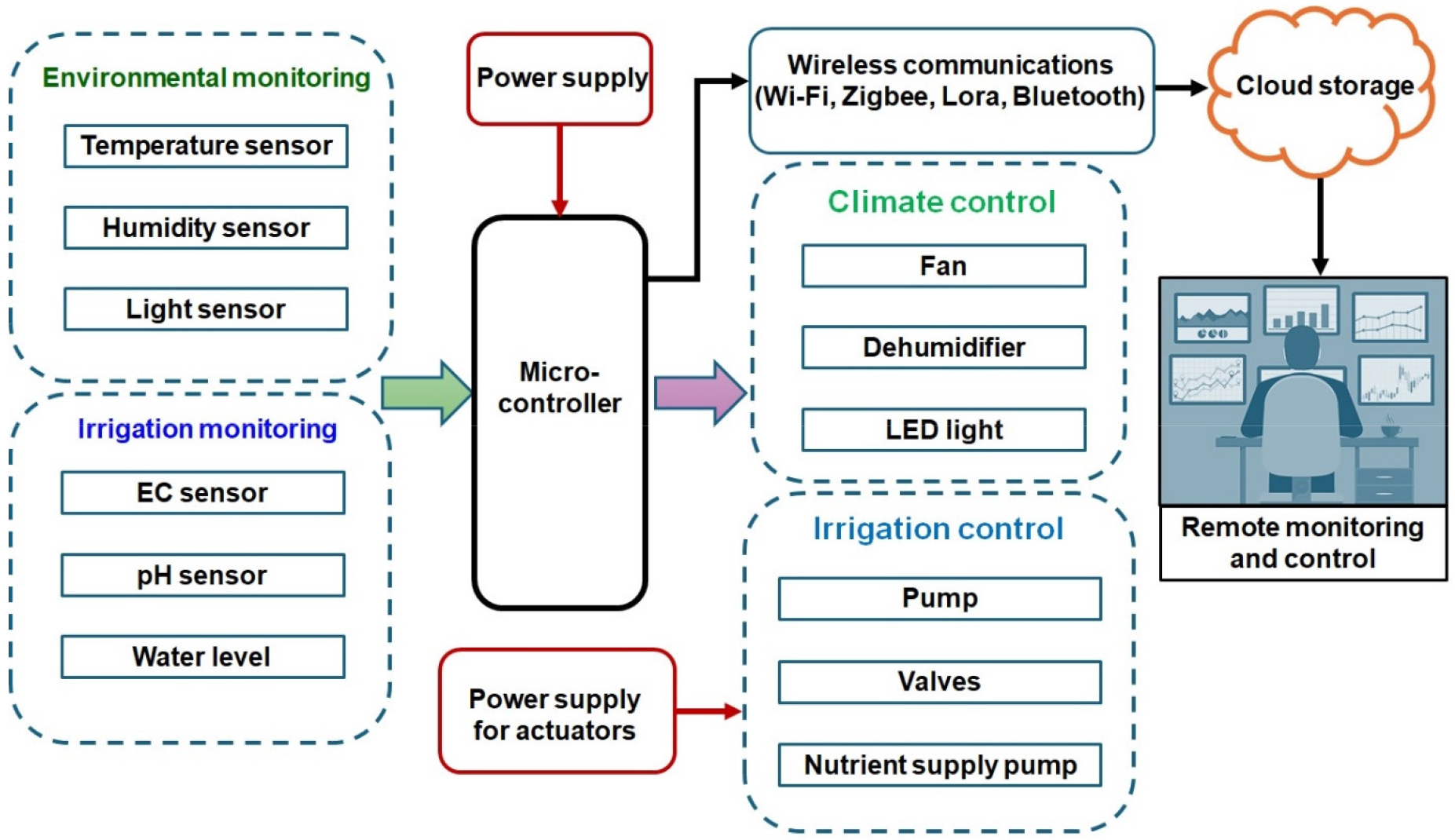
In vertical farming, actuators are used to adjust environmental conditions based on real-time data, and environmental control manage these factors to optimize plant growth. The system employs data insights from the sensors to maintain optimal growing conditions (Rao et al., 2024). Irrigation actuators, such as water pumps and valves, are used to deliver water and nutrients to plants. These systems are often automated to precise, efficient water usage and reduce waste (Alotaibi et al., 2023; Bakirov et al., 2024). Environement control actuators, such as fans, dehumidifier, and cooling systems, regulate temperature and humidity levels in the farm (Awasthi et al., 2023). The integration of sensors and actuators is an important aspect of automated remote vertical farms. Sensors receive data on environmental characteristics, which is subsequently processed by a control system. The control system utilizes the data to engage actuators, which modify the environment to maintain ideal growth circumstances. For instance, when a temperature sensor identifies an increase in temperature, the control system may engage a cooling fan to reduce the temperature (Chin and Lukman, 2017; Kaya, 2025). The actuator node is designed to provide outputs for various types of actuators commonly found in greenhouses and can be controlled using multiple specific communication protocols, ensuring flexibility in operation.
Remote management technology
Remote management refers to monitoring and controlling systems or devices from a distant location (Zhu and Shang, 2022). Users can efficiently manage farm operations from any location by accessing data via web-compatible platforms on various devices, thereby enhancing scalability and flexibility (Ng et al., 2023; Sodhi and Jamwal, 2024). The core idea is to use advanced technologies like the IoT, machine learning, and Programmable Logic Controllers (PLCs) to collect data, analyze, and make decisions making. Remote monitoring and control are crucial for improving resource utilization and productivity (Ng et al., 2023; Asseng et al., 2024). The monitoring management with integration of IoT devices for real-time monitoring enhances efficiency in vertical farming (Asseng et al., 2024; Ullah et al., 2023). Several research has shown that using remote sensing management methods is necessary to accurately evaluate resources in a wide range of environmental settings (Deshan et al., 2024; Choudhari et al., 2024).
In recent years, the smart vertical farming framework integrates microcontrollers with an energy-efficient sensor network to monitor environmental conditions. IoT sensors are strategically placed to collect data on temperature, humidity, and soil moisture, which are then wirelessly transmitted to a cloud server for processing. Fig. 2 shows the system architecture and data flow of a smart vertical farming platform, illustrating how sensor data is collected via microcontrollers, transmitted through a communication gateway to the cloud for analytics, and accessed by remote users through a mobile application for real-time monitoring and control of actuators. The systems that include of sensors, actuators control, microcontrollers, and cloud servers that are connected, able to communicate using data across a network and operate other devices remotely.
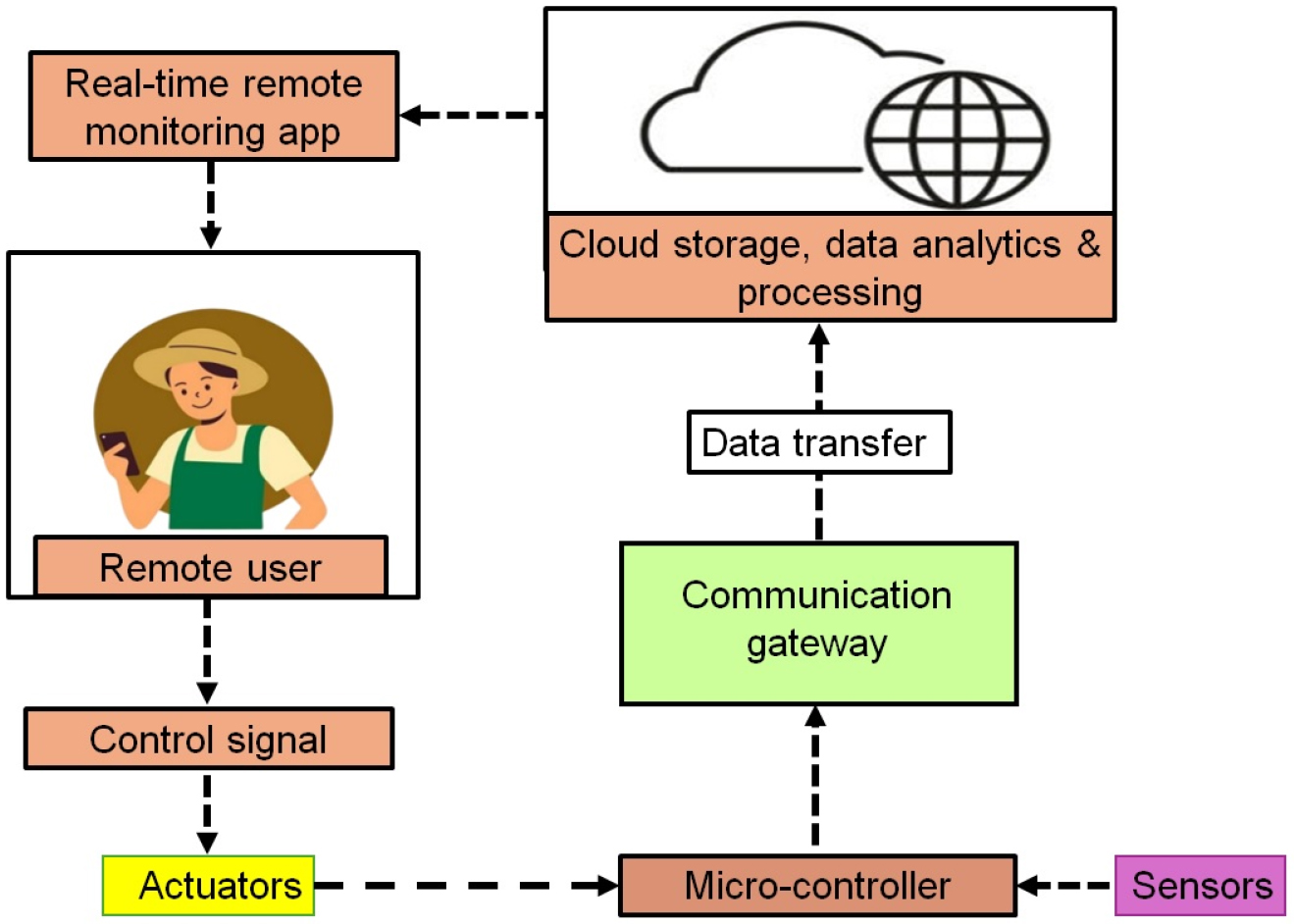
Microcontroller process data from various sensors and control actuators to maintain optimal growing conditions (Alotaibi et al., 2023). These devices are responsible for executing commands based on sensor data, such as adjusting lighting, irrigation, and nutrient delivery systems (Ng et al., 2023; Alotaibi et al., 2023). Communication modules, including Wi-Fi and Low-Power Wide Area Networking (LPWAN) technologies like LoRaWAN, enable data transmission between sensors, microcontrollers, and cloud platforms (Diaz et al., 2025). Additionally, the implementation wireless sensor technology to establish a network that automatically collects and transmits sensing information from the farmland (Zhang and Wang, 2021), leads to improved energy efficiency and electricity savings, allowing for desirable functions to be realized even in conditions of limited power supply. Furthermore, in order to store and archive the data, the sensors automatically send it to a local cloud server from the greenhouse or the vertical farm (Mrosla et al., 2025; Stevens et al., 2023). The data can be accessible by end-user devices, providing insights into crop and farm status, optimal harvesting times, and energy consumption (Tatas et al., 2022; Vidhya et al., 2018). By remote monitoring, farmers provide real-time visualization of environmental conditions (e.g., temperature, humidity, CO2 levels) (Barve et al., 2024; Menon et al., 2023). Based on this information, farmers can take remote actions such as adjusting light intensity, turning on fans, or activating irrigation systems (Raj et al., 2024). The integration of these components results in a highly automated and efficient vertical farming system (Ullah et al., 2023; Ng et al., 2023; Awasthi et al., 2023).
ICT structure for automated remote management
Information and Communication Technology (ICT) plays a vital role in enabling automated and remote management systems in smart vertical farming (Diaz et al., 2025). By combining sensor networks, wireless communication, cloud platforms, and user interfaces, ICT provides an integrated infrastructure for precision monitoring and control (Diaz et al., 2025; Nawaz and Babar, 2025). The function is collecting real-time environmental data and transmitted to the cloud, the system either makes automatic decisions using programmed thresholds or waits for user input through the application interface (Diaz et al., 2025; Chin and Lukman, 2017). In addition, cloud computing, edge computing, Wireless Sensor Networks (WSN), Big Data Gateway, Machine to Machine (M2M), Human to Machine (H2M), LoRa Protocol (LoRaWAN), ZigBee/Z-Wave Radio Frequency Identification (RFID), and Application Programming Interface (API) are among the most significant technologies and commonly used for remote monitoring (Kabir et al., 2023; Yue et al., 2023). The cloud server connects to the gateway, enabling data storage, analysis, and user command forwarding, ensuring efficient monitoring and control of the agricultural environment (Chin and Lukman, 2017; Zhang et al., 2015). Commonly, Wi-Fi is used in vertical farming for connecting sensors and actuators to a central control system. For instance, a vertical micro-farm system utilizes Wi-Fi to communicate with sensors and actuators, enabling automatic control of water, nutrients, and light requirements through a web-enabled interface (Liwal et al., 2020). Similarly, FarmTech, an IoT-based vertical farming setup, employs Wi-Fi for sensor data transmission to an IoT platform like Thingspeak, with a mobile app providing remote access to farm updates (Awasthi et al., 2023). Similarly, protocols like LoRaWAN and Zigbee are employed for their low power consumption and ability to cover large areas, making them suitable for remote agricultural environments (Coelho et al., 2022; Shen, 2021).
A study on IoT-based smart vertical farming highlights the use of WSNs to monitor and control environmental factors, automating irrigation and nutrient delivery (Ullah et al., 2023). Another paper proposes a heterogeneous WSN integrating Wi-Fi, Bluetooth, and LoRa technologies, offering flexibility and resilience in real-world deployments (Rodríguez et al., 2024). In particular, LPWAN technologies like LoRaWAN are gaining traction in vertical farming due to their long-range communication capabilities and low power consumption. As shows in Table 2. The choice of protocol depends on specific application requirements, such as range, data rate, and energy efficiency, which are crucial for the dense sensor networks in vertical farming. Research demonstrates the feasibility of deploying LoRaWAN in remote vertical farms with minimal network infrastructure, supporting large-scale installations (Diaz et al., 2025). In addition, an innovative approaches IoT platform combining LoRaWAN, and ML has been tested in Vietnam. It predicts environmental conditions and improves farm management efficiency, reducing the risk of crop failure (Huong et al., 2023). LoRaWAN enables real-time data collection and transmission, which is vital for automating farm operations (Gore et al., 2022). The use of LoRaWAN in smart farming offers a cost-effective solution for connecting a large number of sensors and devices (Citoni et al., 2019). Moreover, data collected through LoRaWAN networks can be used to inform decisions about crop management, which helps maximize efficiency (Saban et al., 2022). This technology is particularly useful for monitoring data from distant sensors in vertical farming setups (Saha et al., 2022; Zhang et al., 2021).
Table 2.
Comparative analysis of wireless communications technologies.
| Communication technology | Key features | Reference |
| LoraWAN | Long-range, low-power consumption, suitable for large-scale setups | Wu et al. (2024) |
| Zigbee | Low-power, low-cost, tree network topology | Singh et al. (2021) |
| NB-IoT | Low-power, wide-area network, stable and accurate data transmission | Zheng et al. (2024) |
| Wi-Fi | Short-range communication, high data rates | Nguyen et al. (2025) |
| Bluetooth | Short-range, low power consumption | Hortelano et al. (2017) |
Abnormality detection techniques
Types of abnormalities in vertical farming
Vertical farming systems, while offering numerous advantages such as high yields and water efficiency, are not free to various abnormalities that can significantly impact farming productivity (Zou et al., 2023). These abnormalities can arise from environmental factors, system design, or component fault (Malik et al., 2021). Actuators are critical components that execute actions based on sensor data, such as activating irrigation systems or adjusting light levels. Malfunctions in actuators can disrupt the controlled environment of vertical farming, leading to water wastage or inadequate light exposure for plants (Wasswa, 2024). An actuator failure in an irrigation system can result in either overwatering—causing water wastage and potential root damage—or underwatering, which stresses plants and reduces yields (Ahmed et al., 2025; Rao et al., 2020; Sowmya et al., 2024). Similarly, if actuators responsible for lighting malfunction, plants may receive inadequate or excessive light, negatively impacting photosynthesis and growth rates (Rao et al., 2020; Sowmya et al., 2024). A concrete instance is found in automated irrigation systems such as, if a pump actuator or a solenoid valve fails, it can create water imbalances that harm crop health and decrease productivity (Klongdee et al., 2024).
Detection of such malfunctions can be achieved by monitoring the power consumption and operating status of actuators, abnormal patterns in these parameters often indicate faults or operational errors (Ahmed et al., 2025; Leite et al., 2025). Additionally, environmental drift refers to gradual changes in the farming environment that can affect crop health and productivity (Zakir et al., 2022). These changes may include shifts in temperature, humidity, or light intensity over time (Bacelar et al., 2024). If the abnormality undetected, environmental drift can lead to suboptimal growing conditions and reduced yields (Meghana et al., 2023). Therefore, the implementation early detection of these issues is crucial to prevent the spread of infestations and protect crop health (Nyakuri et al., 2024).
Maintaining optimal conditions in vertical farming systems requires robust abnormality detection techniques to address issues such as sensor failures, actuator malfunctions, environmental drift, and pest/disease outbreaks (Barve et al., 2024). Various methods have been developed to identify and address these malfunctions, ensuring that smart agriculture systems can operate effectively and sustainably (Zhang et al., 2015). It highlights the use of machine learning techniques to develop a classification model that can be executed locally on sensing nodes, enabling the detection of characteristic malfunction (Islam et al., 2024). By enhancing diagnostic accuracy and facilitating effective maintenance actions, can optimize the overall smart vertical farming performance (Chowdhury et al., 2020).
Framework for abnormality detection in vertical farming systems
Abnormality detection in vertical farming systems is composed of several integrated stages that ensure early and accurate identification of issues affecting crop health and system performance. The process begins with data acquisition, where a network of sensors is deployed throughout the vertical farm to monitor key environmental and crop parameters such as temperature, humidity, light intensity, soil moisture, and plant health (Meghana et al., 2023). Data acquisition is the process of collecting data from various sensors deployed in the vertical farming system (Garg and Alam, 2023). Sensors typically monitor parameters such as temperature, humidity, light intensity, soil moisture, and crop health. These sensors continuously collect data, which is then transmitted to a central system for further analysis, often using IoT-enabled networks to facilitate real-time monitoring and management (Alumfareh et al., 2024; Paliyanny et al., 2024; Rusev et al., 2024).
Once the data is acquired, it undergoes signal processing to enhance its quality and extract meaningful information. Techniques such as filtering, normalization, and feature extraction are commonly used to prepare the data for the detection stage (Meghana et al., 2023; Tatiraju et al., 2024). Typically this stage includes filtering to remove noise, normalization to standardize the data, and feature extraction to highlight important characteristics or trends that may indicate the onset of abnormalities (Catalano et al., 2022). Fig. 3 illustrates the anomaly detection process in a smart farming system, where sensor data from actuators and processes is analyzed using a detection model to classify faults, triggering real-time monitoring and alert notifications when abnormalities are identified. The signal processing circuit is designed to enhance the signal-to-noise ratio of input signals, by utilizing a low-pass filter circuit to filter lower frequency signals and a high-pass filter circuit to filter higher frequency signals (Lira et al., 2024; Nakamura, 1979). The application of low-pass filters in anomaly detection can be tailored to specific goals, such as maximizing true positives or minimizing false positives, depending on the requirements of the agricultural application (Lira et al., 2024).
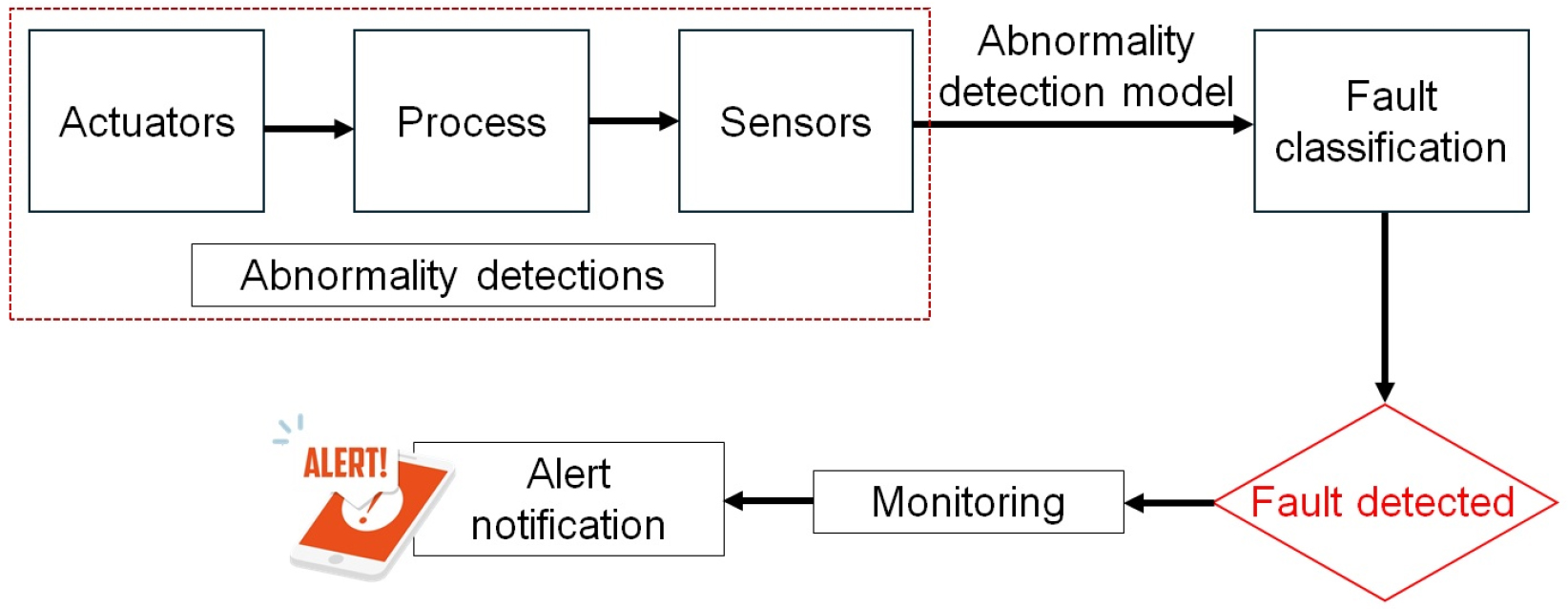
Faults can include accuracy decline, bias, stuck, and spike faults, which may lead to incorrect decisions and operational inefficiencies (Zou et al., 2023). Early detection and diagnosis of these faults are essential to ensure accurate measurements and effective control of agricultural processes (Ahmed et al., 2025). Signal processing plays a crucial role in detecting and diagnosing these faults to ensure the integrity of the system (Ahmed et al., 2025). The MRSD technique, an extension of the Short-Time Fourier Transform, is used for fault detection and isolation in sensors and actuators. This method is effective for spectral analysis and has been successfully applied in smart sensor design (Bal et al., 2011). A combination of morphological filters and wavelet transforms is used to detect faults in sensor and actuator signals. Morphological filters remove noise, while wavelet transforms analyze the filtered signals to identify abrupt fault characteristics (Zhang et al., 2009). This method particularly effective for real-time fault detection and classification (Ahmed et al., 2025; Bal et al., 2011; Zhang et al., 2009).
Furthermore, model-based approaches are widely used for fault detection in smart farming systems. The Kalman filter is a popular choice for sensor fault detection in wireless sensor networks (WSNs). This method is particularly effective for smart irrigation systems (Jihani et al., 2023). Moreover, fault detection for Networked Control System (NCS) are used to design fault detection filters. These filters separate faults from plant disruption and minimize the effect of network-induced delays (Ahmadi et al., 2017). This approach is particularly useful for smart farming systems where communication delays can impact system performance. In smart hydroponic system, Random Forest and Artificial Neural Networks have been evaluated for fault detection and diagnosis. RF models achieved superior accuracy in detecting faults such as bias, drift, and precision degradation in EC and pH sensors (Karimzadeh et al., 2025). However, many machine learning and signal processing techniques require significant computational resources, which can be a challenge for resource-constrained WSNs (Islam et al., 2024). Addressing this challenge will ensure the continued advancement of fault detection systems in smart farming.
Limitations and future research directions
Despite the promising advances in remote monitoring and abnormality detection technologies in smart vertical farming systems, several limitations hinder their full-scale deployment and operational efficiency.
One of the primary limitations lies in the high initial cost and energy requirements associated with vertical farming infrastructure. Establishing controlled environments, sensor networks, and communication modules involves substantial capital investment and power consumption, especially for artificial lighting and climate regulation systems. These cost factors may limit adoption in smallholder or resource-constrained farming contexts, where return on investment may not be immediately feasible.
Technical complexity and the need for specialized expertise to configure, calibrate, and manage IoT-enabled systems also present significant barriers. Proper functioning of integrated components—such as sensor nodes, actuators, communication protocols (e.g., LoRa, Zigbee), and cloud-based analytics—requires not only multidisciplinary knowledge but also ongoing maintenance. Mismanagement or faulty configurations can lead to suboptimal system performance and increased risk of component failures.
From a data perspective, sensor accuracy, drift, and signal interference remain persistent challenges. Sensor faults such as bias, drift, and precision degradation can compromise data integrity and lead to incorrect decision-making. While machine learning and signal processing algorithms (e.g., morphological filters, wavelet transforms, Kalman filters) have shown promise in fault detection, they often demand high computational power, which may not be compatible with energy-efficient wireless sensor networks (WSNs) used in real-time farm environments.
Furthermore, scalability and interoperability of smart vertical farming platforms are yet to be fully achieved. Most systems operate with proprietary protocols and fragmented architectures, limiting integration across platforms and devices. This fragmentation restricts the development of standardized solutions and hinders the creation of unified dashboards for large-scale, multi-site farm management.
Regarding abnormality detection, while several studies have explored the use of machine learning models such as Random Forest, Gradient Boosting, CNNs, and RNNs, these models often rely on large labelled datasets for training, which are scarce in agricultural contexts. The generalizability and transferability of such models across crop types, environmental settings, and hardware setups also remain underexplored.
Future research in smart vertical farming should focus on developing lightweight and energy-efficient machine learning models that can operate on edge devices for real-time fault detection and decision-making. There is a critical need to design self-calibrating, fault-tolerant sensors and interoperable communication protocols that support seamless integration across diverse platforms. Advancements in hybrid computing approaches, such as edge–cloud collaboration, can help balance local responsiveness with high-volume data analytics. Furthermore, research should explore the creation of open-source datasets and simulation environments tailored to vertical farming, enabling robust model training and validation. Enhancing cybersecurity for data transmission and conducting life-cycle cost-benefit analyses will also be essential to ensure long-term sustainability and broader adoption of these technologies in urban and resource-limited settings.
Conclusions
Remote monitoring and anomaly detection have become important for modern vertical farming, facilitating precise management of environmental conditions and ensuring the health and yield of crops, including medicinal plants. The academic literature examined in this research showed significant advancements in the implementation of sensor networks, IoT platforms, and machine learning algorithms for real-time monitoring and anomaly detection. The collective application of these technologies has resulted in enhanced crop quality, early fault detection, and improved resource efficiency in a variety of vertical farming.
Despite these advancements, several challenges might remain. Many studies have not highlighted the cost incurred for setting up the IoT System. Most studies focus on specific aspects and effectiveness or the performance of the systems. Future research and development should focus on reducing costs, improving energy efficiency, and enhancing the scalability and accessibility of smart vertical farming systems. Nonetheless, vertical farming can produce high yields of certain crops, it may not be suitable for all types of crops, particularly those that require large amounts of space or specific soil conditions. Additionally, the integration of IoT and advanced technologies has revolutionized this farming systems, providing real-time monitoring, intelligent decision-making, and automation.
Overall, the current review highlights the transformative potential of smart agriculture technologies in vertical farming. Moving forward, the integration of advanced analytics, robotics, and cloud-based platforms will likely drive further innovation, enabling fully autonomous and resilient farming systems. Continued interdisciplinary collaboration and real-world validation are essential to realize these opportunities and to address the persistent challenges in anomaly detection and remote monitoring. By building on the foundations reviewed here, future research can contribute to more sustainable, efficient, and high-quality production of both food and medicinal crops.