


Introduction
Overview of smart greenhouse systems
ICT-based status monitoring technologies
Communication protocols
Data acquisition and transmission
IoT-based monitoring platforms
Anomaly detection technologies
Conventional techniques
Machine learning techniques
Deep learning approaches
Challenges and future directions
Conclusions
Introduction
The increasing global demand for sustainable food production, coupled with the challenges posed by climate change and resource scarcity, has accelerated the development of smart agriculture systems (Quy et al., 2022; Zhang et al., 2022). Among these, smart greenhouses have emerged as critical infrastructures for achieving high-efficiency, climate-resilient crop cultivation (Juneidi, 2022; Reka et al., 2019).
Smart greenhouses represent a significant advancement in modern agriculture, integrating cutting-edge technologies to optimize crop growth and resource management (Al-Qudah et al., 2025; Assimakopoulos et al., 2025; Yang et al., 2022). The significance of smart greenhouses in modern agriculture lies in their ability to address pressing challenges such as food security and sustainable agricultural practices. With the global population projected to reach nearly 9 billion by 2050, traditional farming methods face challenges in meeting the food demand without exhausting natural resources (Maraveas, 2022). Recent studies have demonstrated that smart greenhouse systems equipped with advanced environmental control strategies can increase crop yields by up to 20% while reducing water consumption by 30-50% compared to traditional greenhouses (Devarajan, 2025; Zhang et al., 2022). Smart greenhouses offer a viable solution by enabling year-round cultivation, optimizing resource use, and minimizing waste. The integration of ICT components in smart greenhouses not only enhances productivity but also contributes to sustainable food production practices, making them a critical component of future agricultural systems (Lee et al., 2023; Maraveas and Bartzanas, 2021).
Monitoring the operating status and detecting anomalies in ICT components are essential for maintaining optimal performance in smart greenhouses. The integration of ICT in greenhouses has revolutionized the way environmental conditions are managed, enabling precise control over temperature, humidity, light intensity, and soil moisture (Devarajan, 2025; Folorunso et al., 2024). This precision control is critical for maximizing crop yields and ensuring resource efficiency. Studies indicate that sensor failures and data transmission errors are responsible for up to 25% of system inefficiencies in large-scale greenhouse operations (Rodríguez et al., 2023). Sensor drift, hardware failures, and data transmission errors can compromise system reliability, while the dynamic interaction of environmental factors makes real-time fault diagnosis complex (Zou et al., 2023). Malfunctions such as defective irrigation controllers or faulty climate regulators can lead to unintended consequences, such as water wastage or temperature instability, affecting plant growth. The absence of standardized anomaly detection protocols further complicates system maintenance, necessitating advanced machine learning-based fault detection models and predictive maintenance strategies (Angelopoulos et al., 2019). However, the complex network of sensors, actuators, and communication systems involved in ICT-based greenhouse management can be prone to failures and anomalies, which, if undetected, can lead to suboptimal growing conditions and reduced productivity (Juneidi, 2022).
Effective monitoring and anomaly detection systems help in identifying issues promptly, allowing for timely interventions that prevent significant losses. The state-of-art IoT devices, WSNs and latest computing paradigms including edge and cloud computing helps smart greenhouses to monitor and managing environmental factors ranging from temperature and moisture of the soil, humidity and intensity of light in real time (Farooq et al., 2022; Hosny et al., 2025). Studies have shown that implementing AI-based anomaly detection algorithms in greenhouse control systems can improve fault diagnosis accuracy by 85% and reduce operational disruptions by 40% compared to conventional rule-based monitoring approaches (Allioui and Mourdi, 2023). These intelligent structures control ICT components, including the IoT, AI, and data analytics, to create a controlled environment conducive to plant growth (Hosny et al., 2025). Unlike traditional greenhouses, which rely heavily on manual monitoring and intervention, smart greenhouses utilize sensors, automated systems, and software to monitor and control environmental factors like temperature, humidity, light, and CO2 levels (Huynh et al., 2023).
The role of ICT components in enhancing greenhouse automation and productivity is important. IoT devices play a crucial role by providing real-time data on various environmental parameters, enabling precise control over irrigation and fertilization (Hosny et al., 2025). This data-driven approach ensures optimal plant growth conditions, leading to higher yields and reduced water and fertilizer usage (Huynh et al., 2023). AI algorithms analyze data collected from sensors and predict crop health and growth patterns, allowing farmers to take proactive measures against potential issues such as pest outbreaks or adverse weather conditions (Tien, 2017). Additionally, AI-powered systems automate tasks like ventilation, shading, and lighting, ensuring a stable environment for crops (Bersani et al., 2022).
While smart greenhouses have proven effective in increasing productivity and reducing input costs, their reliance on complex ICT infrastructures introduces new challenges related to system reliability and data integrity. Failures in sensors, communication networks, or computational modules can lead to inaccurate environmental control, crop stress, and reduced yields. Therefore, robust monitoring systems and intelligent anomaly detection techniques are essential to ensure continuous, error-resilient greenhouse operations. The objective of this review was to provide a comprehensive overview of recent advancements in ICT-enabled status monitoring and anomaly detection methodologies implemented in smart greenhouse components.
Overview of smart greenhouse systems
Controlled environment agriculture (CEA) represents a modern approach to farming that leverages greenhouse technology to optimize crop production. Although often associated with recent innovations, the use of greenhouses dates back to the 19th century in the Netherlands and France (Kabir et al., 2023; Lim et al., 2023). Since then, greenhouse design and functionality have evolved significantly, enabling their widespread adoption across the globe. A greenhouse is a structure, typically constructed from glass or plastic, designed to facilitate year-round cultivation by providing a stable, protected environment. These structures admit sunlight while shielding crops from pests, diseases, and adverse weather conditions. Greenhouse variations are adapted to different climatic needs: for instance, in colder regions, smaller units known as cold frames capture solar heat to maintain warmth, while in hot, arid regions, shade houses reduce sunlight exposure and help retain moisture (Rayhana et al., 2020).
Greenhouses offer the primary advantage of enabling precise control over environmental parameters such as temperature, light intensity, humidity, and nutrient levels, allowing conditions to be tailored to specific crop requirements (Vatistas et al., 2022; Abdo-Peralta et al., 2024). This capability supports extended growing seasons, enhances crop quality, and promotes efficient resource utilization. However, traditional greenhouse management can be labor- and resource-intensive, and achieving optimal conditions for diverse crops remains a complex challenge (Vatistas et al., 2022). Smart greenhouses address these limitations by incorporating IoT technologies. Through the integration of sensors and embedded controllers, these systems continuously monitor environmental conditions and transmit real-time data to cloud-based platforms. Automated control systems then adjust internal conditions accordingly which significantly reduce the need for human intervention (Farooq et al., 2022; Barreca, 2024). Smart greenhouses represent a significant advancement in agricultural technology, enabling the automatic regulation of key environmental factors such as temperature, lighting, and irrigation, along with other mechanical operations (Oguntosin et al., 2023). This level of automation enhances farming efficiency, optimizes resource utilization, and has the potential to improve crop yields.
In addition to environmental control, smart greenhouses offer farmers critical insights into optimal harvesting times, soil conditions, plant nutrient needs, and water quality parameters (Dhanaraju et al., 2022). By controlling these data-driven insights, farmers can make more informed decisions, resulting in increased reliability and cost-effectiveness in agricultural practices. The integration of AI and Computer Vision further elevates the capabilities of smart greenhouses (Maraveas, 2022; Lim et al., 2023). AI facilitates the analysis of extensive datasets, enabling predictive modeling and more precise adjustments to greenhouse operations (Misra et al., 2022; Cao et al., 2022). Meanwhile, Computer Vision systems can monitor plant growth, detect early signs of disease, and determine optimal harvesting times with high accuracy (Islam et al., 2024; Reza et al., 2023).
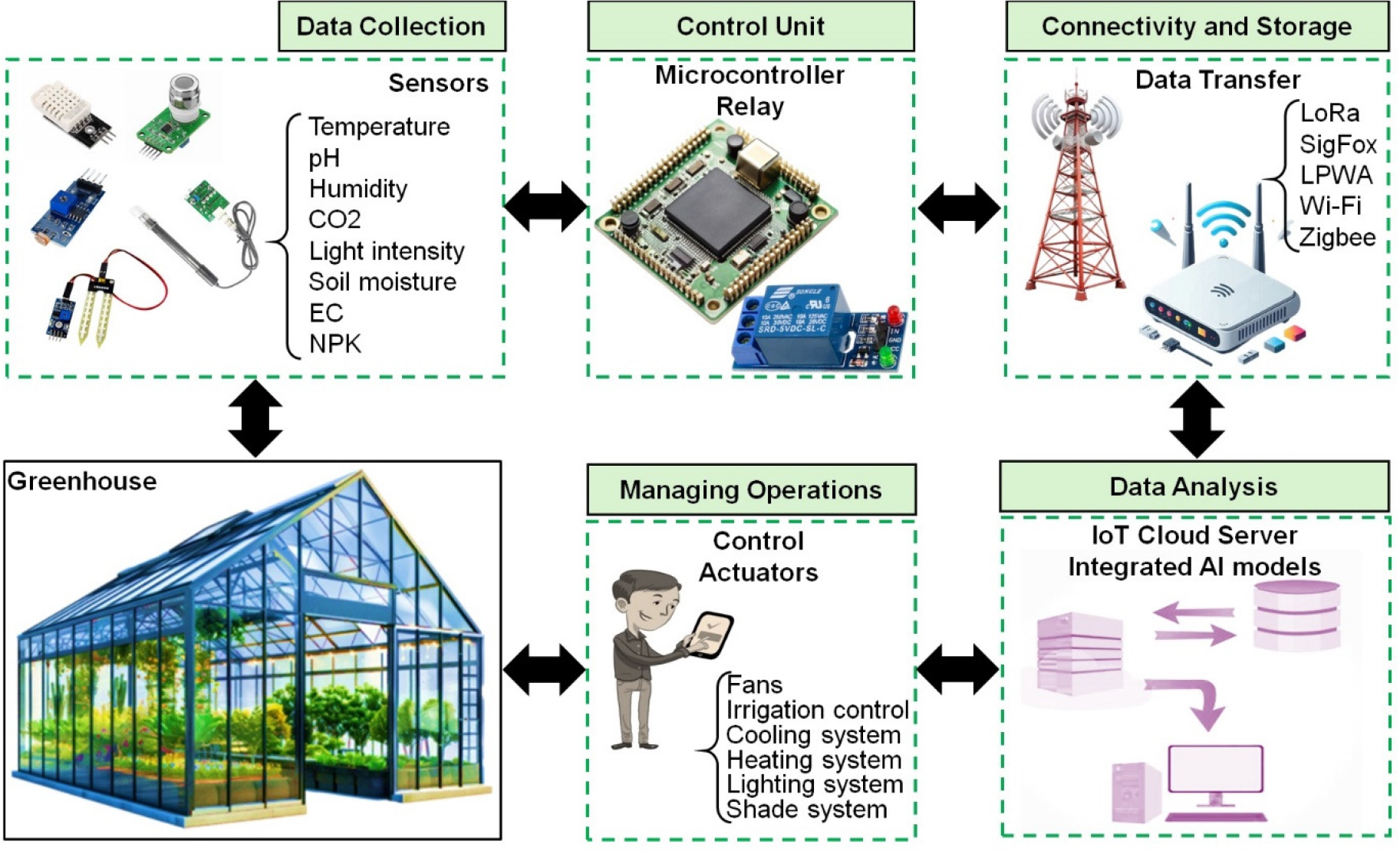
This convergence of IoT, AI, and computer vision technologies is transforming conventional greenhouses into intelligent, interconnected systems. As illustrated in Fig. 1, the architecture of smart greenhouses involves a network of integrated components working collaboratively to automate and remotely manage agricultural processes. The overarching goal is the realization of fully autonomous and resource-efficient farming systems that support sustainable agriculture and improved productivity.
ICT-based status monitoring technologies
Sensor technologies
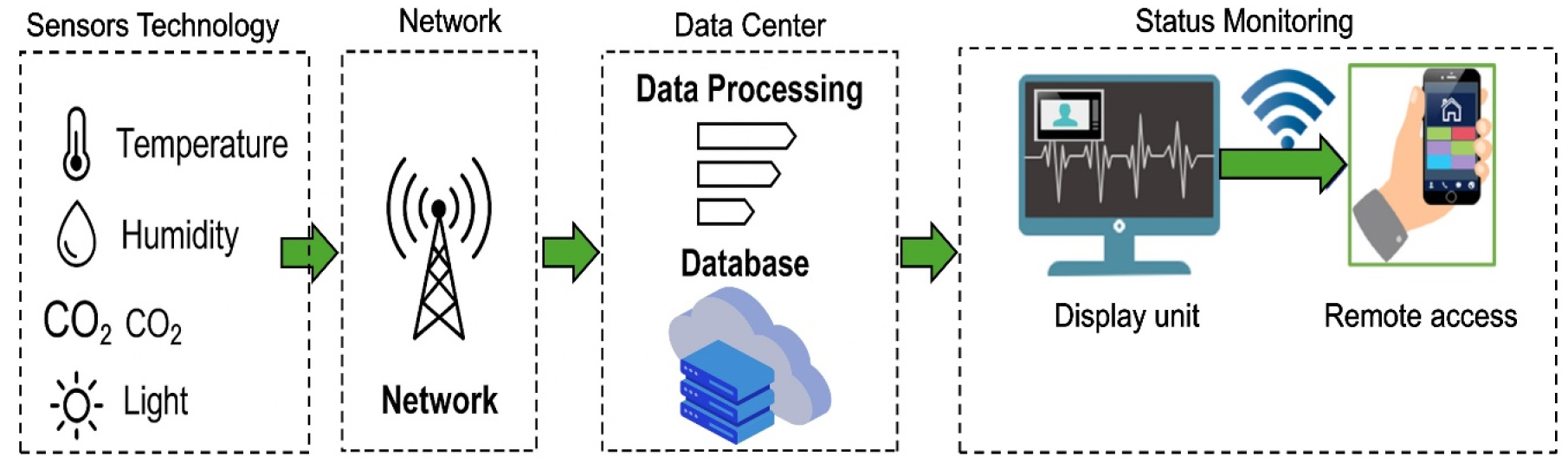
ICT have played an important role in the advancement of precision agriculture, particularly through the deployment of diverse sensor technologies for real-time environmental and operational status monitoring. Sensor-based systems are now integral to smart agricultural environments, providing continuous data on climatic conditions, soil properties, and plant health (Zhang et al., 2023). These systems support more informed decision-making, leading to optimized crop management, efficient resource usage, and increased agricultural productivity (Placidi et al., 2021). Several types of sensors are employed in crop production, each designed to measure specific aspects of the growing environment or plant physiology. A schematic diagram of ICT-based status monitoring system using sensor technologies was shown in Fig. 2.
Climate sensors are among the most widely used in greenhouse and open-field settings. These include sensors for measuring temperature, humidity, solar radiation, and atmospheric pressure (Quan et al., 2011). Such environmental parameters are critical for maintaining optimal growing conditions and can directly influence crop yield and quality (Abbood et al., 2023). Advanced weather stations often integrate multiple climate sensors to provide holistic insights into microclimatic dynamics within farming environments (Bhujel et al., 2020). Soil sensors are equally essential in monitoring soil moisture, temperature, electrical conductivity, pH, and nutrient levels (Yin et al., 2021). These sensors help farmers manage irrigation schedules, prevent water wastage, and apply fertilizers more precisely. Soil moisture sensors utilize various methods to measure water content, including Time Domain Reflectometry (TDR), Time Domain Transmissometry (TDT), Frequency Domain Reflectometry (FDR), tensiometers and capacitance sensors (Okasha at al., 2021). Capacitance-based soil moisture sensors are generally employed due to their balance of cost, portability, accuracy and responsiveness in various soil types (Abdelmoneim et al., 2025; Helmy et al., 2024; Domínguez-Niño et al., 2020). FDR and TDR sensors are mostly used at present to estimate the soil moisture because of their high accuracy and stability (Millán et al., 2024). TDR and FDR sensors are more expensive and complex than capacitance sensors (Okasha at al., 2021). Real-time monitoring of soil conditions enables site-specific management practices that enhance sustainability and crop health (Maroli et al., 2021). Plant-based sensors provide a more direct measurement of crop status, offering insights into parameters such as sap flow, leaf temperature, chlorophyll fluorescence, and plant bioelectric signals (Marino et al., 2021; Hamed et al., 2021). These sensors can detect early signs of plant stress, diseases, or nutrient deficiencies, allowing for timely interventions (Tomkiewicz and Piskier, 2012). Plant phenotyping platforms equipped with such sensors are becoming valuable tools for both research and commercial farming applications (Zhang et al., 2023).
Recent developments have emphasized multi-modal sensing, where various sensor types are integrated to collect comprehensive data from a single platform. Systems combining RGB cameras, thermal imaging, and gas sensors can detect not only visual symptoms of plant stress but also physiological changes such as stomatal conductance or volatile organic compound (VOC) emissions (Canatan et al., 2025). RGB imaging is often used for phenotyping and growth monitoring, while thermal sensors can identify heat stress or detect early water deficiency (Gao et al., 2024). Gas sensors, meanwhile, are capable of measuring CO₂ levels and detecting plant-emitted gases that indicate pest infestation or disease (Guo et al., 2024). The fusion of data from multiple sensor modalities, along with AI-driven analytics, enhances the accuracy and scope of status monitoring. This integration enables the development of decision-support systems that can adapt to complex agricultural environments, ultimately contributing to smarter and more sustainable farming practices (Lim et al., 2023).
Communication protocols
With the advancement of IoT technologies, WSNs have evolved to support more robust and wide-ranging communication protocols. This shift has given rise to the adoption of Low Power Wide Area Networks (LPWANs) such as Long Range (LoRa), Narrowband IoT (NB-IoT), and Zigbee (Bicamumakuba et al., 2025; Ullah et al., 2022). These protocols offer various advantages depending on the application requirements. LoRa, for instance, is widely used for long-range, low-power communication in agricultural settings (Bicamumakuba et al., 2025; Khan et al., 2021). It enables reliable data transmission over several kilometers with minimal energy consumption, making it suitable for large-scale greenhouse deployments (Khan et al., 2021).
NB-IoT is another LPWAN technology optimized for deep indoor coverage and massive device connectivity. Its integration in smart greenhouses supports reliable, low-latency communication, which is essential for real-time anomaly detection and control tasks (Panaligan et al., 2022). Zigbee, on the other hand, provides a short-range, low-data-rate alternative that excels in mesh networking environments, ensuring redundancy and robustness within densely instrumented greenhouses (Bicamumakuba et al., 2025). These LPWAN protocols not only enhance the communication efficiency of smart greenhouse systems but also contribute significantly to reducing power consumption and extending the operational lifetime of sensor nodes (Bicamumakuba et al., 2025). Table 1 provides the comparison of different communication protocols technology used in the greenhouses.
Table 1.
Comparison of communication protocols in smart greenhouses.
Data acquisition and transmission
Effective data acquisition is the foundation of smart greenhouse monitoring systems, as it provides real-time visibility into critical environmental parameters. Typically, a network of heterogeneous sensors is deployed to measure variables such as temperature, humidity, light intensity, carbon dioxide (CO₂) levels, and soil moisture (Lu et al., 2022). The choice of sensors and their deployment configuration is crucial for ensuring spatial and temporal coverage of the monitored area (Henderson et al., 2018). Sampling frequency and resolution must be optimized to balance data accuracy and power consumption (Hoque et al., 2020). High-resolution sampling enhances anomaly detection and predictive analytics but may lead to increased data transmission loads and faster energy depletion of wireless sensor nodes. Moreover, sensor calibration procedures are essential to maintain data quality and consistency, particularly in long-term deployments where drift can affect sensor reliability (Apostolakis et al., 2016).
Once data is collected, local processing and aggregation techniques play a critical role in minimizing redundancy and improving data quality before transmission to central servers or cloud platforms. Preprocessing techniques such as noise filtering, outlier removal, and normalization help reduce inaccuracies due to sensor faults or environmental interference (Dhawas et al., 2024). Data fusion strategies, including spatial and temporal averaging, integrate readings from multiple sensors to derive robust, high-confidence environmental profiles (Kim et al., 2023). Feature extraction algorithms may also be applied to transform raw sensor data into meaningful indicators of plant health or system performance (Lee et al., 2023). Additionally, sensor prioritization mechanisms ensure that critical data streams (e.g., CO₂ levels or temperature spikes) are given precedence for timely decision-making (Abid et al., 2024).
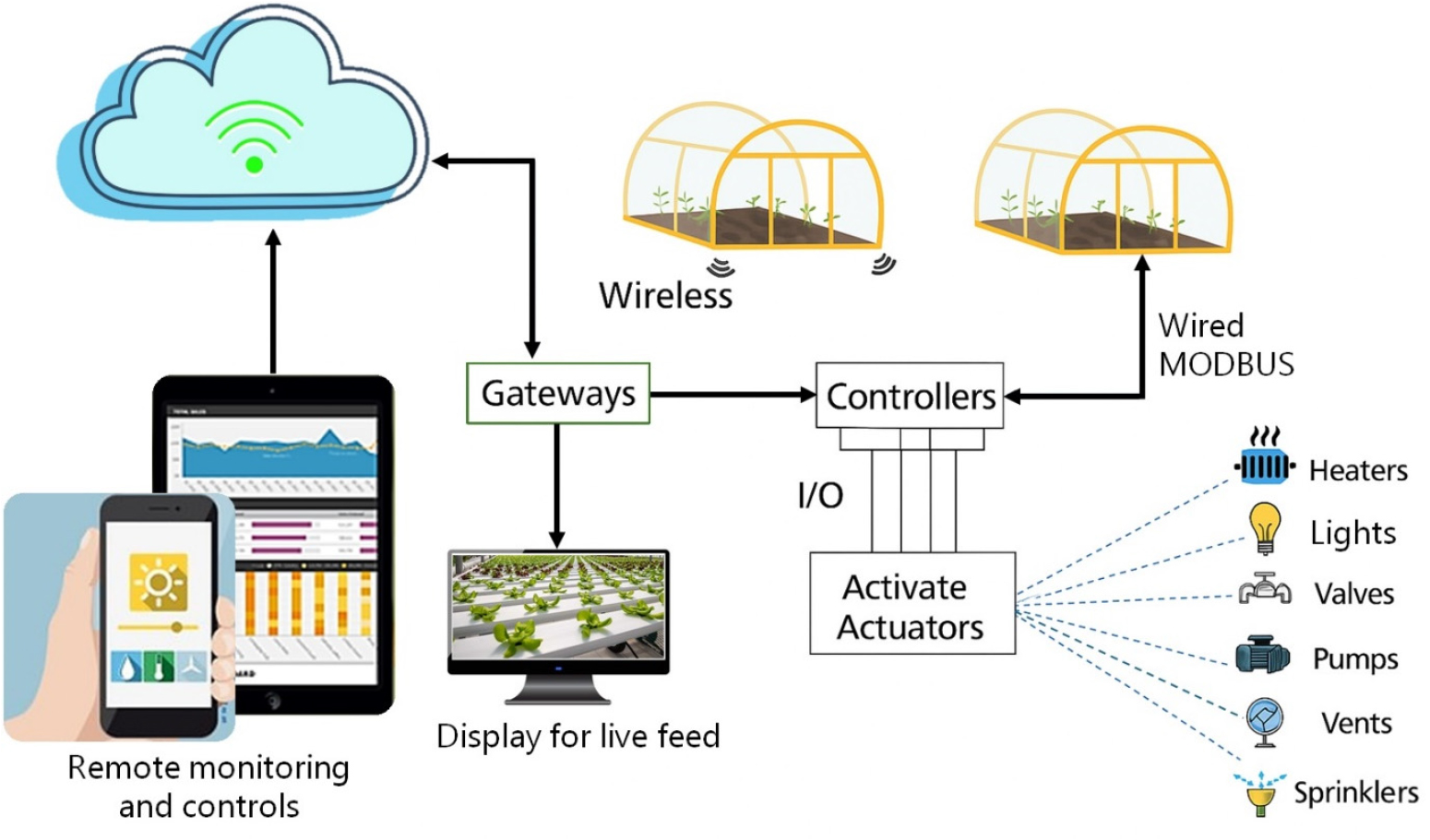
At the transmission gateway level, buffering and storage strategies are implemented to manage data flow and reduce latency during network disruptions. Gateways often serve as intermediate processing nodes, performing lightweight computations and aggregating sensor data to reduce bandwidth usage and improve system responsiveness (Ahmed et al., 2016). These gateways may temporarily store data in local buffers to prevent loss during connectivity interruptions and support delay-tolerant data transmission (Agyemang, 2024). An architecture of data acquisition and transmission is shown in Fig. 3. Energy-efficient communication protocols and compression techniques are often used to extend the operational life of battery-powered nodes while maintaining a reliable data stream (Khan et al., 2021).
IoT-based monitoring platforms
The architecture of IoT-based monitoring systems in smart greenhouses typically follows a layered structure comprising sensors, edge devices, gateways, and cloud platform. Sensors collect data on environmental and crop-specific parameters such as temperature, humidity, soil moisture, light intensity, and CO₂ levels. This data is first processed by edge devices or microcontrollers, which perform preliminary filtering and formatting before transmission. Gateways act as intermediaries that bridge the communication between edge devices and cloud platforms, often performing protocol translation (e.g., from Zigbee or LoRaWAN to MQTT or HTTP) to ensure compatibility and secure data transfer (Morales-García et al., 2024; Farooq et al., 2022). The integration of microcontrollers with communication modules (e.g., Wi-Fi, Bluetooth, or GSM) enables cost-effective and scalable deployment in diverse greenhouse environments (Farooq et al., 2022).
Cloud-integrated IoT dashboards play a central role in aggregating, storing, and managing data streams from smart greenhouse systems. Platforms such as AWS IoT Core, Microsoft Azure IoT Hub, and Google Cloud IoT provide robust infrastructure for handling large volumes of real-time data while supporting analytics, device management, and visualization capabilities (Bhaskaran et al., 2024). These cloud services often include tools for stream processing, machine learning model deployment, and rule-based alert configurations (Ullah et al., 2022). The flexibility of cloud integration allows greenhouse operators to monitor their systems remotely, ensuring timely interventions and data-driven decision-making from any geographic location (Tien et al., 2017; Ullah et al., 2022).
Real-time data visualization is crucial for effective greenhouse management, offering stakeholders intuitive access to multi-sensor fusion data. Advanced dashboards can display heat maps of temperature or humidity gradients, temporal graphs showing trends over time, and spatial plots indicating sensor distribution across the facility (Quy et al., 2022). These visualizations enhance situational awareness and facilitate prompt diagnosis of irregularities. Moreover, many IoT systems incorporate notification and alert mechanisms using SMS, push notifications, or email services to inform operators of detected anomalies, such as abrupt temperature fluctuations or irrigation failures (Ibrahim et al., 2019). This real-time alerting capability ensures swift responses to critical issues, minimizing the risk of crop damage (Rajeswari et al., 2017).
Interoperability and adherence to data standards are essential for ensuring seamless communication among heterogeneous devices and systems in smart greenhouses. Standardized APIs and communication protocols, such as MQTT, CoAP, and RESTful APIs, enable consistent integration of sensors, actuators, and third-party platforms (Lalhriatpuii and Wasson, 2024). Furthermore, interoperability with farm management systems and enterprise resource planning (ERP) tools allows for unified control and monitoring, supporting broader agricultural planning and automation objectives. The use of data standards such as ISO/IEC 30141 and OGC SensorThings API ensures that collected data can be exchanged, interpreted, and utilized efficiently across various platforms, enhancing the scalability and sustainability of smart greenhouse solutions (Raes et al., 2025).
Anomaly detection technologies
Types of anomalies for greenhouse components
Sensor faults are among the most common anomalies in smart greenhouse environments, primarily due to the reliance on numerous sensors for continuous monitoring of environmental conditions. These faults may include sensor drift, calibration errors, data dropout, or complete sensor failure. Such anomalies can significantly affect the accuracy of decision-making systems, leading to inappropriate control actions such as incorrect irrigation or ventilation commands. Various techniques, including redundancy, sensor fusion, and statistical outlier detection, have been applied to identify and mitigate sensor faults in real-time (Zou et al., 2023; Yang et al., 2022). Machine learning-based methods such as autoencoders and isolation forests are also increasingly employed to detect abnormal sensor behavior by learning the typical patterns of sensor data (Li et al., 2024).
In IoT-enabled greenhouses, stable communication is critical for real-time data transmission between sensor nodes, gateways, and control units. Communication failures may arise due to wireless interference, power outages, network congestion, or hardware malfunctions. These issues can lead to data loss, latency, or miscommunication, undermining the greenhouse’s autonomous operations. Techniques such as network monitoring, retransmission protocols, and fault-tolerant routing algorithms have been proposed to enhance communication reliability.
While some environmental variability is natural, sudden or uncharacteristic fluctuations—such as abrupt temperature spikes, humidity drops, or CO₂ concentration anomalies—can indicate system malfunctions or external disturbances. These anomalies can adversely affect plant health and crop yield if not promptly addressed. Identifying environmental anomalies often involves modeling normal environmental behavior using time-series analysis, clustering, or predictive models like ARIMA, LSTM, or Gaussian Processes (Zou et al., 2023; Hosny et al., 2025; Tien et al., 2017; Puder et al., 2024). Accurate detection allows the system to distinguish between normal variations and significant deviations that require intervention.
As smart greenhouses become more connected through ICT and IoT infrastructures, they are increasingly vulnerable to cybersecurity threats. Malicious attacks such as data spoofing, denial-of-service (DoS), or unauthorized access can compromise the integrity and availability of greenhouse systems. These attacks may go unnoticed without proper security monitoring, potentially leading to manipulated sensor data, disrupted operations, or even physical damage to crops (Barreto and Amaral, 2018). To mitigate such risks, anomaly detection systems have been integrated with cybersecurity frameworks that utilize intrusion detection systems (IDS), blockchain-based authentication, and AI-driven threat detection methods (Benameur et al., 2024).
Conventional techniques
Conventional techniques for monitoring and anomaly detection in greenhouses have historically relied on manual observation and predefined rule-based systems. Manual methods involve direct human inspection of plant health, environmental conditions, and equipment performance. While these methods are straightforward and require minimal technological infrastructure, they are highly labor-intensive, prone to human error, and unsuitable for large-scale or highly dynamic greenhouse environments (Geng et al., 2019). The performance of manual monitoring is often inconsistent due to subjective assessments and can result in delayed responses to anomalies such as pest infestations, irrigation failures, or equipment malfunctions (Cafuta et al., 2021). However, in small or low-budget greenhouses where ICT adoption is limited, manual approaches may still offer basic utility.
Threshold-based detection systems and rule-based expert systems represent early automation efforts in greenhouse monitoring. These systems operate by comparing measured environmental parameters (e.g., temperature, humidity, CO₂ levels) against predefined thresholds, triggering alerts when values deviate beyond acceptable limits (Astillo et al., 2020). Rule-based expert systems further extend this logic by using sets of IF-THEN rules developed through expert knowledge to identify potential anomalies or suggest corrective actions (Ayuningsih et al., 2019). These methods are relatively simple to implement, cost-effective, and offer deterministic decision-making, making them suitable for moderately controlled greenhouse environments. However, their performance is limited by the rigidity of static rules, lack of adaptability to dynamic conditions, and inability to handle complex, multivariate relationships or unexpected anomalies (Moore et al., 2014). As a result, while threshold and rule-based systems are still used in some traditional or semi-automated greenhouses, they are increasingly being replaced by data-driven, AI-based techniques in modern smart greenhouse deployments.
Machine learning techniques
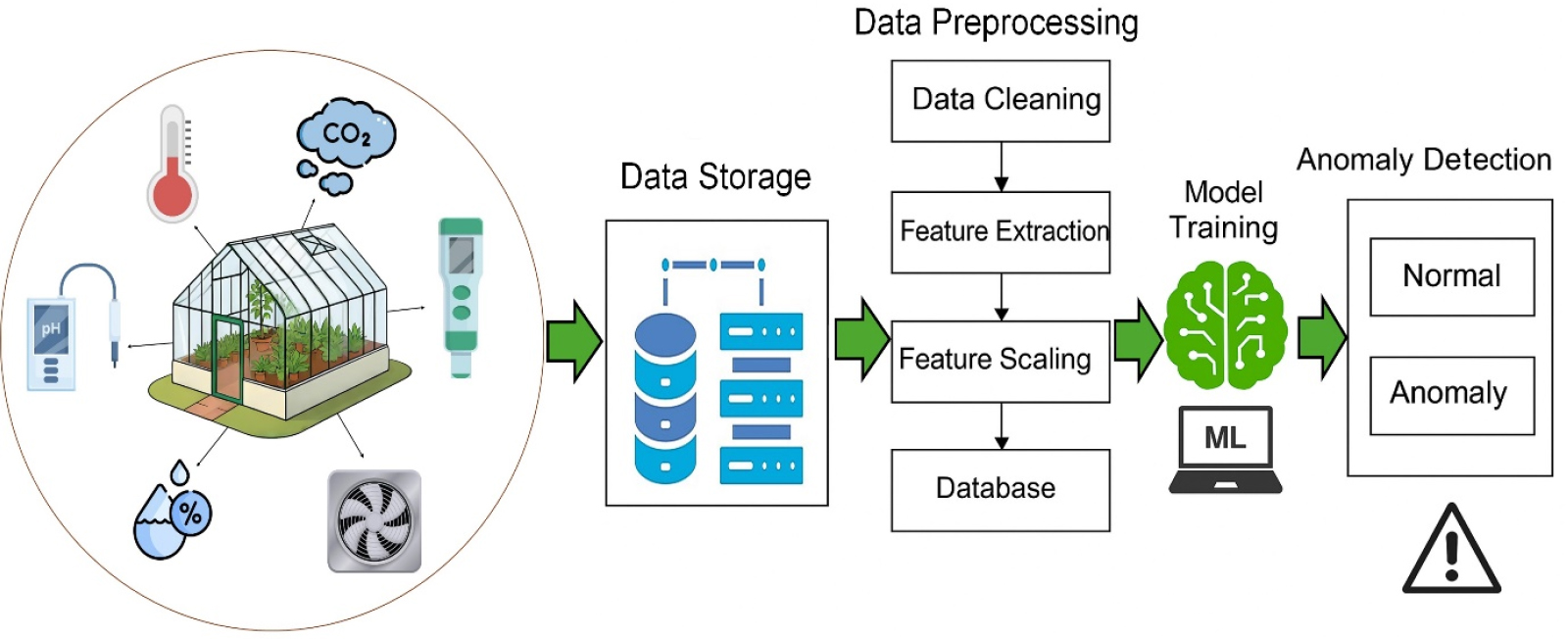
AI and ML have emerged as transformative technologies in the domain of smart greenhouses. These techniques enable precise monitoring, prediction, and optimization of various parameters critical to greenhouse operations. A machine learning based anomaly detection system is shown in Figure 4. Among the ML approaches, supervised learning and unsupervised learning models are widely utilized for anomaly detection, predictive maintenance, and operational efficiency improvements in ICT components within smart greenhouses.
Supervised ML such as SVMs, decision trees, and neural networks make use of labeled datasets to achieve the classification of anomalies. Abid et al. (2024) implemented Support Vector Machines (SVMs) within an IoT-based greenhouse system, achieving a 92% accuracy rate in detecting temperature drifts greater than 1°C. Their model was trained on 50,000 labeled samples and demonstrated a response time of 50 milliseconds. Similarly, Rosero-Montalvo et al. (2023) developed a supervised learning approach using Decision Trees and Neural Networks to identify sensor noise within a ±3% relative humidity margin, attaining 98% precision and a 30-millisecond detection time, while also reducing false positives by 18%. In another study, Morales-García et al. (2024) integrated neural networks into the Greenhouse system to detect actuator delays exceeding 200 milliseconds, leading to a 15% improvement in automation timing. While supervised learning algorithms can deliver high performance when trained on quality data, they typically require extensive labeled datasets (Yang et al., 2022). Table 2 illustrates some supervised learning models that used to predict anomaly detections.
Table 2.
Supervised learning models to predict anomaly detections.
| Model/Algorithm | Application | Accuracy (%) | References |
| Support vector machines (SVM) | Fault detection in sensors | >90 | Barbosa et al. (2015) |
| Convolutional neural network (CNN) | Fault-tolerance | 83.4 to 89.7 | Shekarian et al. (2024) |
| Neural network (NN) | Automatic fault detection and classification | 93.0 | Hojabri et al. (2022) |
| Particle swarm optimization (PSO) | Detect and evaluate events | - | Guan et al. (2021) |
| Support vector machines (svm) | Fault detection | 99.7 | Barkhi et al. (2024) |
|
Radial basis function neural network (RBFNN) | Detection of the optimal setpoints | - | Abbood et al. (2023) |
Unsupervised learning includes the model that discovers the patterns in the absence of labeled data and is aimed at separating normal cases from outliers/grand cases, etc. Benameur et al. (2024) utilized the Isolation Forest algorithm to detect temperature anomalies exceeding 2°C above the mean, achieving a 93% accuracy rate with processing times under 50 milliseconds, even on devices with limited memory. As highlighted by Zou et al. (2023), while unsupervised methods are robust and can generalize across different anomaly types without retraining, they may still overlook subtle deviations. This limitation is further echoed by Chicaiza et al. (2024), who noted that such models may fail to detect fine-grained anomalies without additional tuning. Table 3 summarizes different unsupervised learning models that used to predict anomaly detections.
Table 3.
Comparative performance of machine learning and clustering algorithms for fault and anomaly detection applications in smart systems.
| Model/Algorithm | Application | Accuracy (%) | References |
| Principal component analysis (PCA) | Fault detection and diagnosis | - | Elshenawy et al. (2021) |
| Self-organizing map (SOM) | Intrusion detection | - | Oh and Chae (2008) |
| Fuzzy C-means | Inference intrusion detection | - | Zhou and Fang (2009) |
| One-class support vector machine | Anomaly detection | 91.36 | Agyemang (2024) |
| K-means | Anomaly detection | 57.81 | Syarif et al. (2012) |
| Improved K-means | Anomaly detection | 65.40 | |
| K-medoids | Anomaly detection | 76.71 | |
| EM clustering | Anomaly detection | 78.06 |
Deep learning approaches
Recent advancements in deep learning have significantly enhanced the ability to process large-scale sensor data in smart greenhouses, particularly for anomaly detection and fault prediction. Techniques such as Convolutional Neural Networks (CNNs), Long Short-Term Memory (LSTM) networks, and autoencoders have proven effective in handling high-dimensional data and identifying subtle patterns indicative of system irregularities (Guo and Feng, 2024; Joaquim et al., 2022). The application of these methods has notably improved the precision of anomaly detection systems within smart greenhouse environments (Kim et al., 2023). To address the complex challenges in monitoring ICT components, hybrid AI models have emerged, combining multiple algorithms to leverage their individual strengths (Guesbaya et al., 2023). These approaches often incorporate optimization techniques or fuzzy logic into machine learning frameworks, thereby increasing system robustness and adaptability to dynamic operational conditions (Lee et al., 2023).
Spatial-temporal anomalies are often captured using deep learning models, with CNNs and LSTMs being particularly effective. Cheng et al. (2022) applied CNNs to analyze irrigation pressure distribution over a 10 m² area, successfully detecting spatial anomalies such as uneven pressure with a 94% accuracy and a processing latency of just 100 ms. Similarly, LSTM networks have demonstrated strong performance in modeling temporal patterns, achieving 96% accuracy in predicting humidity drops and preemptive fault detection up to 12 hours in advance (Puder et al., 2024). Moreover, Morales-García et al. (2024) introduced GreenhouseGuard, a system utilizing both CNNs and LSTMs to model CO₂ concentration trends (600–1000 ppm), achieving 97% prediction accuracy with a computational load of only 10 GFLOPS. Despite their effectiveness in handling complex scenarios, deep learning models typically require substantial computational resources (Abdo-Peralta et al., 2024).
Edge AI incorporates lightweight deep learning models or compressed versions of traditional architectures such as MobileNet, Tiny-YOLO, and quantized CNNs and LSTMs to support real-time inference under limited computational resources (Jouini et al., 2024). Edge AI has proven effective in detecting both spatial and temporal anomalies directly at the sensor node level. Sinha et al. (2025) deployed a CNN-LSTM hybrid model on an edge device to detect irregularities in microclimatic conditions, achieving 99.87% accuracy, 99.89% precision, and 99.85% recall with a low false positive rate of 0.13%. Similarly, Kondaveeti et al. (2024) demonstrated that federated learning approaches, where models are trained collaboratively across distributed edge devices, can achieve robust anomaly detection while preserving data privacy and reducing cloud traffic.
Challenges and future directions
Despite the promising advancements in ICT-based monitoring and anomaly detection for smart greenhouses, several challenges persist that hinder large-scale deployment and consistent performance. One significant issue is the lack of standardization in communication protocols and data formats across different sensors and platforms (Abdo-Peralta et al., 2024). This interoperability gap can lead to integration difficulties, increased system complexity, and higher deployment costs (Guo and Feng, 2024). Additionally, the heterogeneity of devices often results in inconsistent data quality, which adversely affects the performance of AI and machine learning models used for anomaly detection (Morales-García et al., 2024). Addressing these issues requires the development of open, standardized frameworks for data exchange and device compatibility.
Another major challenge is the limited availability of labeled datasets for training accurate anomaly detection models (Puder et al., 2024; Cheng et al., 2022). Many smart greenhouse deployments rely on custom setups, making it difficult to generalize findings or reuse data. Furthermore, data scarcity is particularly problematic in detecting rare events such as equipment failure or early signs of plant disease, which may not occur frequently enough to support effective model training (Joaquim et al., 2022). Future research should focus on data augmentation methods, synthetic data generation, and federated learning approaches that enable collaborative model training without compromising data privacy.
Real-time monitoring and anomaly detection also face computational and energy constraints, especially in remote or resource-constrained greenhouse environments. High-resolution imaging, continuous sensing, and complex AI models can demand significant processing power and energy, which may not be feasible for all setups. Edge computing and low-power AI models have emerged as promising solutions to reduce latency and bandwidth usage while maintaining performance (Puder et al., 2024; Cheng et al., 2022). However, these approaches need further optimization to balance power efficiency with the accuracy and responsiveness required in dynamic agricultural conditions. Future research directions should emphasize the development of explainable AI models to enhance trust and transparency in decision-making. This is crucial for encouraging adoption among farmers, many of whom may not have a technical background. Additionally, multi-modal fusion techniques—integrating data from visual, thermal, humidity, and soil sensors—can provide a more comprehensive view of greenhouse conditions and improve anomaly detection accuracy. Long-term, the integration of blockchain for secure data sharing, digital twins for predictive maintenance, and self-healing sensor networks could revolutionize smart greenhouse management, paving the way toward fully autonomous and resilient agricultural systems.
Conclusions
This review highlighted the important role of ICT in enhancing monitoring and anomaly detection in smart greenhouses. Technologies such as Wireless Sensor Networks (WSNs), IoT, AI, and Computer Vision have significantly improved system efficiency, accuracy, and responsiveness. These tools enable real-time data acquisition, automated decision-making, and precise environmental control, ultimately optimizing plant growth and boosting yields.
ICT integration also strengthens agricultural resilience by allowing early detection of system faults, environmental changes, and biological threats like pests or diseases. Smart systems reduce labor reliance, maintain production consistency, and support sustainable operations. Machine learning-based anomaly detection further provides predictive insights essential for proactive management amid dynamic climate conditions.
Future research should address interoperability challenges, improve integration of heterogeneous data, and standardize communication protocols. Emphasis is also needed on developing energy-efficient, robust anomaly detection algorithms capable of functioning across varied greenhouse conditions. Practical applications must consider user-friendly interfaces, affordability for small-scale farmers, and cybersecurity for remote operations. Advancing ICT solutions and fostering interdisciplinary collaboration will be critical to maximizing the potential of smart greenhouses in achieving sustainable and secure food production.