


Introduction
Microplastic in Soil and Terrestrial Environments
Types and sources of microplastic in soils
Global distribution and abundance of microplastics
Fate and Transport of Microplastics in Agricultural Soils
Transport and migration of MP in soil ecosystem
Interaction between microplastics and other pollutants
MP Effect on Soil Biota
Impact on soil animals
MPs and soil organic matter
Uptake of MPs by plants
MPs on soil chemistry
Challenges of MP Separation and Analysis
Separation and analysis
Analytical methods
Visual observation
Scanning electron microscopy (SEM)
Fourier transform infrared (FTIR) and Raman spectroscopy
Liquid chromatography-tandem mass spectrometry
Thermochemical method coupled with mass spectrometry
Laser direct infrared spectroscopy
Thermogravimetric analysis
High-performance liquid chromatography
Proton nuclear magnetic resonance spectroscopy (1H NMR)
Thermal extraction desorption gas chromatography-mass spectrometry
Differential scanning calorimetry
Microplastics as Emerging Pollutants for Agricultural Soils
Microplastics and plastic mulch as pollutants for soils
Microplastics as vectors for pesticide and heavy metal
Microplastics as adsorbent for related pollutants
Removal and degradation of microplastics from soil
Physical removal of microplastics
Microbial microplastic degradation
Chemical technologies for microplastic’s removal and degradation
Factors and Mechanisms Affecting the Degradation of Plastics/MPs
Analysis of the Advantages and Limitations of Different Removal and Degradation Techniques
Research Challenges Regarding Sampling and Analysis
Intensive Research on Transport and Fate of MP in Soil
Need Phytoremediation and Biodegradation
Standardization of Microplastic Separation and Detection Methods
Establishment of Proper Sampling and Pretreatment Procedures
Plant-MP Interaction at the Molecular and Physiological Level
Need More Field-level Evaluation
Need Collaboration on Policy-making to mitigate Microplastic Pollution
Conclusion and Perspectives for Future Work
Introduction
Plastic materials are extensively used in contemporary society for product packaging, manufacturing, construction, and agricultural mulching. The widespread dependence presents significant ecological challenges and potential health risks owing to increased fossil fuel consumption and inadequate waste management practices. Atmospheric microplastics, which are capable of long-distance transport, undergo fragmentation into smaller particles through natural processes. As defined by Thompson et al. (2004), the fragments, measuring less than 5 mm are classified as “microplastics (MPs)” (Thompson et al., 2004). Primary raw polymers constituting MPs include polyethylene terephthalate (PET), polyurethane (PU), polystyrene (PS), polyvinyl chloride (PVC), polypropylene (PP), polyesters, polyethylene (PE) and polyamides (PA, nylon). Ineffective waste management strategies have led to the ubiquitous presence of MPs. The toxicity of MPs is influenced by their chemical structure, additives used during polymerisation, and bonding activity. MPs exhibited a greater abundance and mobility than larger plastic debris. The diminutive size of microplastics facilitates their attachment to other organisms through specific and non-specific interactions, thereby posing environmental risks (Sajjad et al., 2022; Tu et al., 2020). MP pollution is detectable in various environmental media, but is particularly common in soils. Previous studies revealed that soil carries considerably higher MP levels (4–23 times) than marine ecosystems (Chang et al., 2023). Plastic mulch films, sewage sludge fertilizers, landfills, runoff and atmospheric deposition are major sources of MPs in soil, mainly agricultural lands. Soil pollution is also caused by inadequate waste management and anthropogenic activities (Sajjad et al., 2022; Kulkarni and Anantharama, 2024).
MPs can act on their surroundings in the soil and differently affect biotic and abiotic properties depending on particle characteristics and ecological conditions. Soil is a complex environment which both contains organic matter and minerals. Potential threats of MPs on properties, biota and microbe communities have been ecotoxicological effects in studies which may result in lethal effects (Schöpfer et al., 2020; de Souza Machado et al., 2018). Soils can concentrate and modify heavy metals and persistent organic pollutants via MP persistence and large surface area (Wang et al., 2020b). MP pollution might lead to physicochemical soil changes related to its structure and chemical compositions through leached hazardous additives, under critical stress of terrestrial environment (Möller et al., 2020; Qin et al., 2021; Uwamungu et al., 2022; Zhang et al., 2022b). However, developing a reliable soil sampling procedure is important for investigating MPs. At this point, there is no agreed standard method, and most of the work has been on pre analysis and analytical techniques, with little on field sampling.
Accurate field soil sampling is essential for studying soil MP pollution because inaccuracies can lead to unrepresentative or unreliable data (Thomas et al., 2020; Chia et al., 2024; Lee et al., 2023). Quantifying soil MP pollution is necessary to understand its environmental behavior and ecological risks (Luo et al., 2022; Chen et al., 2020; Gong and Xie, 2020).
MPs are small, hydrophobic particles with large surface areas that interact with chemicals through various sorption mechanisms, leading to complex contamination and affecting their bioavailability (Wang et al., 2020b). This process depends on MP characteristics, contaminant properties, and environmental conditions. Understanding the combined risks of MPs and pollutants is vital, particularly because MPs are resistant to degradation and persist in the environment. Chemical additives or pollutants attached to MP surfaces can migrate within soil ecosystems, and cause ecotoxicological hazards (Zhang et al., 2022b; Fred-Ahmadu et al., 2020; Fu et al., 2021; Uwamungu et al., 2022; Pérez-Reverón et al., 2022; Ye et al., 2022; Yang et al., 2022; Thomas et al., 2020; Chia et al., 2024; Chen et al., 2020; Ahmed et al., 2022; Fakour et al., 2021; Zhang et al., 2023). MPs accumulation in soil affects soil properties, plant uptake and toxicity (Chang et al., 2022b). MPs directly and indirectly affect plant growth by altering soil properties and microbial communities (Ren et al., 2022). Although recent meta-analyses have examined the effects of different types and sizes of MPs on plant growth, the impact of MPs’ chemical composition and biodegradability remains unclear. Studies have suggested that MPs can harm soil fauna by inducing oxidative stress and DNA damage, thereby reducing survival rates (Liu et al., 2023; Jia et al., 2024). Compared to physical and chemical approaches, ecofriendly bioprocesses like phytoremediation represent promising contributions to a sustainable circular economy (Paul et al., 2024). The application of phytoremediation on a systematic basis in an instrumental framework will improve its efficiency. The methodical analysis offered in this work will help researchers to understand that which research directions are preferable according to the analysis provided in this study (Paul et al., 2024).
Fossil fuel dependence not only contributes to greenhouse gas emissions, but also undermines the large functioning and important role of microorganisms in nutrient cycling, carbon sequestration, and soil structure formation. Microbial diversity was strongly influenced by soil pH and organic matter content. It turns out climate change and pollution have big impacts not just on climate but also on soil health and microbiome diversity. MP pollution is a novel stressor that can mediate nutrient cycling and influence the ecological stability and functional management of terrestrial ecosystems. The effects of MPs on soil microbial activity and nutrient cycling have been studied quite recently by (Joos and De Tender, 2022; Huang et al., 2022).
Degradation of MPs in different environments is a complicated process that requires both physical chemical and microbial factors. MPs are more resistant to microbial attack than other degradable materials, but microbial degradation is important in their transformation. MPs offer a surface for colonisation and growth plus a potential carbon source, provide a unique ecological niche for the existing microorganism. Researchers isolate numerous microbes (fungi and bacteria) that can degrade MPs isolated from different environmental samples to examine degradation patterns of MPs. Information on how microorganisms bring out MP degradation has been compiled into pure bacterial cultures, pure fungal cultures, bacterial consortia and biofilms associated with the enzymatic reactions made by these microorganisms. This review addresses degradative effects of these microorganisms on MPs prior and after degradation process (Yuan et al., 2020; Othman et al., 2021; Zhai et al., 2024).
The current findings in the defined plantation of the MPs ecosystem require a more comprehensive evaluation to guide future research efforts aimed at understanding the MPs in the soil ecosystem. The sources, distribution, fate and transport of MPs in the soil are reviewed in detail in this review. It emphasises analytical methods, ecological risks (the effects of MPs on soil properties, plants, and microorganisms) and future research directions to elucidate the impacts of MPs on terrestrial ecosystems and sustainable remediation technologies (Amesho et al., 2023; Munhoz et al., 2023). The extant knowledge base should be subjected to a comprehensive examination to facilitate the development of coordinated policies and strategies that can effectively deal with this waste management challenge.
Microplastic in Soil and Terrestrial Environments
Types and sources of microplastic in soils
Plastics are poorly utilized and managed, so their presence in soils is largely attributable to inadequate utilization and management of plastics. Primary and secondary MPs in the soil are characterized by their initial size. A number of industrial or commercial products utilize primary MPs, including plastic microbeads and nanoparticles, such as detergents and cosmetics, and there is atmospheric input to soil (Xu et al., 2020). Secondary MPs result from the degradation of large plastic items, such as plastic film and household waste, through processes such as solar ultraviolet irradiation or physical and biological breakdown (Andrady, 2011). MPs are further categorized by size as large (3-5 mm), medium (1-3 mm), and small (<1 mm)(Horton et al., 2017; Liu et al., 2018). They are essential for classifying soil transport and cellular absorption potential. The World Health Organization (WHO) notes that most plants and soil organisms do not absorb MPs larger than 0.15mm so there are little health risks (WHO, 2019). Nevertheless, nanoscaled nanoparticles and nanoplastics (<1 µm) enter cells, which is a serious cause of environmental concern (Li et al., 2022).
Research suggests that terrestrial environments can be primary sources of MPs in the aquatic environment (Horton et al., 2017; Karbalaei et al., 2018; Vivekanand et al., 2021) but currently there is no immediate solution to preventing their proliferation. Major sources of MPs in croplands include plastic mulch films, municipal solid waste, compost, sewage sludge, plastic-coated fertilizers, and atmospheric deposition (Tian et al., 2022). Plastic mulch film, composed of polyethylene (PE), are widely utilized in agriculture because of its economic benefits such as increased yield, enhanced fruit quality, and improved resource efficiency (Gao et al., 2019; Mansoor et al., 2022). In 2016, the global market for plastic mulch films in agriculture was 4 million tons, with a projected annual growth rate of 5.6% by 2030 (Huang et al., 2020).
The main problem is that films are too thin (approx. 0.008−0.05 mm) to remove from soil after harvest (Li et al., 2022). It is shown that, because of the lack of recycling infrastructure for soil contaminated plastics, their retrieval is economically and practically unfeasible. Residual plastic mulch disintegrates under UV irradiation and biological degradation during tillage operations, resulting in macro, micro and nanoplastics in soil (Qiang et al., 2023). That biosolids contain large amounts of plastic pollution (Qiang et al., 2023) has been already passed in the news. In the sludge from water treatment, MPs are retained at 70% to 99% in the sludge (Hassan et al., 2023) of household wastewater thus MPs concentrations are 103 to 105 particles/kg (Rodríguez-Seijo et al., 2019). The implications of this make me question whether recycling the nutrients through biosolids outweighs the risk to plastic pollution (Harley-Nyang et al., 2023).
Compost as a soil amendment can also be used as a source of MPs contamination. Compost can also be facilitating nutrient recycling, biological waste however may have plastic residues as a result of improper dumping and lack of sorting (Vithanage et al., 2021). At a composting facility in Bonn, a study identified visible plastic fragments of 2.38 – 180 mg/kg and thus compost as a considerable primary source for MPs in soil. The degradation of plastic film mulch used in agriculture also contributes to soil contamination by MPs (Huang et al., 2020), as do polymer-based slow release fertilizers and pesticides (Wang et al., 2019). In addition, plastic powders and resin pellets can reach terrestrial ecosystems because of poor waste management (Boyle and Örmeci, 2020). The MPs found in the environment have typically been identified as residues of plastic processing and recycling facilities that degrade to be released into the environment (Stapleton et al., 2023).
Global distribution and abundance of microplastics
Worldwide plastic usage and distribution of MPs follows variability, owing to respective environmental and anthropogenic impacts (Imhof et al., 2017; Veerasingam et al., 2020). Their dispersal (Felismino et al., 2021; Kye et al., 2023) is contributed to by wave patterns, tides, storms, wind, and stream dynamics. Just as much plastic debris is built up by human activity. An estimated 10 billion tons of plastic have been produced between 1950 and the present, of which 55% end up in landfills and on land or at sea (Geyer et al., 2017). Just over 80 per cent of global marine plastic pollution is attributable to land based sources (Kosior and Crescenzi, 2020). The distribution of MPs in the environment is given in Table 1.
Table 1.
Global distribution and abundance of MPs in different countries.
| Country | Sample Location | MPs abundance | Sample type | Composition |
Identification Techniques | References |
| China | Bohai Sea |
103-163 items/kg |
Beach sediments |
PE, LDPE, HDPE, PP, PET, PS |
Microscope, FTIR, Scanning Electron Microscpe (SEM) | Yu et al., 2016 |
| China |
Changjiang Estuary |
20-340 items/kg | Sediments |
Rayon, AC, PET, PES, PS |
Microscope, µ-FTIR, ATR | Peng et al., 2018 |
| Hong Kong | Coastal beaches |
49-279 items/kg |
Beach sediments | LDPE, HDPE, PP | ATR-FTIR | Tsang et al., 2017 |
| China | Shanghai |
802 ± 594 items/kg | Sediments |
PP, PE, Rayon, cotton |
Microscope, µ-FTIR, ATR | Peng et al., 2018 |
| China |
Three Gorges Reservoir |
25-300 items/kg |
Sediments (sandy) | PE, PP, PS |
Visual Identification using dissecting Microscope, µ-Raman spectroscopy | Di and Wang, 2018 |
| China | Beijiang River |
178-544 items/kg | Sediments |
PE, PP, copolymer, paint particle |
Digital handheld microscope, , µ-FTIR, SEM-EDS | Wang et al., 2017 |
| China | Shanghai |
78.0 ± 12.91 items/kg | Vegetable fields | PE, PP, PES | µ-FTIR | Liu et al., 2018 |
| China | Shanghai |
10.3 ± 2.2 items/kg |
Rice-fish coculture ecosystem | PE, PP |
Dissecting Microscope, µ-FTIR | Lv et al., 2019 |
| China | Loess Plateau | <0.54 mg/kg |
Agricultural Field (silty clay to loam) | PE, PP |
Camera connected to a microscope | Zhang et al., 2018 |
| China | Yunnan |
7100-42960 items/kg |
Tree planted soil | NA |
Visual Identification using 40× dissection microscope | Zhang and Liu, 2018 |
| China | Hangzhou Bay |
571.2 items/kg |
Mulching cropped soil | NA |
Stereomicroscopy and µ-FTIR | Zhou et al., 2020a |
| Italy | Sicily |
160 ± 31 items/kg | Sediments | NA |
Visual Identification using a stereo-microscope and Raman spectroscopy | Lots et al., 2017 |
| Italy | Lido di Dante |
1512 ± 187 items/kg | Sediments | NA |
Visual Identification using a stereo-microscope and Raman spectroscopy | Lots et al., 2017 |
| Spain | Denia |
156 ± 29 items/kg | Sediments | NA |
Visual Identification using a stereo-microscope and Raman spectroscopy | Lots et al., 2017 |
| Spain | Barcelona |
148 ± 23 items/kg | Sediments | NA |
Visual Identification using a stereo-microscope and Raman spectroscopy | Lots et al., 2017 |
| France | Cassis |
124 ± 36 items/kg | Sediments | NA |
Visual Identification using a stereo-microscope and Raman spectroscopy | Lots et al., 2017 |
| Greece | Pilion |
232 ± 93 items/kg | Sediments | NA |
Visual Identification using a stereo-microscope and Raman spectroscopy | Lots et al., 2017 |
| Switzerland | - |
55.5 mg/kg or 593 items/kg | Floodplain soil | PE, PS, PVC | FTIR microscopy | Scheurer and Bigalke, 2018 |
| USA | Kenilworth Park |
1270 ± 150 items/kg |
Tidal freshwater wetland | NA | Microscope, FTIR-ATR | Helcoski et al., 2020 |
| USA |
Fort Sumter Monument |
306-443 items/kg |
Beach sediments | PET | FTIR | Yu et al., 2018 |
| USA |
Timucuan Ecological Reserve |
196-253 items/kg |
Beach sediments | PET | FTIR | Yu et al., 2018 |
| Canada | Ontario |
8.7 × 10³ items/kg and 1.4 × 10⁴ items/kg | Biosolid | NA |
Stereomicroscope, ATR-FTIR | Crossman et al., 2020 |
| Chile |
Santiago Metropolitan Region |
306 ± 360 items/kg |
Cropland soil (loam to sandy loam) | NA |
Stereomicroscope at 20×, µ-FTIR | Corradini et al., 2021 |
| South Korea | Soya Island |
46,334 ± 71,291 items/kg | Surface water | EPS, PP, PE | Microscope, FTIR | Kim et al., 2015 |
| South Korea | Heungnam Beach |
976 ± 405 items/kg |
Beach sediments | PS | Forceps | Heo et al., 2013 |
| India | Andaman |
414 ± 87 items/kg | Sediments | PP, PVC | Raman spectroscopy | Patchaiyappan et al., 2020 |
| India | Port Blair Bay |
78 ± 9 to 137 ± 22 items/kg | Sea salt | PET, PP, PE, PS |
Stereomicroscope, ATR-FTIR | Goswami et al., 2020 |
| Bangladesh | Maheshkhali |
78 ± 9 to 137 ± 22 | Sea salt | PET, PP, PE, PS | NA | Goswami et al., 2020 |
Fate and Transport of Microplastics in Agricultural Soils
Transport and migration of MP in soil ecosystem
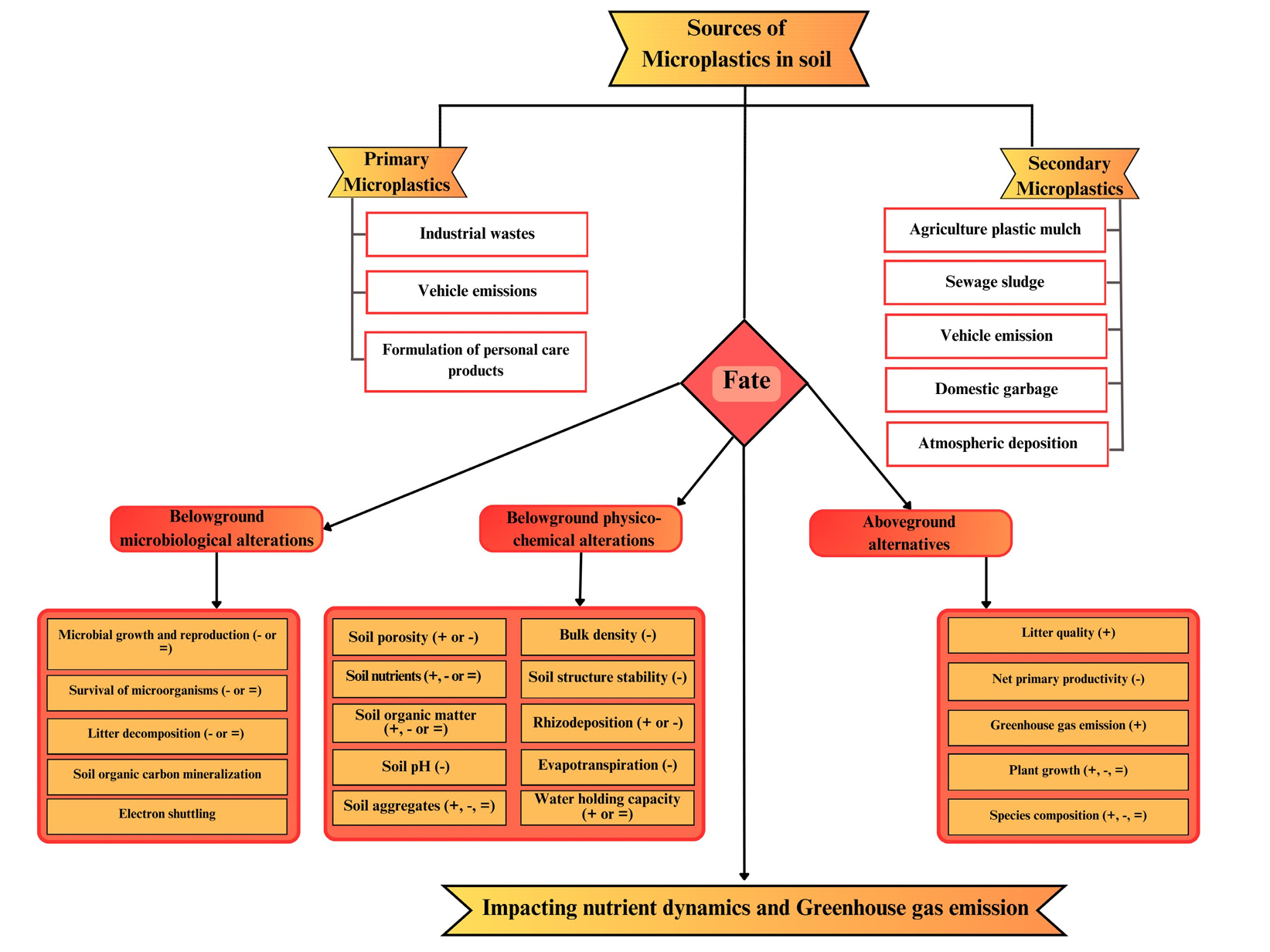
MPs can change the function of terrestrial soils. They can reduce soil infiltration capacity, or, more importantly, they can reduce moisture availability for plant growth by blocking soil pores as larger MPs. It may be that these decreased infiltration rates translate, through increased runoff, erosion, soil nutrient input, and overall ecological productivity all contribute to a decline (Kumar et al., 2023; Wang et al., 2020c).
MPs are transported through a number of pathways such as advection, adsorption, aggregation, degradation, diffusion and settling, and move by way of air, wind and water to deeper soil regions. The macro and mesopores transfer MPs from the topsoil (0–30 cm) to the deep soil. Settling and diffusion are influenced by the density, whereas the contact angle determines the interparticle forces in natural particles. Decomposed plant roots can support the retention of such large MPs, providing macrospores. The translocation of MPs in deeper layers is therefore enhanced by agricultural ploughing. Potatoes, carrots, turnips and gingers may help vertical MP movement. MPs’ downward movement is further helped by wet-dry climate cycles and tillage practices (Keller et al., 2020). In reaching depths >70cm, leaching plays a major role (Kumar et al., 2023; Wang et al., 2020c; Li et al., 2020b).
MPs translocation and deposition in heterogeneous soils are complex processes (Kumar et al., 2023; Wang et al., 2020c; Zhou et al., 2020b). Soil texture and porosity have an effect on MP transportation. They were more mobile in porous soils than the larger particles. Leaching and, thus, MP transport was enhanced by high macrospore abundance and soil porosity. The movement of MPs in sand quartz is affected by organic matter, biofouling, saturation and roughness of the surface. At high ionic strength, the pores widen so that MPs can move faster than MPs in low density. Transportation is affected by MP shape, polymer, and interaction with organic matter (Fig. 1). The fate of MPs is also affected by soil type, temperature and water status. More work is required to unravel what intrinsic properties and external factors play in MP migration in the soil (Fig. 1). The soil surface is entered by MPs when agricultural practices, precipitation, and soil organisms introduce MPs (Zhou et al., 2020b; Rose et al., 2023; Quik et al., 2023; Ren et al., 2022; Li et al., 2024; Ricardo et al., 2021).
Interaction between microplastics and other pollutants
MPs can interact with pollutants through aggregation, adsorption, and transformation, primarily via sorption processes involving adsorption and absorption. Adsorption encompasses chemical bonding between MPs and other substances, ranging from van der Waals to covalent bonds, while absorption predominantly involves van der Walls bonds. These interactions enable MPs to function as carriers of harmful substances, affecting organisms upon ingestion or inhalation. Factors such as hydrophobic interactions, charge, color, age, pH, density, weathering process, particle size, composition, and crystallinity influence contaminants sorption onto MPs (Fig. 2). Comprehension of these interactions is crucial for sustainable MP management and the development of water treatment methods. Research on the toxicity of transformation products from MP treatments and other contaminants is essential for identifying effective removal methods (Ricardo et al., 2021; Mohana et al., 2022; Fu et al., 2021; Chang et al., 2022a).
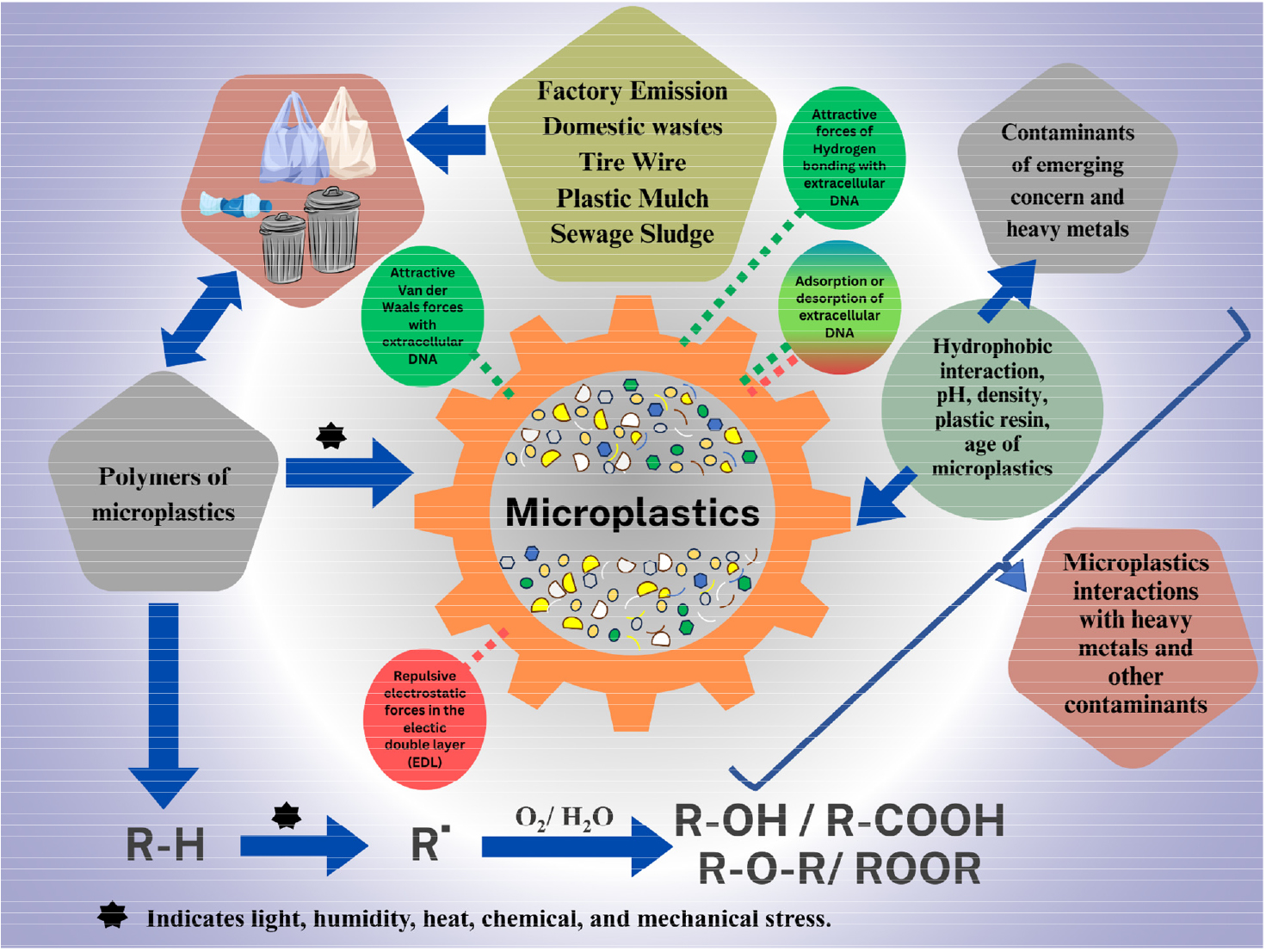
Fig. 2.
Possible interaction of MPs with biomolecules by the action of different attractive (green dotted lines) or repulsive (red dotted line) forces. Polymers of MPs can be altered due to multiple environmental factors and eventually interact with heavy metals and other contaminants present in soil.
MP Effect on Soil Biota
Impact on soil animals
MPs alter organic contaminant toxicity to soil animals in both the synergistic and antagonistic effects. In soil, organic pollutants and MPs can interact, and the presence of MPs can further enhance the toxicity of organic pollutants by means of a ‘carrier effect’. In particular, MPs contribute to the local enrichment of organic pollutants achieved through the adsorption of the pollutants, thus increasing their contact with organisms and bioavailability. The concentration gradient between MPs and soil is a determinant for the accumulation of organic pollutants by MPs. Limited research has been done on the combined toxicity of MPs and organic contaminants to soil animals (Chang et al., 2022a; Lwanga et al., 2022; Wang et al., 2020b; Fred-Ahmadu et al., 2020).
MPs and microbes
Nitrogen cycling, pollution degradation and soil health all depend upon soil microbes. Soil conditions may be influenced by MPs, and thus the composition and function of soil microorganisms (Fig. 3) (Zhang et al., 2021). MPs have high distribution, small size and large volume and can interact with both biotic and abiotic factors of agroecosystems, they can cascade effects on the food chain and ecosystems (Panigrahi et al., 2019). Soil microplastics can host bacterial and fungal communities in their membranes, which hinder their movement or dispersion (Fan et al., 2022; Hou et al., 2021). Nevertheless, MPs can inhibit microbial activities and retard reproduction and development because of the addition of additives and adsorbed pollutants (Hämer et al., 2014). Microplastics can boost soil microbial population and change its composition (Ren et al., 2020). The effect of microplastics (2%), lead, and zinc showed reducing diversity and/or abundance of bacterial communities in the exposed samples. This subsequently increases the specific taxa of the microbial community (Feng et al., 2022). MPs with different effects on microbial communities are possible. PMF and PVC microplastics support certain microbial populations, and PE microplastics may substantially modify the bacterial ecosystem (Guo et al., 2021). Environmental conditions can be altered by MPs in soils and soil organisms can directly consume MPs (Rong et al., 2021). Long-lasting effects of altered microbial communities on soil health and associated plant communities (Qiao et al., 2019; Li et al., 2021). For example, MPs can increase dodecanal levels in rhizosphere soil, negatively impacting plant root fungal growth and decreasing soil microbial diversity and root symbiont abundance (Wang et al., 2020a; Yu et al., 2021b).
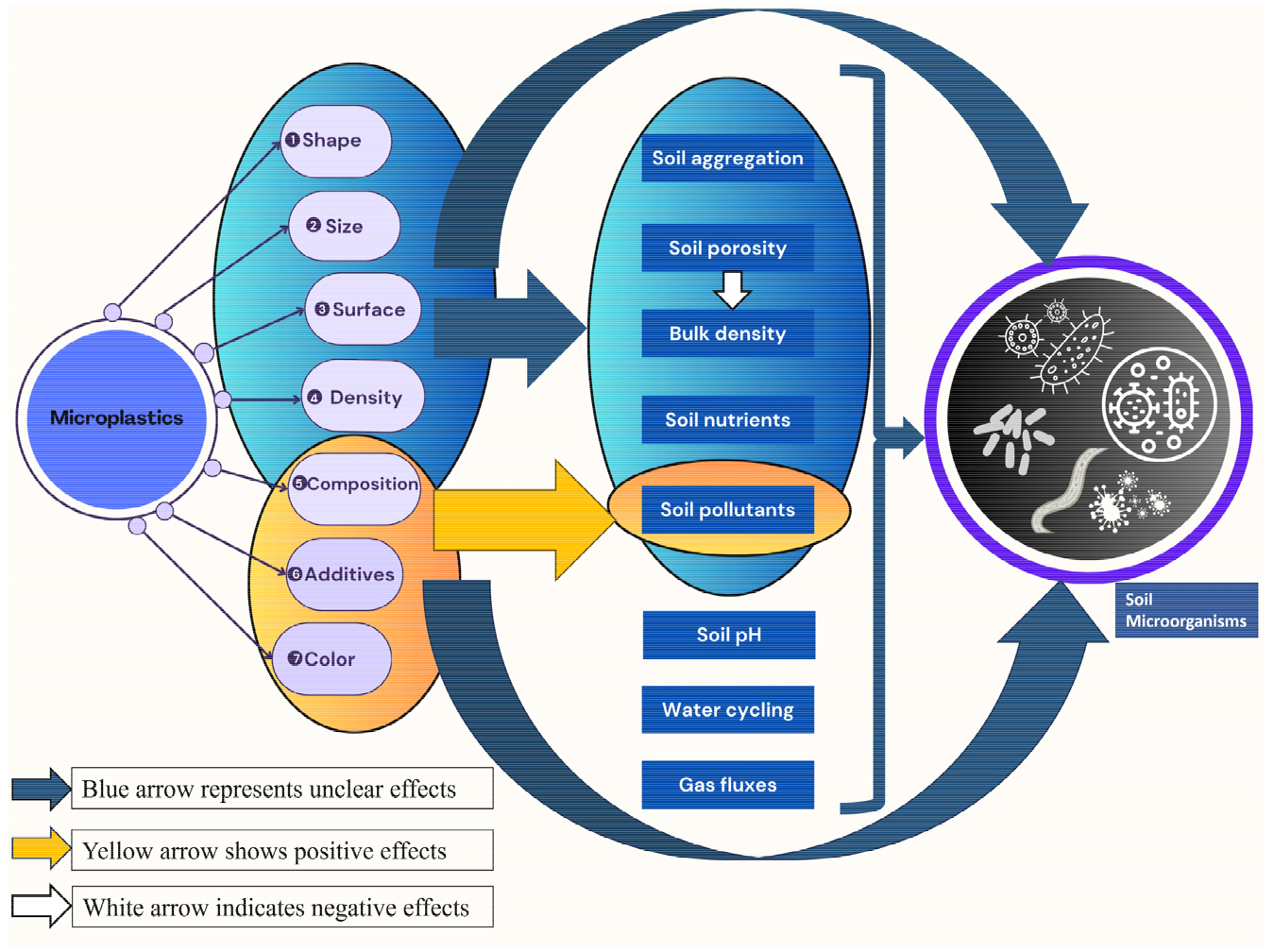
Fig. 3.
Impact of multiple attributes of MPs on soil health and functions, and their interaction with soil microorganisms. Capsule shapes exhibit specific properties of MPs and the blue square shapes represent certain soil properties. These soil properties can be influenced by MPs in different ways (positive or negative or unclear) which have been indicated by colored arrows.
MPs and soil organic matter
Soil organic matter is important to support soil microbes and fauna and is important to soil health (Obalum et al., 2017; Rao et al., 2019). Polypropylene MPs contaminated soil showed increased levels of soil organic matter and nutrients (Liu et al., 2017). In a straight manner, MPs in soil can influence soil organic matter through damaging soil aggregate stability (Zhang and Zhang, 2020). Soil disrupted by MPs inhibits the formation of soil aggregates (Liang et al., 2021). Organic matter levels are controlled by soil microorganisms that breakdown organic material (Abbott et al., 2022). The organic content of soil can be affected by MPs (Rillig et al., 2021). Carbon-based microplastics could have already been supporting carbon storage (Rillig, 2018). Organic Carbon and nitrogen in the labile pool are fundamental drivers of soil ecosystem functions (Blanco-Moure et al., 2016; Muqaddas et al., 2019). Root exudates and soil microorganisms influence soil microbial activity more significantly than total soil organic matter (SOM) (Bongiorno et al., 2019) derived from soil-dissolved organic carbon (DOC) and dissolved organic nitrogen (DON). Soil extractable carbon, including polysaccharides or lignin from decomposition of soil organic matter and soil microbial biomass, is strongly associated with soil phospholipid fatty acids (Bongiorno et al., 2019; Jokela et al., 2009).
Uptake of MPs by plants
Plants are unlikely to absorb MPs due to their large size and molecular weight, which hinder their penetration through plant cell walls (Teuten et al., 2009). Residual mulch film may damage soil quality and lower crop yields (Liu et al., 2022). The impacts on growth and development by MPs have been shown in earlier studies (de Souza Machado et al., 2019; Zhou et al., 2021). MPs in soils decreased nutrient availability, reduced species diversity and reduced microbial activity (Ibarra-Jiménez et al., 2011), with consequent negative impacts on crop growth and production (Ibarra-Jiménez et al., 2011). MPs move into plant roots through a crack entry mechanism and then transport into shoots, adversely affecting a wide range of plant functions and overall productivity (Li et al., 2020b). The mechanism of this phenomenon can inhibit crop growth and reduce food production (Fig. 4) (Sun et al., 2020). The biomass, leaf, and root traits of Allium fistulosum are significantly affected by three types of MPs: microbeads, micro fragments, and microfibers (de Souza Machado et al., 2019). Both vegetative and reproductive stage MP have negative effects on wheat growth and composition (Qi et al., 2018). The toxicity of MPs is size-dependent, with smaller MPs more harmful (Li et al., 2020c). When nanoplastic particles adhere to seeds, they block pores and prevent nutrients and water uptake by the seeds (Bosker et al., 2019). Through transpiration MPs (<0.2 µm) can adhere to lettuce (Li et al., 2019). MPs (2 µm) were identified in the lateral roots and xylem of wheat (Li et al., 2020b, Li et al., 2019). Passive absorption of organic pollutants during transpiration into plants elicits toxic effects (Yin et al., 2021). The capacity of the plants to absorb organic pollutants in the soil is very high (Maity et al., 2021). Once present, MPs change the toxic behaviour of organic pollutants in soil. Nanoscale MPs < 1 µm can catch pollutants and transfer them into plants, while larger MPs are not taken up owing to their obstructing root pores (Li et al., 2020c).
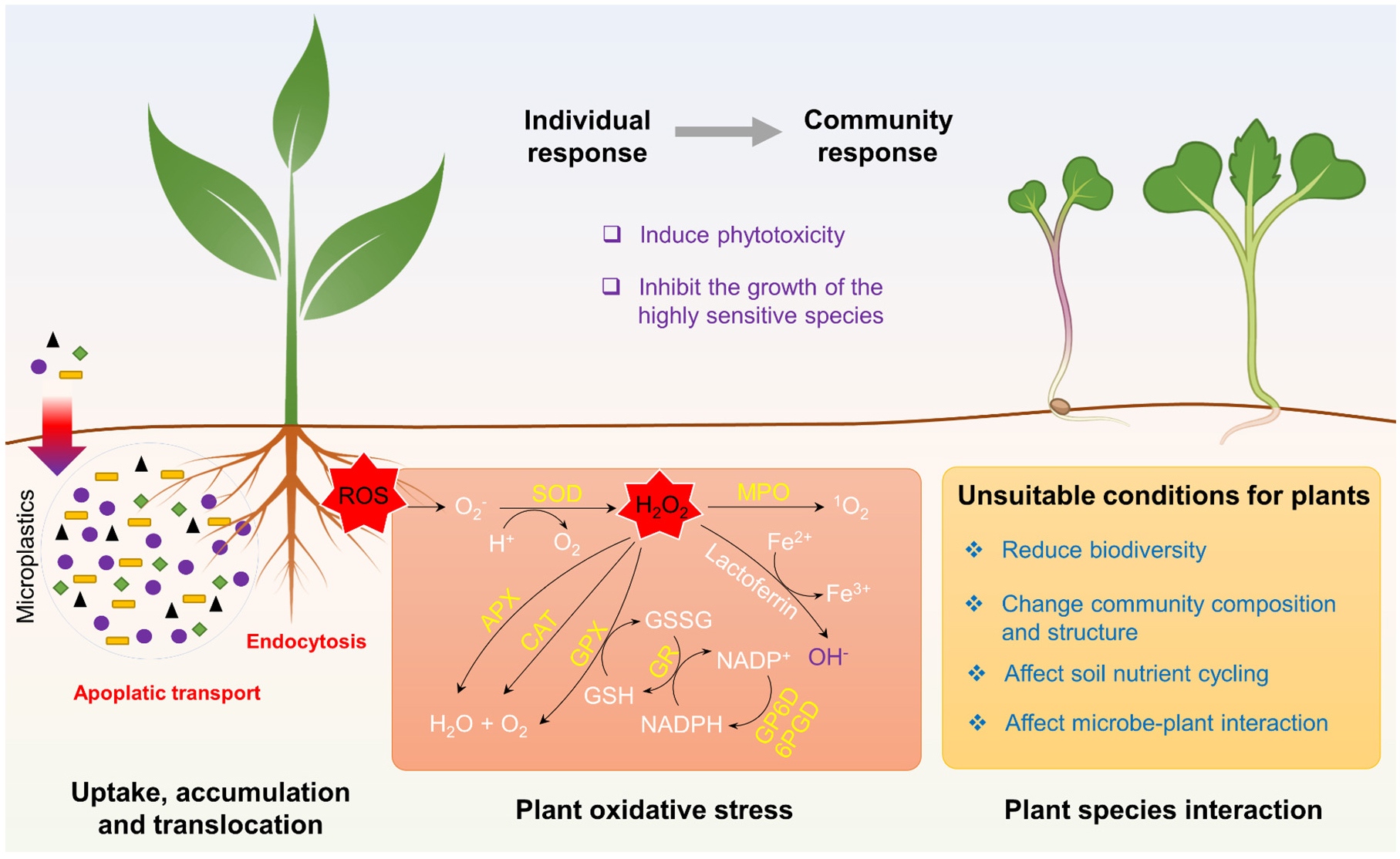
Fig. 4.
An overview of the effects of MPs on plants including uptake, stress, species interaction, and their responses (both individual and community responses). ROS: Reactive Oxygen Species, H2O2: Hydrogen Peroxide, O2-: Superoxide Anions, OH-: Hydroxyl Radicals, 1O2: Singlet Oxygen, SOD: Superoxide Dismutase, MPO: Myeloperoxidase, APX: Ascorbate Peroxidases, CAT: Catalase, GPX: Glutathione Peroxidase, GR: Glutathione Reductase, GP6D: Glucose-6-phosphate Dehydrogenase, 6PGD: 6-Phosphogluconate Dehydrogenase, GSSG: Glutathione Disulfide, NADP+/NADPH: Nicotinamide Adenine Dinucleotide Phosphate.
Submicron MPs (100 to <1000nm) can enter plants through root cracks and move to aerial parts via transpiration (Maity et al., 2021; Yu et al., 2021a). The release of organic pollutants may limit the absorption of larger MPs by plants (Lian et al., 2020). Xu et al. (Xu et al., 2021b) reported that MPs impair phenanthrene absorption in soybean plants by harming roots and leaves. Additionally, MPs exacerbate phenanthrene toxicity at the cellular and molecular levels, impacting phenanthrene dynamics and toxicity in soybeans. The role of rhizosphere microorganisms in the interaction between MPs and organic pollutants has also been suggested, but research in this area is limited (Ren et al., 2020; Zang et al., 2021).
MPs on soil chemistry
Microplastics (MPs) in soils could influence soil pH, electrical conductivity (EC), soil organic matter (SOM) content, and organic carbon storage (Lian et al., 2021; Rillig et al., 2021) through their large surface area and hydrophobicity. Substances such as plasticizers, polycyclic aromatic hydrocarbons (PAHs), antibiotics and Pterostilbenes (PTEs), are known to have harmful effects on the soil and the ecosystem integrity (Sajjad et al., 2022; Baho et al., 2021). The behavior of MPs on soil is dependent on several MPs conditions as their concentration, morphology dimensions and the nature of MPs introduced on the surface (de Souza Machado et al., 2019; Lozano et al., 2021). First, soil microplastics may prevent the functionality of nitrogen cycling enzymes, such as leucine aminopeptidase and N-acetyl-β-glucosaminidase, important factors affecting nitrogen availability and plant growth (Tiwari et al., 2020). They could also affect decomposition enzymes and soil carbon sequestration (Leifheit et al., 2021).
Ecological concerns include MPs’ ability to adsorb and concentrate heavy metals and organic contaminants (Holmes et al., 2012; Mato et al., 2001; Koelmans et al., 2016). The longevity of MPs (Monkul and Özhan, 2021) has been proven in long term studies in which MPs have not degraded in soils and have continued to accumulate toxins. In particular, the degradation period of plastics ranges from 20 to 500 years or both depending on their composition and environmental conditions (Kumari et al., 2022). As the environmental degradation of MPs, these harmful chemicals are released to the soil, thus worsening pollution (Teuten et al., 2007; Hahladakis et al., 2018). Chai et al. (2014) found plastic phthalate esters could be present in significant amounts in MP-amended soils (Chai et al., 2014). Chemical distribution in the soil matrix may be influenced by the varying sorption potentials of sorbates in soils and MPs (Teuten et al., 2007; Ramos et al., 2015). Hüffer et al. (2019) and Ramos et al. (2015) state that MPs may increase soil organic pollutant mobility and decrease their breakdown rates (Hüffer et al., 2019; Ramos et al., 2015).
Challenges of MP Separation and Analysis
Separation and analysis
MPs contamination analysis comprised four sequential steps: i) soil sample collection, ii) sample separation, iii) soil digestion/MPs extraction, and iv) MPs quantification. Sample collection is crucial because non-representative samples can yield unreliable data, particularly in homogenous matrices, such as soil. Samples should be obtained from various areas or layers using appropriate tools, such as an auger, steel correr, and stainless-steel trowel (Fig. 5). Given the three-dimensional nature of soil and variable MPs deposition, careful consideration of the depth and site is essential. The number of sampling points is also significant; samples can be single point sources or composites of equal-sizes discrete samples within a spatial unit, which facilitates homogenization and can be advantageous owing to MPs’ particle size and distribution of MPs (Luo et al., 2022; Park and Park, 2021; Martinho et al., 2022; Ye et al., 2022; Kasa et al., 2022; Chen et al., 2020).
Following collection, separation, or extraction, adhering substances are removed from the soil matrix. Soil matrix, which forms stable aggregates enclosing MPs, thus complicating separation. Separation methods include manual or electrostatic separation, matrix removal, oxidation with hydrogen peroxide, and enzymatic separation. Additional methods include acid and alkaline digestion, biological material digestion, density separation, pressurized fluid extraction, oil separation, magnetic extraction, froth flotation, electrostatic separation, solvent extraction, digestion of hydrogen peroxide oxidation, and vertical density gradient separation (Möller et al., 2020; Zhang et al., 2022b; Yang et al., 2022; Huang et al., 2021; Luo et al., 2022; Park and Park, 2021; Martinho et al., 2022; Kasa et al., 2022; Chen et al., 2020).
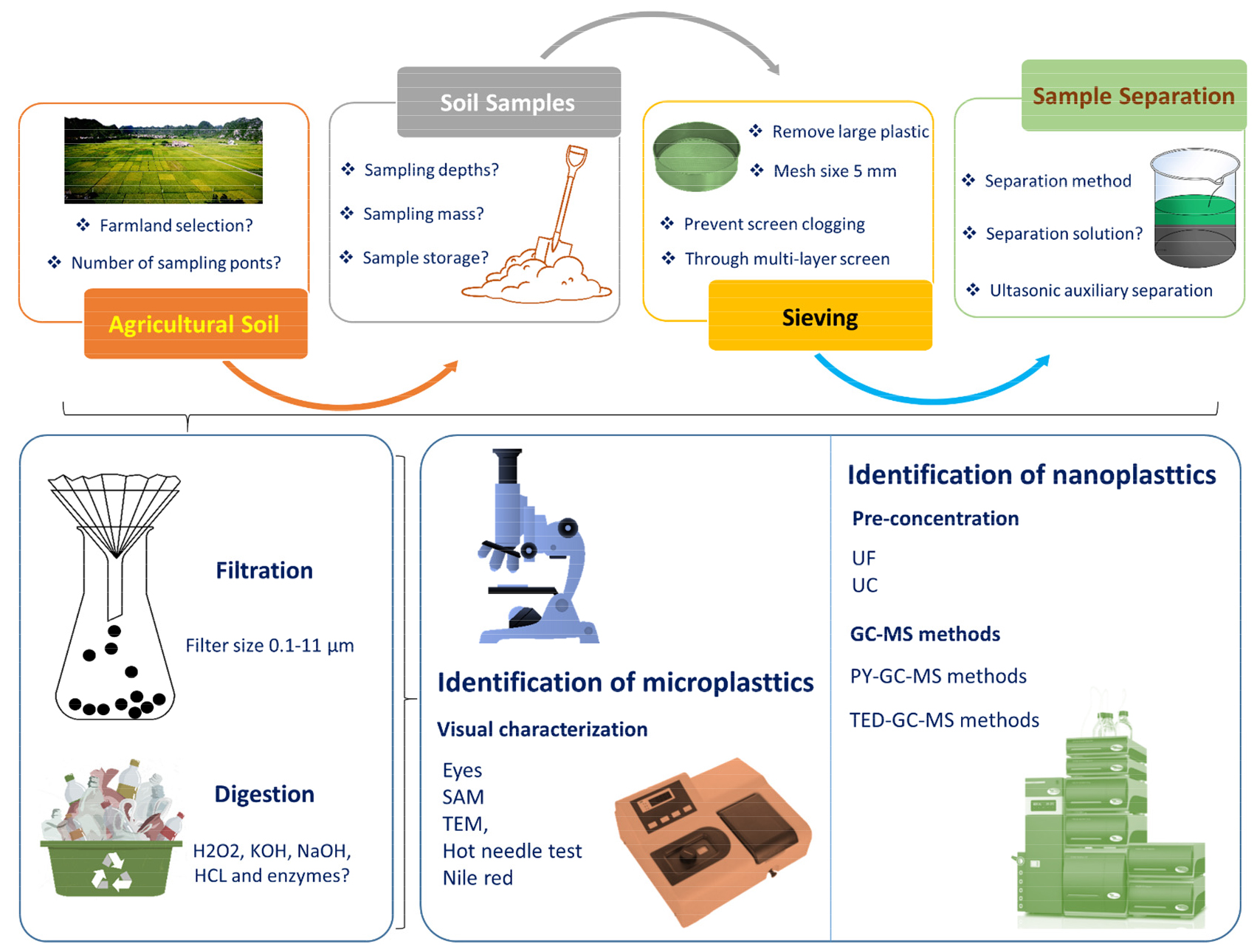
Fig. 5.
Review of sampling, treatment, and identification of MPs and NPs in agricultural soil. H2O2: Hydrogen Peroxide, KOH: Potassium Hydroxide, NaOH: Sodium Hydroxide, HCl: Hydrochloric Acid, SAM: Spectral Angle Mapping, TEM: Transmission Electron Microscopy, UF: Ultrafiltration, UC: Ultracentrifugation, PY-GC-MS: Pyrolysis-Gas Chromatography-Mass Spectrometry, TED-GC-MS: Thermal Extraction Desorption-Gas Chromatography-Mass Spectrometry.
Pretreatment involves sample sieving, digestion, density separation, filtration, and drying to isolate MPs from impurities, ensuring their thorough removal from MPs’ surfaces, and preparing them for identification. Pretreatment methods primarily fall into two categories: density separation and oxidation methods. Density separation utilizes NaCl, NaBr, NaI, CaCl2, and ZnCl2 are to separate MPs from other materials. Oxidation uses H2O2 or Fenton-like reagents to eliminate natural organic matter (NOM). Techniques such as Fenton oxidation, acid/base decomposition, 30% hydrogen peroxide, and enzyme decomposition are employed individually or in combination to remove NOM from MPs’ surface subsequent to separation from inorganic particles (Luo et al., 2022; Park and Park, 2021; Martinho et al., 2022; Ye et al., 2022; Kasa et al., 2022; Chen et al., 2020).
Analytical methods
After sampling and purification, the identification of MPs in samples is crucial, given the substantial similarities in MPs identification across aquatic, terrestrial, and environmental contexts. This process encompasses the morphological characterization of assessing size, shape, color and abundance in conjunction with chemical analysis to determine the polymeric composition (Chen et al., 2020). Comparison among different analytical techniques with their principle, application,detection limit and merits /demerits are given in Table 2.
Table 2.
Comparative overview of modern analytical methods for MPs in soil samples.
Visual observation
Visual observation with the unaided eye or a microscope is used to identify MPs in samples, characterizing atmospheric MPs qualitatively and quantitatively. Microscopic analysis distinguishes natural from synthetic samples, favored for its cost-efficiency and ability to detect particles as small as 50 µm in size. However, microscopy alone is limited to a high degree of error. MPs are commonly visualized using various stereomicroscopes (inverted and upright binoculars, fluorescence, polarized light). Classifying MPs' morphologies by visual inspection, using stereomicroscopes with software for image analysis and quantification, is also popular. However, stereomicroscopes cannot tell natural from synthetic particles, and accurate identification of MP requires a combined use of microscopy with other analytical techniques (Chen et al., 2020; Luo et al., 2022).
Scanning electron microscopy (SEM)
A sophisticated micromorphological technique for examining the surface morphology of MPs is SEM-EDS. Using high resolution imagery, this approach further elucidates fine structural features such as grooves, pits, cracks and flakes. Although SEM can effectively detect MP, its use in the analysis of larger numbers of MP is hindered by the time-consuming preparation and observation of specimens (Ye et al., 2022; Chen et al., 2020; Luo et al., 2022).
Fourier transform infrared (FTIR) and Raman spectroscopy
Analytical tools for characterizing the composition of Microplastics consist of Fourier-transform infrared (FTIR) spectroscopy and Raman spectroscopy. One technique widely used in polymer analysis was FTIR which provides a characteristic spectrum of each sample to be compared to reference libraries. This technique operates via three distinct modes: reflectivity, transmission and attenuated total reflectivity (ATR). Under µFTIR, samples can be visualized. MP size detection lower limit is determined by the specific detectors and mode used. Such as atmospheric MP analysis, FTIR is used often for being easily available with large spectral databases and nondestructive (Gong and Xie, 2020, Möller et al., 2020, Chen et al., 2020, Luo et al., 2022).
Raman spectroscopy, conversely, utilizes laser light to probe molecular vibrations, thereby identifying MPs based on frequency shifts characteristic of their molecular structures. The application of a monochromatic laser to a sample induces various excitation phenomena, with the resultant Raman shift (cm−1) and peak intensity providing reliable analytical data. Micro-Raman (µ-Raman) facilitates visual inspection with a minimum identifiable particle size of 1 µm. However, care must be taken to avoid laser-induced damage to the MP samples during analysis (Gong and Xie, 2020; Möller et al., 2020; Chen et al., 2020; Luo et al., 2022).
Liquid chromatography-tandem mass spectrometry
The quantification of PET and PC in dust is achieved through alkali-assisted thermal depolymerization LC-MS/MS, thereby circumventing the need for sieving, digestion, density separation, and filtration processes. This methodology expeditiously identifies pollutants without pre-treatment, conferring a significant advantage in detecting atmospheric MPs of all dimensions (Luo et al., 2022; Chen et al., 2021; Gong and Xie, 2020; Chen et al., 2020; Möller et al., 2020).
Thermochemical method coupled with mass spectrometry
Pyrolysis-gas chromatography-mass spectrometry (Py-GC/MS) detects MPs and nanoplastics with a detection limit of 0.05–1.9 ng ml−1 in water, effectively identifying additive components. Although less frequently employed in airborne MPs research, it is extensively utilized in environmental studies. This analytical technique identifies the chemical properties of MPs by comparing thermal decomposition outputs with a database unaffected by the particles' shape, size, or color. When combined with Raman spectroscopy, Py-GC/MS provides comprehensive polymer and additive information with minimal sample requirements. These limitations include similar decomposition products from different polymers, restricted sample quantity, and equipment risks due to large molecular weight products during pyrolysis. Nevertheless, Py-GC/MS is recommended for precise chemical composition analysis of MPs (Luo et al., 2022; Chen et al., 2021; Gong and Xie, 2020; Chen et al., 2020; Möller et al., 2020).
Laser direct infrared spectroscopy
Laser direct infrared spectroscopy (LDIR) identifies MPs in oceans, groundwater, soil, and biological tissues utilizing a high-magnification visible camera to capture images of particles exceeding 20 µm in size. Research has demonstrated that LDIR can detect particles as small as 18 µm (Luo et al., 2022; Jiménez-Skrzypek et al., 2021; Möller et al., 2020).
Thermogravimetric analysis
Thermogravimetric analysis (TGA) is a new method for analyzing soil MPs. TGA, in conjunction with chromatography, provides expeditious and quantitative identification of MPs. However, current limitations include the destructive nature of these methods, rendering subsequent analyses challenging, and the inability to ascertain the number, size, and form of particles, thereby posing difficulties in chromatography (Möller et al., 2020).
High-performance liquid chromatography
High-performance liquid chromatography (HPLC) is frequently utilized to separate, identify, and quantify organic compounds in liquids by introducing a sample and solvent into a column containing porous particles. The separation of components in HPLC is predicated upon their respective solubilities and polarities within the mobile and stationary phases. Whilst HPLC exhibits remarkable sensitivity and versatility as an analytical technique, it is important to note that sample degradation may occur during the process (Ye et al., 2022).
Proton nuclear magnetic resonance spectroscopy (1H NMR)
1H NMR is applied to the analysis of MPs across a wide range in size. Model samples of PE, PS and PET were examined using quantitative 1H NMR spectroscopy in combination with a calibration curve. However, limitations of current 1H NMR method make it unsuitable for MP detection in soil samples due to difficulty in removing all organic matter, without destroying the plastic (Möller et al., 2020; Gong and Xie, 2020; Chen et al., 2021).
Thermal extraction desorption gas chromatography-mass spectrometry
Thermal extraction desorption gas chromatography-mass spectrometry (TED GC–MS) is a highly developed analytical method which combines thermogravimetric analysis with solid phase extraction and thermal desorption gas chromatography-mass spectrometry (TDS GC–MS). Here, pyrolysis of the specimen is performed in the TGA to temperatures of 1000°C or higher. These resulting degradation products are then conveyed to a thermal desorption apparatus while being examined. In addition to allowing for large sample masses of up to 100 mg and significantly reducing the analysis time for large sample size, this technique also provides several advantages. Additionally, it avoids sample pre-treatment at entry and renders reaction tube blockage by high molecular weight pyrolysis byproducts relatively less of a problem (Ye et al., 2022).
Differential scanning calorimetry
Differential scanning calorimetry (DSC), as a sophisticated analytical technique, is used for identification of chemical compounds using its potential of detecting the melting temperatures of plastic samples during heating processes. This leads to both qualitative and quantitative information about the gaseous by products of microplastics. DSC has become commonly used for the determination of thermal characteristics of polymeric materials, but a unique reference standard is required for determination of specific polymers. Therefore, DSC signals are dependent upon the dimensions of the microplastic particles and sample preparation must occur before analysis. Additionally, whilst larger sample quantities offer improved peak areas, the increase in resolution limits the measurement accuracy (Ye et al., 2022).
Microplastics as Emerging Pollutants for Agricultural Soils
Microplastics and plastic mulch as pollutants for soils
Agriculture widely utilizes plastic mulch films to control soil temperature and maximize water efficiency for plant growth and increased productivity (Briassoulis and Giannoulis, 2018). As a residual use of arable land (Zhou et al., 2020a), the economic benefits and crop yield increases from these films have a reason to become popularized all over the world and used in approximately 128,652 km2 of space. Nevertheless, the degradation of these films into smaller particles is contributing to MPs pollution (Ng et al., 2018). As the usage of plastic mulch films increases, so does the relationship with the amount and concentration of plastic residues and MPs in soil, with values of 80.3 ± 49.3, 308 ± 138.1, and 1075.6 ± 346.8 pieces per kilogram for 5, 15 and 24 years of continued use, respectively (Huang et al., 2020). The durability of polymers in natural soils was studied by a long-term study in which LDPE mulch films (Briassoulis et al., 2015) were buried. The researchers also buried pro-oxidant-added films for 8.5 years, observing that LDPE films remained predominantly intact without disintegration.
Plastic films have been demonstrated to induce soil desiccation by creating channels for water movement, thereby increasing evaporation (Wan et al., 2019). Numerous studies have established that MPs from plastic films adversely affect soil organic carbon and nitrogen cycling (Cao et al., 2017). Plastic mulch residues can inadvertently increase soil organic carbon levels, with a typical pollution level of 5-25 kg ha-1 year-1 contributing 4-20 kg C ha-1 year-1. However, this addition is minimal compared to organic carbon loss in intensive agriculture and should not be considered beneficial. Furthermore, plastic mulches may contain toxic residues that can potentially leach into the soil, resulting in long-term environmental contamination (Ramos et al., 2015).
Microplastics as vectors for pesticide and heavy metal
Microplastics (MPs) have been identified as potential carriers of contaminants, including pesticides and heavy metals (Anderson et al., 2016). The process of weathering enhances the surface area of MPs, thereby facilitating pollutant adsorption and leaching (Holmes et al., 2014). The intricate relationship between MPs and heavy metals within soil ecosystems is influenced by various factors, including MP characteristics, soil properties, and microbiological aspects (Meng et al., 2023). Research has shown that prolonged MP contamination can lead to increased bioavailability of several metals, such as copper (Cu), lead (Pb), cadmium (Cd), iron (Fe), and manganese (Mn) (An et al., 2023). Notably, polyethylene terephthalate (PET) particles derived from MPs serve as primary conduits for the transfer of heavy metals (Cd, Zn, and Pb) to the rhizosphere of wheat plants (Abbasi et al., 2020). These adsorbed contaminants can negatively impact plant root systems, resulting in diminished growth and productivity (Rillig et al., 2019). An investigation employing a column percolation test simulated the ageing process of high-density polyethylene (HDPE), polyvinyl chloride (PVC), and polystyrene (PS) plastics (Bandow et al., 2017). The findings revealed that aged MPs exhibited enhanced adsorption of chlorine, calcium, copper, and zinc, while simultaneously reducing heavy metal desorption, indicating increased metal fixation (Jiang and Li, 2020). Additionally, the interaction between MPs and pesticides in agricultural soils has garnered significant research attention. Polyethylene (PE) plastic mulch films have been found to accumulate pesticides (Ramos et al., 2015). Certain pesticides, such as chlorpyrifos, trifluralin, and procymidone, can migrate from plastic to soil without the need for solvents, potentially leading to environmental contamination. Studies have demonstrated that plastic film retains a higher quantity of pesticides compared to soil, and specific fungicides exhibit strong adsorption to plastic MPs, particularly PE and PS (Ramos et al., 2015; Hai et al., 2020).
Microplastics as adsorbent for related pollutants
The substantial surface area and hydrophobic characteristics of MPs facilitate the adsorption of toxic substances (Li et al., 2020a) from diverse sources, including wastewater, landfill leachate, and urban runoff (Velzeboer et al., 2014). This process impacts soil health by modifying the sorption capacity, mobility, leaching, and distribution of organic pollutants, leading to soil contamination (Xu et al., 2021a). Investigations have revealed that MPs, when combined with phenanthrene, influence wheat seedling's photosynthesis, antioxidant activity, and height (Liu et al., 2021). The presence of MPs in soil presents considerable risks to terrestrial ecosystems by promoting the movement of persistent organic pollutants within the soil environment (Velzeboer et al., 2014). The interaction between glyphosate and polypropylene MPs (<250 µm) had a minimal effect on glyphosate decomposition (Yang et al., 2018). Conversely, 4-(2,4 dichlorophenoxy) butyric acid in conjunction with PE MPs significantly diminished soil sorption capabilities (Hüffer et al., 2019). Furthermore, aged isotactic polypropylene MPs demonstrate the capacity to adsorb triclosan, an antibacterial compound found in personal care products (Wu et al., 2020). The accumulation of triclosan-adsorbed MPs in the bodies of soil and aquatic organisms results in increased toxicity (Puckowski et al., 2021).
Removal and degradation of microplastics from soil
Three primary categories of technologies are employed for MP removal: physical, chemical, and biological methods. This review presents a comprehensive analysis of the advantages and disadvantages of each method.
Physical removal of microplastics
The removal of MPs relies heavily on adsorption and filtration processes. MPs possess functional groups that demonstrate an affinity for pollutants, making them valuable in sewage treatment applications, albeit with associated environmental implications. The efficacy of MPs adsorption in sewage treatment is influenced by various parameters, including pH levels, particle dimensions, thermal conditions, and additional factors. Within wastewater treatment plants (WWTPs), sedimentation plays a crucial role in mitigating the discharge of MPs into aquatic ecosystems through mechanisms such as adhesion, settling, and filtration (Zhao et al., 2022; Padervand et al., 2020; Xu et al., 2021c; Ahmed et al., 2022). MPs undergo degradation through hydrolysis and mechanical wear, resulting from water and sediment movement. Although physical degradation is cost-effective and straightforward, additional methodologies are often required. Pyrolysis has the potential to treat MPs in wastewater and sludge by accelerating degradation in an oxidative environment. Further research is required to elucidate the environmental factors that affect physical degradation (Xi et al., 2022; Zhao et al., 2022; Padervand et al., 2020; Xu et al., 2021c; Ahmed et al., 2022).
Hybrid membrane filtration systems, including photocatalytic membranes and membrane bioreactor systems, effectively remove and degrade MPs in water and wastewater treatment due to their cost-effectiveness, stability, strength, and flexibility. Recent studies have demonstrated the efficiency of membranes in MP removal through sieving and adjustable properties; however, their effectiveness varies with the membrane type, catalyst, and target pollutants. Fouling diminishes the effectiveness and lifespan of membrane systems, necessitating further research on mitigation strategies and the impact of MPs on hybrid system (Golmohammadi et al., 2023).
Microbial microplastic degradation
Bacteria are ubiquitous in soil, water, and air, and are recognized for their capacity to degrade pollutants. Research has employed pure bacterial cultures isolated from sediment, sludge, and wastewater to investigate MP degradation, elucidate metabolic pathways, and evaluate environmental impacts on MP decomposition. Monitoring the degradation process and MP alteration is crucial (Yuan et al., 2020).
Studies have indicated that bacteria can modify MP characteristics and structures. The isolation of bacterial cultures from contaminated environments and the procurement of strains from arachnids and insects constitute the primary methodological approaches. Bacillus, Pseudomonas, Chelatococcus, Lysinibacillus, and obligate anaerobic bacteria are frequently isolated genera. Nonetheless, bacterial biodeterioration yields limited MP mass reduction (0-15%) over prolonged degradation intervals (0-3 months). Subsequent investigations should prioritize the optimization of conditions and strains to augment degradation efficacy and minimize toxic metabolites. The cooperative nature and enhanced activity of bacterial consortia render them increasingly relevant in MP degradation research (Yuan et al., 2020; Othman et al., 2021; Golmohammadi et al., 2023).
Fungi and bacteria facilitate MP degradation through chemical bond formation and hydrophobicity reduction. The ubiquity and diversity of fungi indicate their potential for utilizing MPs as a carbon source. Fungal activity can modify MP morphology and characteristics, particularly in the degradation of hydrolysable plastics under laboratory conditions. Genomic and proteomic approaches should be employed in future research to expedite fungal-mediated MP degradation. The environmental mitigation potential of fungal biodegradation of MPs has attracted scholarly interest, necessitating pilot studies in situ due to the intricate nature of degradation processes (Yuan et al., 2020; Othman et al., 2021; Golmohammadi et al., 2023). Microorganisms colonizing MPs establish biofilms and intricate ecosystems capable of MP degradation through surface masking, additive decomposition, and the secretion of enzymes and byproducts. This degradation process unfolds in four distinct phases: initial adhesion and surface alteration, additive leaching, enzymatic degradation leading to embrittlement, and microbial decomposition (Yuan et al., 2020; Othman et al., 2021; Golmohammadi et al., 2023).
Microbial enzymes degrade MPs primarily through hydrolysis, wherein enzymes bind to MPs and catalyze hydrolytic cleavage via intracellular or extracellular depolymerase. Enzymes exhibit variation among microorganisms and plastic types, facilitating the degradation of MPs polymers into monomers that serve as a carbon source for microbial energy production (Yuan et al., 2020; Othman et al., 2021; Golmohammadi et al., 2023).
Microorganisms for the degradation of microplastics and plastics are influenced by many factors. These factors can be categorised into two main groups: Theses are microbial growth-related and those describe MP characteristics and environmental conditions (Yuan et al., 2020). MP characteristics include chemical and physical properties, with molecular weight, density, crystallinity, presence of functional groups and substituents in their structure (Yuan et al., 2020). Plasticisers or additives also have a major impact on MP biodegradability. MPs are primarily subject to environmental factors (light; UV, heat, humidity; the presence of chemicals (Yuan et al., 2020; Othman et al., 2021). It is referred to as surface modifying enzyme since it is the enzyme responsible for breaking down MP. According to this analysis, the bonding change observed by the researcher was attributed to enzyme surface interaction. This surface modification activity is unique to a limited number of cutinase enzymes reported to degrade the inner block of microplastic (Yuan et al., 2020; Othman et al., 2021). Over the past decade considerable research has aimed to find new enzymes capable of degrading microplastics. Several enzyme groups that could break the backbone of the polymers or their monomeric components into monomers have been identified. Selected among them are oxidases, amidases, laccases, hydrolases and peroxidases all involved in polymer degradation (Othman et al., 2021).
MPs are polymeric molecules and their breakdown processes are analogous to those of other polymers. To mineralize, both require conversion to monomers. MP particles dimensionally are larger than the dimensions of the pore size of cellular membrane, for this reason, MP particles need to be depolymerized into smaller monomeric units for cellular absorption and biodegradation. MP depolymerization is dependent on microbial enzymes and microorganisms, mainly the hydrolysis of MP is important for MP degradation (Yuan et al., 2020). Oxidative degradation, however, can affect both hydrolysable and non-hydrolysable polymers and differs from this hydrolytic process. Firstly, enzymes attach to MPs and hydrolyze the MPs during hydrolysis. Intracellular or extracellular depolymerases can achieve MP degradation in various microorganisms (Yuan et al., 2020). The first is to accumulate microbes utilizing hydrolysis of internal carbon reserves; the second is to use external carbon sources and extracellular enzymes to break MPs into smaller chains or molecules, smaller than to permeate semipermeable membranes. These short-chain products are depolymerized into final carbon and energy sources such as CO2, H2O or CH4 (Yuan et al., 2020).
Microbial engineering approaches are shown to be a promising technology platform to reduce MP concentrations in terrestrial environments through the application of microorganisms’ abilities to degrade, transform, or sequester MP, addressing environmental remediation efforts (Zhai et al., 2024). Genetically modified microbes are used to improve their plastic degradation rate. Using PETases, lipases, esterases and cutinases, researchers have found that some specific plastic polymers can be broken down (Zhai et al., 2024). Genetically engineered microbes (GEMs) can be used to maximize the expression of these enzymes by microorganisms in order to improve plastic degradation efficiency (Zhai et al., 2024). Moreover, synthetic organisms have been constructed that with compatible plastic-degrading enzymes allow degradation rates to increase and types of targetable plastic to broaden (Zhai et al., 2024).
The second approach is predicated on utilizing and expanding the potential of naturally occurring microorganisms capable of degrading plastic. This can be accomplished through environmental manipulation or selective enrichment. The isolation and cultivation of microorganisms from plastic-contaminated environments may facilitate the identification of plastic-degrading strains with significant degradation potential. Further enhancements in the plastic degradation capabilities of these microorganisms can be achieved through optimization of growth conditions and microbial interactions (Zhai et al., 2024). Moreover, genomic and metagenomic approaches, such as high-throughput sequencing, can elucidate information regarding the capacity of microbial communities to respond to MPs contamination (Zhai et al., 2024). This knowledge can inform the development of strategies to augment the growth and activity of plastic-degrading microbes subjected to targeted amendments or environmental management. Methods for monitoring and assessing MPs in terrestrial ecosystems are based on a multiparametric approach incorporating a combination of methods and techniques (Zhai et al., 2024).
Chemical technologies for microplastic’s removal and degradation
The degradation of polymers through chemical means employs external agents, such as peroxide and carbonyl groups, in conjunction with natural light for mineralization. These techniques modify the surface chemistry, effectively eliminating microplastics (MPs) and altering polymer properties. The transformation of MPs is influenced by various factors, including polymer type, structure, size, and process conditions (Golmohammadi et al., 2023). Coagulation, a method for removing pollutants like MPs, utilizes chemical coagulants to neutralize surface charges, resulting in floc formation. This process involves three key stages: dissociation, adsorption/neutralization, and association, which destabilize MP surfaces to promote flocculation. As a component of coagulation, flocculation enhances particle collision and aggregation, facilitating efficient removal in wastewater treatment facilities (Golmohammadi et al., 2023; Du et al., 2021).
The removal of small plastic particles, including MPs, is effectively achieved through agglomeration, which forms larger, more easily removable clusters. Recent innovations include bioinspired alkoxy-silyl compounds that induce agglomeration among polyethene MP particles. The sol-gel-induced agglomeration mechanism hydrolyses Si-OR bonds, generating Si-OH groups and three-dimensional agglomerates (Golmohammadi et al., 2023; Du et al., 2021). Froth flotation, a technique for separating MPs based on surface chemistry, involves bubbles adhering to hydrophobic MPs for removal. The efficacy of this method depends on factors such as size, concentration, density, and pH. It is crucial to differentiate froth flotation from flotation using salt solutions. Chemical degradation methods for MPs, including hydrolysis and cavitation, involve physicochemical alterations (Golmohammadi et al., 2023; Du et al., 2021).
Hydrolysis presents a cost-effective approach for MP degradation, yielding environmentally benign products through acid, neutral, and alkaline processes. Cavitation, another degradation method, generates hydroxyl radicals by creating vapor bubbles in liquids, employing techniques such as Acoustic Cavitation (AC), Hydrodynamic Cavitation (HC), and CaviGulation (CG) (Golmohammadi et al., 2023; Du et al., 2021). Advanced oxidation processes (AOPs) are extensively utilized in wastewater treatment and MP degradation, generating reactive oxygen species (ROS) like hydroxyl radical, superoxide anion, and anion peroxide. These species are produced through various methods, including the Fenton process (Fe2+/ H2O2), Self-made Hydrothermal Carbonization (HTC), heat-activated persulfate, Ozone, Chlorine, and Ultraviolet light. AOPs demonstrate high efficiency in degrading persistent organic contaminants (POCs) in water, with Fenton treatment converting plastic waste into useful products and sulfate radical-based AOPs (SR-AOPs) eliminating polyethylene-based MPs. The AOP category encompasses photochemical, photocatalytic, and electrochemical oxidation techniques (Du et al., 2021; Lin et al., 2022; Golmohammadi et al., 2023).
Factors and Mechanisms Affecting the Degradation of Plastics/MPs
The physicochemical breakdown of plastic materials is predominantly influenced by four key factors: mechanical fragmentation, thermal conditions, acidity levels, and exposure to ultraviolet and infrared electromagnetic waves. Mechanical comminution and temperature significantly enhanced the degradation efficiency, and elevated temperatures accelerated the oxidation process. For instance, ultra-high-temperature composting can increase plastic degradation rates up to 6.6 times compared to high-temperature composting by rapidly oxidizing C-C bonds to C=C double bond, O- and C-O bonds under extreme thermophilic conditions, thereby improving degradation rates and hydrophobicity. pH levels also affect MP degradation by influencing microorganism survival and activity, which in turn affects microbial population structure, enzyme activity, and degradation rates. Additionally, oxygen, high temperature, and the environmental medium contribute to plastic ageing, with oxygen and water facilitating the formation of oxygen-containing groups in the polymer. Consideration of the environmental matrix is crucial for studying plastic degradation. Although MP photodegradation is inefficient under natural conditions, the addition of catalysts, such as TiO2, significantly enhances the photodegradation efficiency (Xi et al., 2022; Lin et al., 2022).
Analysis of the Advantages and Limitations of Different Removal and Degradation Techniques
MP removal technologies have varying degrees of efficacy and applicability. Physical methodologies such as adsorption, membrane filtration, and sedimentation are cost-effective but generate non-recyclable spent sorbents. Processes such as coagulation, agglomeration, and photocatalytic degradation effectively remove oil from the water surface; however, they involve chemical agents and may not always be scalable. Activated sludges and biological degradation are accessible, economical, and scalable, but may demonstrate variable efficiency based on the organism species and environmental conditions. Photocatalytic processes require more efficient catalysts and suitable microbes MPs removal (Ahmed et al., 2022; Golmohammadi et al., 2023; Lin et al., 2022).
Plastic degradation is influenced by the temperature, water, oxygen, and pH. UV radiation cleaves C-H bonds, forming radicals that react with oxygen to produce alcohols and acids, rendering plastics brittle and less dense. Photocatalysts accelerate degradation but typically decompose plastics into smaller molecules. Microbial degradation converts plastics into methane, CO2, and water, depending on the temperature and humidity, but proceeds at a slow rate with low efficiency. Current plastic waste elimination methods remain experimental and unoptimized and natural degradation can span decades or centuries (Ahmed et al., 2022; Golmohammadi et al., 2023; Lin et al., 2022).
Enzymatic degradation utilizes microorganisms to produce enzymes that oxidize or hydrolyze polymers. However, the mechanisms of enzymatic plastic degradation, particularly PET hydrolysis, remain unclear. Although microorganisms secrete enzymes to dissolve plastics, their secretion is limited, and synthetic enzymes have not been developed. Further research is required to elucidate these processes and enhance enzyme efficiency (Ahmed et al., 2022; Golmohammadi et al., 2023; Lin et al., 2022).
Research Challenges Regarding Sampling and Analysis
The identification of MPs in the environment and their detrimental effects on water quality, biodiversity, ecosystem services, and public health are increasing (Provencher et al., 2020; Woods et al., 2021). MPs pollution has exceeded safe planetary boundaries (Persson et al., 2022), prompting extensive research on its prevalence, distribution, characteristics, fate, and ecological impacts (Domercq et al., 2022; Woods et al., 2021). However, standardized methodologies for sampling, extraction, purification, and identification of MPs in soil samples are lacking.
Numerous laboratory instruments are inadequate for analyzing micro-sized and sub-micron particles, which complicates the accurate identification and quantification of MPs. The heterogeneous distribution of plastic debris in the environment and samples further complicates the analysis (Hartmann et al., 2019). Sample composition of dust filters can affect the detection of MPs. Low environmental concentrations often necessitate significant up-concentration from large air and water volumes (Li et al., 2020a). Quantifying MPs is challenging because of the risk of contamination, which leads to inaccurate results. Moreover, variable sizes and shapes of MPs can cause preferential attachment and detection, resulting in arbitrary reporting. Detected MPs can vary significantly in size and mass, sometimes differing by several orders of magnitude (Hale et al., 2020; Zarus et al., 2021). Generally, the buoyancy and density characteristics of plastics, similar to those of water, reduce the efficacy of density-based separation methods, thereby introducing bias in detection and quantification. MPs interaction with environmental components can lead to the accumulation of other contaminants on their surfaces (Wardrop et al., 2016), complicating risk assessments. Although data on MPs in various environmental matrices have advanced, information on nanoplastics remains limited. The detection and quantification of plastic debris in human biofluids and brain tissues lags, hindering accurate exposure assessment.
Active and passive sampling methods may not capture all MPs, potentially leading to a biased sampling. Analytical techniques such as Pyr-GC-MS and LC-MS/MS offer valuable insights into polymer type and mass; however, the absence of data on particle count, dimensions, and morphology may restrict comprehensive health risk evaluations. On the other hand, using FPA-based µ-FTIR and Raman spectroscopic approach, polymer type, morphology, concentration, and size of MPs within samples can be determined (Vinay Kumar et al., 2021). This is while FPA-based µ-FTIR and Raman spectroscopic techniques are helpful to determine the polymer type, morphology, amount, and size of MPs in a sample (Kumar Vinay et al., 2021). Pre-understanding is required because Löder et al., (2017) have noted that MPs are only separable from the matrix to allow for identification (Löder et al., 2017). It is also during polymerization that various ingredients are incorporated into the polymers such as antioxidant, colors, UV stabilizers, flame quotes, antistatic agents and plasticizers. Some of these additives, described here as volatile or semi-volatile, may have adverse health effects (Jansson et al., 2007).
Intensive Research on Transport and Fate of MP in Soil
MP transport mechanisms in soil and atmospheric environments, and their ecological ramifications, require much further investigations. Accurate models for delineating the transport processes, origins, pathways, distribution and repositories of MPs is critical. We should direct scholarly attention to the interplay between MPs and soil aggregates in which their impact on soil characteristics and ultimate disposition is understood. Additionally, a complete understanding of the consequences of MP exposure on the population levels of several organisms inhabiting the soil must be studied, as well as on the accumulation of these particles into soil matrices. The cause of MP dissemination needs to be examined thoroughly by looking at agricultural methodologies, in which plastic films have been particularly considered. Advancements in soil profile-based models may facilitate the forecasting of long-term MPs movement and persistence in the soil.
Need Phytoremediation and Biodegradation
In contrast to the use of physical or chemical approaches, eco-compatible bioprocesses like phytoremediation are receiving more attention because they have potential in a sustainable circular economy. Among the advantages of using phytoremediation techniques are less cost, no additional waste production and high effectiveness and reusability (Paul et al., 2024). The single step solution to MPs and their associated contaminants via phytoremediation is presented. The nature, origin and accessibility of MPs can be utilized to adapt phytoremediation strategies of phytoaccumulation, phytofiltration, and phytostabilization. Paul et al. (2024) propose that these methods may be used separately or in combination to provide optimal MP removal from polluted soil or water. Diverse microorganisms enhance the speed and efficiency of phytoremediation by secreting enzymes that catalyze MP degradation, or by increasing the bioavailability of a contaminant in plants, termed rhizodegradation. Although potential candidates for this process, such as Vicia faba, Murraya exotica, Eichornia crassipes, Triticum aestivum, Typha angustifolia, Peltranda virginica, Leersia oryzoides, Lemna minor, Fucus vesiculosus, Lactuca sativa, and Phragmites adans, need to be identified, rapidly growing species with extensive root systems and high transpiration rates are suggested for use in phytoremediation (Paul et al., 2024).
Various microplastics (MPs) have been identified in diverse plant systems. Plants that produce radical mucilage are more prone to attracting MPs, particularly those with negative charges, resulting in their aggregation within root structures aided by root cell secretions (Paul et al., 2024). MP accumulation can also occur through root uptake via crack-entry, driven primarily by transpirational pull, which facilitates MP movement from roots to shoots. Although the same plant species are involved in MP uptake by roots, limited root-to-shoot transport was noted, suggesting that these processes are affected by numerous internal and external variables that differ across locations (Paul et al., 2024). MPs move from roots through the apoplastic pathway and vascular bundles, accumulating in intercellular spaces. The effectiveness of phytoremediation is influenced by multiple factors, including physiological parameters, soil properties, initial conditions, and environmental pollutants (Paul et al., 2024). Time and water movement are crucial in phytoremediation, with a gradual reduction in adhered MPs occurring over time (Paul et al., 2024). Optimal pH, temperature, salinity, chemical components, sunlight, and carbon dioxide levels in the surrounding environment determine overall plant growth and performance (Paul et al., 2024). The combination of algae-based phycoremediation and plant-driven phytoremediation presents promising solutions for MP pollution mitigation, particularly when integrated into constructed artificial wetlands. By incorporating these biological approaches into broader environmental management strategies, progress can be made towards developing cleaner, healthier, and MP-free ecosystems (Paul et al., 2024).
It is imperative to develop guidelines for the classification of biodegradable materials based on their biodegradability, aligning with treatment requirements to enhance degradation efficiency and mitigate future implementation costs. Although physicochemical factors in natural environments may not effectively degrade plastics, biodegradation is an eco-friendly, sustainable solution for MP removal. The heterogenous microorganism population in natural environments pose challenges in identifying efficient plastic/MP-degrading bacteria. Elucidating plastic/MP degradation mechanisms is essential for the development of effective management strategies. Genetically engineered microbes (GEMs) can enhance enzyme expression to improve plastic degradation. Further research is needed to investigate enzyme-based MP degradation, including enzyme identification and mechanisms. Proteomic methods can be used to address these challenges. Additionally, genetic modification of plants and their symbionts to produce enzymes, such as PETase and MHETase, can facilitate the breakdown of plastic residues.
Standardization of Microplastic Separation and Detection Methods
To understand the ecological consequences of MPs on agricultural systems, it is crucial for scientists to examine their build-up, transport, and breakdown processes. Agricultural lands are globally contaminated with plastics, and although bio-based alternatives are acknowledged, traditional plastics will persist for centuries. Elucidating MPs breaks down into smaller particles over time, and the potential challenges associated with renewable mulch films are essential. A comparative analysis of the environmental impacts of different plastic sizes, from micro to nanoplastics, is necessary to assess their effects. Comparing the effects of MPs against controls like inert quartz sand or compost can provide valuable context. Biochar and MPs have similar effects on soil quality, but standard procedures are needed to characterize biochar for consistent comparisons. Developing standardized protocols for analyzing MPs, considering their various characteristics is essential for global research comparability. A standardized analytical method needs to be established, and data from spectroscopy and mass spectrometry correlated for a global study. Different methods for analysis have their strengths and weaknesses, so researchers should choose the most appropriate method based on their research goals and conditions.
Establishment of Proper Sampling and Pretreatment Procedures
Microplastic analysis of soil must accommodate the intrinsic heterogeneity of soil samples and hence require tailored preparation methods. This approach allows for the elimination of matrices without loss of the microplastic material and thereby enables the study of interactions between microplastics and soil organic matter.
Plant-MP Interaction at the Molecular and Physiological Level
MPs are translocated into the plant through xylem vessels because of transpiration and are stored in the plant leaves. Movement of MPs to stems and leaves from roots is through apoplastic and symplastic pathways, and this is determined by factors such as the nature of MPs, including chemical structure and shape, transport mechanisms, root features, cell membrane potential, and xylem carrying capacity. MPs also employ the use of gaps that may appear in fresh roots after fragmentation to directly capture accessing conductive tissues (Jia et al., 2023; Roy et al., 2022). Moreover, the mechanically impaired tissues of plants, pests, diseases or a stressful environment can also develop other access points in plants for MPs. For instance, analysis of the leaf cell damage shows the presence of polystyrene nanoparticles (PS-NPs) inside these cells. These conclusions suggest that such plastic particles can disrupt typical wound-healing steps and impair signaling. Thus, MPs/NPs could perhaps create physical barriers that interfere with the interconnecting structural networks and undermine the purely signaling mishmash (Roy et al., 2022).
MP induces a reduction in physical growth, a process which takes place in conjunction with alterations in a number of vital physiological processes, including photosynthesis, redox regulation, ionic homeostasis, and hormonal control. They are prone to stresses and a perturbation can reduce crop growth. Plants are exposed to MPs or NPs, and thus an excessive production of reactive oxygen species (ROS) is caused. These ROS are produced mainly by various organelles in plants, such as chloroplasts, mitochondria, peroxisomes and the endoplasmic reticulum (Zhang et al., 2022a). Two of these are the chloroplast playing a dominant role in ROS generation during photosynthesis that produces energy necessary for chemical bonding from light energy during the photosynthesis process. Under normal growth conditions, chlorophyll absorbs light, and it drives a series of redox reactions in thylakoid membranes, involving oxidation of H2O, generation of H+ gradient in thylakoid membranes, and reduction of NADP+ to NADPH (Jia et al., 2023). However, these reactions are highly sensitive to any abnormalities in growth conditions, such as abiotic or biotic stress (Jia et al., 2023). Exposure to various MPs resulted in significantly high ROS production (Jia et al., 2023), one of the most important ROS, thereby decreasing photosynthesis by reducing the overall efficiency of PSII, leading to photoinhibition (Jia et al., 2023). The increased ROS production induced by MPs may cause oxidative damage to the thylakoid membrane, resulting in membrane lipid peroxidation, impairment of membrane integrity, and suppression of mitotic cell division, ultimately causing a significant decline in root growth and development (Zhang et al., 2022a) and chloroplast structure, thus inhibiting photosynthesis and carbon fixation (Jia et al., 2023). The control mechanism depends on several genes, which code chlorophyll biosynthesis, carbohydrate synthesis, and energy supply ATP. Stress has been reported to affect the regulation of these genes by MP, which in turn decreases photosynthesis in plants and alters stomatal responses under abscisic acid (ABA) (Jia et al., 2023). In response to the MP stress, plants displayed developed multiple tolerance mechanisms involving both antioxidant enzymes categorized by Superoxide dismutase (SOD), Chloramphenicol acetyltransferase (CAT), and peroxidase (POX), and antioxidant non-enzymes such as Glutathione (GSH), and ascorbate (AsA).. These isozymes consist of different actions and regulation networks to protect organelles and reduce tissue injury under different environmental stress (Zhang et al., 2022a). The maintenance of ionic balance is crucial in order to provoke different responses such as osmotic adaptation, nutrient and water accumulation and plant development in general. Any disruption in Ionic balance, especially under salt stress (Jia et al., 2023) or heavy metal stress, affects ion transport through membrane depolarization, activation of ROS-dependent cation efflux channel and channel desensitization (Jia et al., 2023).
The preservation of ionic equilibrium is essential for eliciting various adaptive responses, including osmotic adjustment, nutrient and water uptake, and overall plant development. Perturbations in ionic balance, particularly under conditions of salt stress (Jia et al., 2023) or heavy metal exposure, impairing ion transport (Jia et al., 2023) through increased membrane depolarization, ROS-activated cation efflux channels, and ion channel desensitization (Jia et al., 2023). Microplastic (MP) stress induces physical damage to roots, affecting plants' ionic homeostasis (Jia et al., 2023; Zhang et al., 2022a). Furthermore, MP stress elicits changes in gene expression (Jia et al., 2023) within roots. As previously observed, MP stress exerts cytotoxic and genotoxic effects on root growth, potentially due to alterations in cell cycle, metabolic pathway, and hormonal regulation gene expression. Such modifications in gene expression result in changes in root growth and development (Jia et al., 2023; Gan et al., 2023; Zhang et al., 2022a). The application of polystyrene (PS) MPs modifies overall root and plant growth by downregulating genes involved in nitrogen and linolenic acid metabolism, altering the transcriptome and expression of genes encoding proteins involved in the tricarboxylic acid cycle, C/N ratio, and soluble protein accumulation (Jia et al., 2023, Gan et al., 2023). Consequently, MP stress impacts root physiology through gene expression alterations. However, variations may exist among plant species, MP particle size, MP type, surface functional group, polymer composition, and other growth conditions, necessitating further investigation in future studies (Jia et al., 2023; Gan et al., 2023; Chang et al., 2022b).
Further research is necessary to elucidate the mechanisms by which MPs influence plant physiology upon entering the soil matrix. Few studies have investigated this phenomenon, particularly within the context of the soil-microbe-plant system. The utilization of isotopes of essential nutrients and microbial analysis may facilitate the elucidation of MPs-mediated effects on plant nutrient cycling. However, the effect of MPs on phytohormones and soil biota remains poorly understood. More research in this area is crucial for sustainable agroecosystem management.
Need More Field-level Evaluation
Controlled studies on MPs conducted in laboratory settings spanning weeks or months provide a limited perspective on their effects. Long-term trials are crucial to assess the lasting impacts of MPs. Smart design, sustainable upcycling, and technologies for preventing soil pollution are necessary to sustain a circular plastic economy. Previous studies on MPs in soil utilized unrealistically high doses, thereby reducing their real-world relevance and potentially leading to sensationalized media reports. Researchers should endeavor to provide balanced perspectives and comprehensively contextualize their findings.
Need Collaboration on Policy-making to mitigate Microplastic Pollution
Plastic waste prevention strategies encompass a range of measures that can be implemented by individuals, organizations, and governmental bodies to mitigate the generation of plastic waste and its infiltration into the environment. These approaches should include reducing plastic consumption by promoting the use of reusable items reducing pollution and understanding the relevant stocktaking targets and strategies. People need to be encouraged to study, be educated, be aware of all that is happening and be pushed to favor the use of environmentally friendly materials as well to provide management of the entire product life cycle on the manufacturer's side, starting from take-back programs. Regulations of industrial effluents, prohibitions, mandatory labeling of products, promoting research and monitoring (program), providing incentives for innovation, running educational campaigns, promoting international cooperation, accepting fines and penalties and use of biodegradable plastic and other alternatives to promote environmental sustainability are added measures. In addition, investment in research and development, particularly in microplastic degradation, waste-to-energy technologies, circular economy principles, and bio-based polymers, should be used to stimulate innovation. Remediation and removal strategies, in addition to the development of novel, environmentally benign and sustainable materials and products, should also be targeted by these efforts.
Conclusion and Perspectives for Future Work
Soil constitutes a complex system comprising components such as minerals, organic matter, and soil biota that interact with microplastics (MPs) in ways that may result in uncertain consequences. Environmental conditions, such as drought, temperature, CO2 levels, agricultural fertilization, organic residues, and soil flora and fauna significantly influence the ecological impacts of MPs. The environmental fate and effects of MPs in soil systems remain highly debated. Studying MPs in soil is more challenging than in aquatic ecosystems due to the difficulty in separating plastics from the soil matrix. Research on MP pollution in soil ecosystems is gaining attention due to its long-term threat to agroecosystem functioning, food security, and human health. Based on current studies, several key priorities for further research in this emerging field have been identified.