


Introduction
Background information
Purpose and scope of review
Methodology
Data collection
Criteria used for selecting the source
Case studies
Limitations
Findings
Current state of CA adoption in semi-arid Kenya
Status of Mechanization in semi-arid Kenya
Sustainable intensification outcomes
Challenges and barriers to Mechanization in semi-arid Kenya
Extension and support services impact on mechanization adoption
Environmental and socioeconomic impact
Conclusion and Policy Implications
Summarized vital findings and lessons learned on Mechanizing CA in semi-arid Kenya
Recommendations for policymakers, extension services, and smallholder farmers
Highlight of best practices for sustainable mechanization intensification
Declaration of Competing Interest
Introduction
Background information
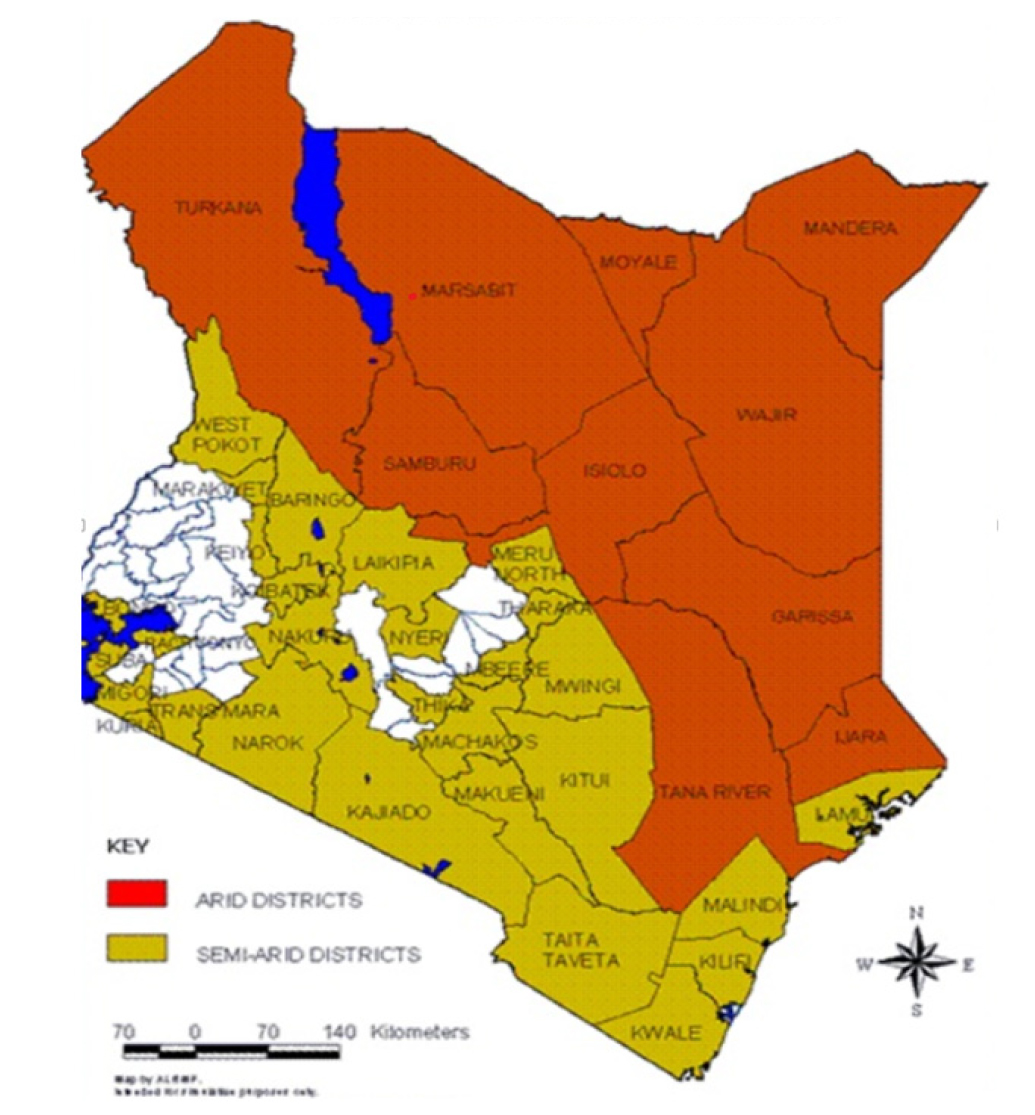
The agriculture sector remains pivotal in Kenya’s economy (CBK, 2023), contributing 20% of gross domestic product (GDP) directly and indirectly, accounting for 27% through interconnectedness with other sectors. Furthermore, the sector employs over 40% of the population and supports more than 70% of those living in rural areas. Approximately 70% of Kenya’s land area is arid or semi-arid (Winowiecki et al., 2018). Fig. 1 shows the extent of the semi-arid area in Kenya.
Over the past four decades, there has been a noticeable shift in climate zones within Kenya, resulting in a transition towards hotter and drier conditions. The changes in temperature and precipitation patterns over time have significantly reshaped the country’s geographic distribution and arrangement of climate zones. Specifically, during these 40 years, the arid climate regions in Kenya have expanded significantly. This shift represents a substantial alteration, with areas once categorized as humid and semi-humid now falling within the semi-arid to arid regions.
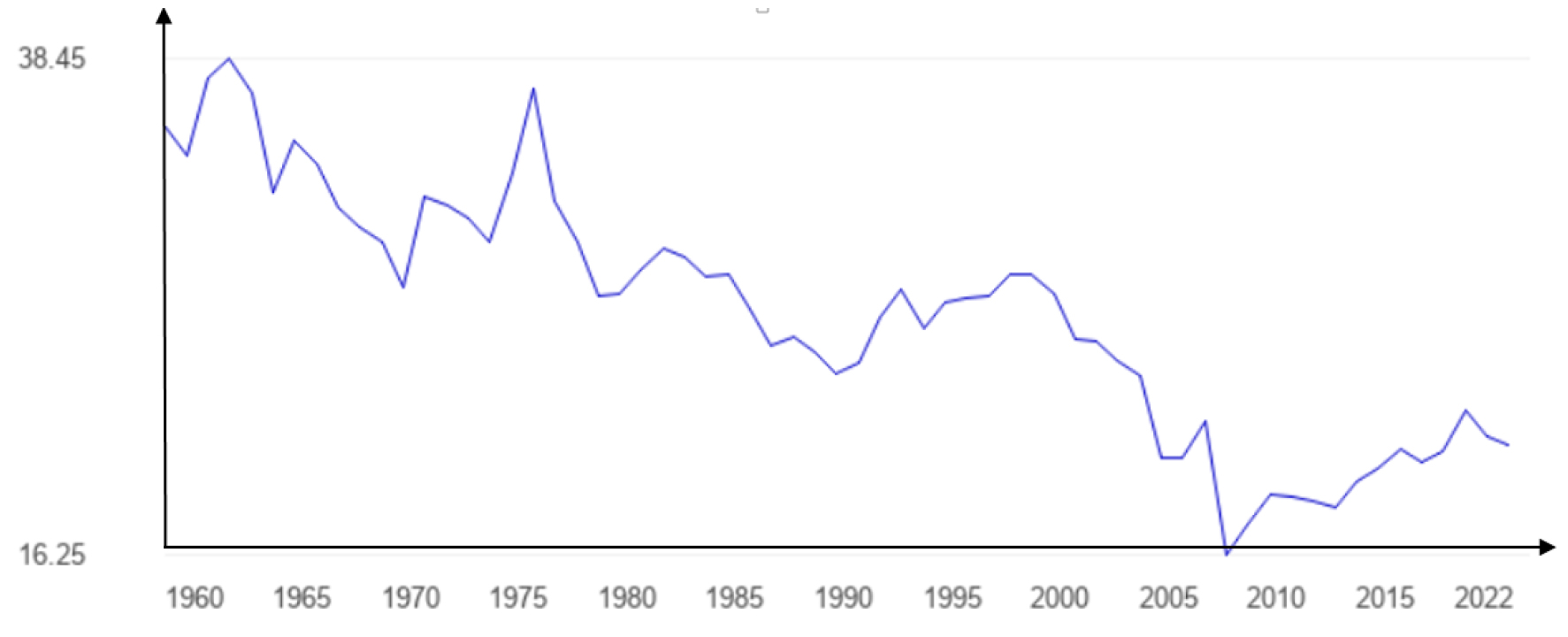
Regarding this indicator, we offer information on Kenya from 1960 to 2022. Over that timeframe, the average value for Kenya was 27.07 percent, reaching a minimum of 16.25 percent in 2009 and a maximum of 38.45 percent in 1963. The latest value from 2022 is 21.17 percent, as per the graphical representation in Fig. 2. In 2022, the global average, considering 146 countries, stands at 9.58 percent. The significance of agriculture in Kenya and other nations is assessed by the contribution of the agricultural sector’s value added to the Gross Domestic Product (GDP). This measurement encompasses activities such as forestry, hunting, fishing, and the cultivation of crops and livestock production.
The frequency, intensity, and magnitude of extreme weather events have been on the rise, posing a growing threat to the vulnerability of rural livelihoods, particularly in Kenya’s arid and semi-arid regions (Rockström et al., 2002). Climate change has affected agricultural productivity, food security, and the socio-economic status of smallholder farmers in these regions. There is a pressing need to integrate potential adaptation strategies within smallholder farming systems effectively. This requires addressing barriers to adoption and implementation while ensuring that policies, programs, and institutional support systems are well-aligned with these objectives.
Purpose and scope of review
Whereas most of the soils in marginal rainfall areas of Kenya have high potential for agriculture, the major limiting factor for optimum crop production is soil water. The soil water deficit in these areas is attributed to low infiltration rates due to surface crusting, low organic matter content and high runoff rates. Relatively low, erratic, poorly distributed rainfall and high evaporative losses in these areas contribute significantly to soil water deficit. Where runoff losses are high, it must be harvested and conserved in situ to sustain crop growth. Conservation of soil water in marginal areas requires appropriate tillage and management practices that improve infiltration rates and conserve soil water for better plant growth. Factors other than cover that can be manipulated to maintain infiltration rates include surface roughness and aggregate stability, which can be done through proper tillage. Developing tillage practices for dry land farming should focus on improving soil physical properties to conserve more soil water and increase crop yields (Gicheru et al., 2005).
This article review will focus on mechanized conservation agriculture in the semi-arid areas in Kenya and draw lessons from case studies of works that bore positive results, then seek to understand how to intensify the adoption of these technologies sustainably.
Methodology
Data collection
Literature review, case studies, and academic literature, including books on existing articles, were the materials used to develop dynamics on adopting mechanized conservation agriculture in semi-arid areas of Kenya.
Criteria used for selecting the source
The articles reviewed align to increase and retain soil moisture, improving productivity in semi-arid land and appropriate equipment for conservation agriculture. Several case studies have been evaluated and summarized below.
Case studies
Three case studies reviewed are based on the ground research, methodology employed for selecting study sites and data collection processes. They are discussed below,
Case study 1: Status of agricultural mechanization in Kenya
The methodology for the study on the status of agricultural mechanization in Kenya (Wawire et al., 2016) employed a multistage approach, encompassing data collection at various levels and using several data collection methods. The study collected data at different levels, including secondary sources, key informant interviews, and semi-structured questionnaires for specific agricultural value chains. This comprehensive approach gave a holistic understanding of Kenya’s agricultural mechanization state. Research teams formed for the survey administered the questionnaires to the respondents on their farms. This process was conducted with the assistance of trained enumerators who were likely equipped with the necessary skills for effective data collection.
As part of the data collection process, the location coordinates of the surveyed farms or areas were recorded using GPS equipment. This geospatial information can be valuable for mapping and spatial analysis related to agricultural mechanization. To complement the primary data collected from surveys, background information on the selected value chains was gathered from key informants. These informants included county directors of agriculture, milling and processing companies involved in the value chains, officials from farmers’ organizations, Non-Governmental Organizations (NGOs), and research institutes such as the Kenya Agricultural and Livestock Research Organization (KALRO).
The survey employed a multistage sampling design. This design included the selection of nine specific agricultural value chains for data collection. A multistage design allows for a systematic and structured approach to selecting representative study sites and value chains.
The first phase focused on collecting secondary information, which likely involved reviewing existing literature, reports, and data related to agricultural mechanization in Kenya. Key informant interviews were conducted during this phase to gather expert insights.
In the second phase, the research team focused on tool development. This involved the development and finalization of interview tools, including the design of questionnaires. Pretesting was likely conducted to ensure the effectiveness and clarity of the survey instruments. Enumerators were also recruited and trained during this phase.
The third phase involved implementing the questionnaire in the selected counties. This is where the primary data collection took place, with enumerators administering the questionnaires to the selected respondents, who were likely farmers or stakeholders involved in the chosen value chains.
This multistage, comprehensive approach ensured that the study collected quantitative and qualitative data, encompassing a range of perspectives and sources, to provide a robust understanding of the status of agricultural mechanization in Kenya within the selected value chains.
Case study 2: Agricultural mechanization adoption pattern and economic impact
The study (Pingali, 2007) focused on the correlation between farming systems and mechanization in Sub-Saharan Africa. Their findings suggested that the adoption of mechanical power in African agriculture follows a pattern like that observed in Asia and Latin America when certain demand side factors are present.
The study examined the adoption of mechanical power in African agriculture. Mechanical power typically refers to using machines and equipment, such as tractors, plows, and other mechanized tools, to perform various farming tasks. The adoption of mechanical power can have a significant impact on agricultural productivity, labor requirements, and overall efficiency.
The key emphasis in the study was on “demand side factors.” Demand-side factors refer to the conditions or circumstances that encourage or drive the adoption of mechanization in agriculture. These factors are often related to the needs and preferences of farmers and the broader agricultural community.
The notable finding of the study was that the adoption of mechanical power in Sub-Saharan Africa exhibited a pattern similar to what had been observed in Asia and Latin America. In other words, when specific demand-side factors were present, Sub-Saharan African farmers were likelier to adopt mechanical power in their farming practices. If farmers perceive mechanization as a means to increase their agricultural productivity and income, they are more likely to adopt it. Adopting mechanized equipment can be more appealing in regions with a labor shortage or with high labor costs. Farmers’ access to and knowledge of modern agricultural machinery and equipment play a significant role in adoption. Government incentives or subsidies for purchasing agricultural machinery can also be a crucial demand side factor.
The finding that Sub-Saharan Africa follows a similar adoption pattern to other regions suggests that generalizable factors may influence the adoption of mechanization in agriculture across different continents. Understanding these factors can be valuable for policymakers, development organizations, and researchers promoting sustainable and efficient agricultural practices in Sub-Saharan Africa.
Case study 3: Farming systems in semi-arid tropical eastern Kenya and adaptation of innovations by smallholder farmers
The research adopted a case-study approach, focusing on the four districts mentioned by (Ockweul et al., 1990). This approach allows for an in-depth examination of specific cases to gain a comprehensive understanding of farming systems in the region. Sixteen (16) farms were carefully chosen as study sites. These farms were selected to provide representative coverage of factors that characterize the diversity of farms in the region. The aim was to capture various characteristics, including resources, constraints, and farming practices.
The selection criteria for the Pre-Extension Trials (PET) program emphasized that the chosen farmers should be representative of the larger farming population in the region. This meant that the selected farmers should reflect the typical challenges and practices of the local farming community. Local extension and district agricultural officers were crucial in the selection process. Their expertise and knowledge of the local farming community helped ensure that the chosen farms represented the region.
Data collection involved a combination of formal and informal techniques. A formal questionnaire was used to gather structured information. Informal discussions allowed for more open-ended and qualitative insights into farmers’ behavior and interactions between production and household activities. Farm visits were conducted at approximately six-week intervals. This timing coincided with specific farm activities influenced by the bimodal rainfall distribution. This approach enabled researchers to collect data at critical points in the agricultural calendar. The field team responsible for data collection included an agronomist and an economist. Occasionally, additional experts were included to enhance the research linkage and provide expertise in specific areas relevant to the study.
The data collection process extended over 15 months, covering five seasons. Each farm was visited approximately nine times during this period. This extended duration allowed for a comprehensive understanding of the evolving dynamics in the farming systems and decision-making processes. The data collection process was described as “recursive,” indicating that it was iterative and allowed for a deep exploration of the factors influencing farmers’ decisions. This approach likely facilitated a more nuanced understanding of the farming systems and decision-making processes.
Limitations
Acknowledging limitations in the methodology, such as data availability, sample size, geographical coverage, and any other potential impact on the findings, is essential. The limitations of the three case studies have been discussed below,
In case study 1, the researchers (Wawire et al., 2016) likely encountered difficulties obtaining more thorough and precise data concerning agricultural mechanization in Kenya. The insufficiency of information and expertise in this field and the absence of well-coordinated research initiatives might have restricted the scope and depth of the study’s findings. Moreover, the inadequate condition of rural roads could have impeded the researchers’ capacity to access certain areas and collect data efficiently. When interpreting the study’s results, these constraints should be considered, and they may justify the need for additional research to bridge these knowledge and infrastructure gaps.
In case study 2 (Pingali, 2007), the study on agricultural mechanization adoption patterns and economic impact has limitations. The study does not offer a comprehensive analysis of all the demand side factors influencing the adoption of mechanical technologies, particularly in Sub-Saharan Africa. It primarily focuses on adoption trends, sequential patterns, and the impact of mechanization on productivity and equity but may not thoroughly address other potential limitations or challenges. The study, therefore, does not extensively discuss the specific challenges and limitations associated with conservation agriculture as a mechanization strategy, especially in diverse agro-climatic zones. The study does not comprehensively examine specific factors contributing to the success or failure of public sector tractor promotion projects and tractor-hire operations. The study may not provide a detailed exploration of the potential positive and negative consequences of global integration in food and input markets on small-scale farm mechanization. The study offers insights into mechanization adoption and its economic impact. However, it should be interpreted with an awareness of these limitations, which leave certain aspects of the topic less explored.
In case study 3 (Ockweul et al., 1990), the article is restricted to describing farms in a specific environment, with a primary focus on the relationship between the farming-household system and the adoption of new technology. However, it has certain limitations in that the study sites were confined to the Machakos, Kitui, Embu, and Meru Districts, which may not fully represent all farming systems across Kenya. The sample size was relatively small, comprising only sixteen farms, which could potentially restrict the applicability of the findings to a broader context. Data collection heavily relied on self-reported information from farmers, introducing the potential for recall bias or social desirability bias. The study had a limited duration of 15 months, covering five seasons, which may not adequately capture long-term trends or variations in farming practices. While the study delved into farmers’ decision-making processes and their adoption of new technologies, it did not extensively explore the socio-economic or technological components. The article offers valuable insights into the farming household system and technology adoption within its defined scope. However, these limitations should be considered when interpreting the results, and their broader implications should be considered.
Findings
Current state of CA adoption in semi-arid Kenya
The adoption of Conservation Agriculture (CA) in semi-arid regions of Kenya exhibits variations depending on the specific region and the type of farmers involved. Large-scale farms in semi-arid highlands have been practicing CA for over a decade and are experiencing growing adoption with positive outcomes. In contrast, smallholders in semi-arid areas have only recently begun adopting CA, and their experience in this regard is relatively limited, typically spanning 2-3 years. To support and encourage CA adoption in these semi-arid areas, donor-funded initiatives such as CA-SARD and FAO-TCP have played a crucial role. These projects provide essential resources and assistance to promote CA practices among smallholder farmers (Ockweul et al., 1990).
Efforts to facilitate CA adoption are further reinforced through extension services, which offer smallholder farmers education, training, and technical support. These services play a vital role in disseminating knowledge and practical skills, which are instrumental in successfully implementing CA practices.
The collaboration between various stakeholders is essential for the scaling up of CA adoption in semi-arid regions. This collaboration involves policymakers, researchers, non-governmental organizations (NGOs), and extension services. This collective effort creates a supportive network that provides farmers with the knowledge, resources, and tools to adopt and implement CA practices effectively. Through such collaborative endeavors, the benefits of CA can be extended and realized by a broader segment of the agricultural community in semi-arid areas of Kenya (Kaumbutho and Kienzle, 2007).
Status of Mechanization in semi-arid Kenya
In semi-arid regions of Kenya, agricultural mechanization occurs at three levels—using hand tools, oxen for cultivation, and tractor equipment. Hand tools are the slowest and least efficient option, while tractors are costly and unsuitable for small or steep plots. Ox cultivation, on the other hand, has gained significant popularity, with adoption rates exceeding 70% in specific areas. This is because ox cultivation is highly effective for loosening the soil, has a reasonable work rate, and provides labor-saving benefits (Muchiri, 2012).
In Kenya, the overall adoption of agricultural mechanization is relatively low. Only 30% of power sources are motorized, 50% rely on hand-operated tools, and 20% utilize animal draught power. This suggests a heavy reliance on manual labor throughout the country. Regarding land preparation for food crops in Kenya, there is a relatively high level of mechanization, ranging from 67% to 100%. This could be attributed to the strenuous nature of land preparation and the high labor costs involved. However, the level of mechanization varies for industrial crops and horticultural crops, ranging from 0% to 100% as shown in table 1 below showing level of mechanization per value chain. In the context of planting operations in Kenya, human labor remains the primary method, with mechanization mainly seen in planting food crops like maize (56%) and wheat (95%). Mechanized planting is virtually absent for rice, industrial crops, and horticultural crops, possibly due to a lack of suitable machinery or information regarding their availability. Weed control, a crucial aspect of agriculture, is relatively under-mechanized in Kenya. Maize stands out with the highest level of mechanized weeding at 46%, followed by tea at 14.1%. The provided papers do not specify the mechanization status for weed control in other crops (Wawire et al., 2016).
Table 1.
Summary of the level of mechanization in the value chains (Wawire et al., 2016).
Table 2.
Operations, machines, and implements used (Wawire et al., 2016).
Sustainable intensification outcomes
The application of mechanization technologies in agri-food chains has the potential to significantly reduce losses along the entire food supply chain and maintain rural infrastructure in semi-arid regions of Sub-Saharan Africa (SSA). Timely execution of field operations is of paramount importance in most farming systems in SSA, as any delays in planting can lead to reduced crop yields. This underscores the critical need for the efficient utilization of agricultural machinery in semi-arid areas (Mrema et al., 2018).
Conservation tillage is a central mechanization practice in typical smallholder agriculture in semi-arid regions. It plays a crucial role in soil conservation and land preparation, addressing the unique challenges of these areas. Efforts to address mechanization challenges in small-scale farming have included introducing public sector-managed tractor-hire services. However, the success of these initiatives has been limited due to various factors, including inadequate training, high ownership costs, and a lack of sufficient technical support (Muchiri, 2012).
In summary, adopting mechanization technologies in the agri-food chains of semi-arid areas in Sub-Saharan Africa is vital for reducing food losses and preserving rural infrastructure. Timely field operations are essential; conservation tillage is a critical mechanization component. While efforts have been made to provide tractor hire services, challenges such as training, ownership costs, and technical support have hindered their effectiveness in small-scale farming.
Challenges and barriers to Mechanization in semi-arid Kenya
In semi-arid regions of Kenya, the adoption of mechanization faces various challenges and barriers. These obstacles include mechanization technologies’ limited availability and affordability, primarily due to the high costs associated with equipment and maintenance. Consequently, many small-scale farmers find it challenging to access and embrace these technologies, which could significantly improve their farming practices (Muchiri, 2012).
Another major hindrance is the heavy reliance on manual labor for land preparation and weeding. This labor-intensive approach is time-consuming and leads to inefficiencies in farming processes, as it can be physically demanding and slow. Furthermore, the inadequate access to training and technical support for farmers and local artisans, known as “Jua Kali” artisans responsible for repairing and maintaining machinery, poses a significant barrier. This lack of support hampers the effective utilization of mechanization technologies (Mwenzwa, 2011).
Gender disparities in land ownership and land tenure security are additional constraints. These disparities limit women’s ability to invest in mechanization and, in turn, contribute to reduced food production in dry land areas, as women often play a critical role in agricultural activities. Unpredictable and unreliable weather patterns and the lack of access to essential inputs like fertilizers and herbicides further compound the challenges. These factors result in low crop yields and food insecurity in semi-arid areas as farmers struggle to adapt to adverse environmental conditions (Bett et al., 2021).
In summary, the challenges and barriers to mechanization in semi-arid Kenya include affordability, labor reliance, limited training and technical support, gender disparities, and environmental factors. Addressing these challenges is crucial to enhancing these regions’ agricultural productivity and food security.
Extension and support services impact on mechanization adoption
In semi-arid regions of Kenya, extension and support services play a pivotal role in facilitating the adoption of mechanization. These services offer farmers valuable information, training, and technical assistance concerning the use and maintenance of mechanization technologies. Extension services are instrumental in raising farmers’ awareness about mechanization’s advantages, which include increased productivity and reduced labor requirements.
Support services are equally vital as they help farmers overcome challenges related to the affordability and availability of mechanization equipment. They assist farmers in accessing and acquiring the necessary machinery, addressing critical barriers to adoption.
Providing training and technical support by extension services is crucial as it enables farmers to overcome issues linked to their lack of knowledge and skills in operating and maintaining machinery. Collaboration among extension services, researchers, and non-governmental organizations is essential to further promote and scale up mechanization adoption in semi-arid areas. This collaborative effort can help create a supportive ecosystem that provides farmers with the knowledge, tools, and resources needed to effectively embrace mechanization and enhance agricultural practices in these regions (Rockström et al., 2002).
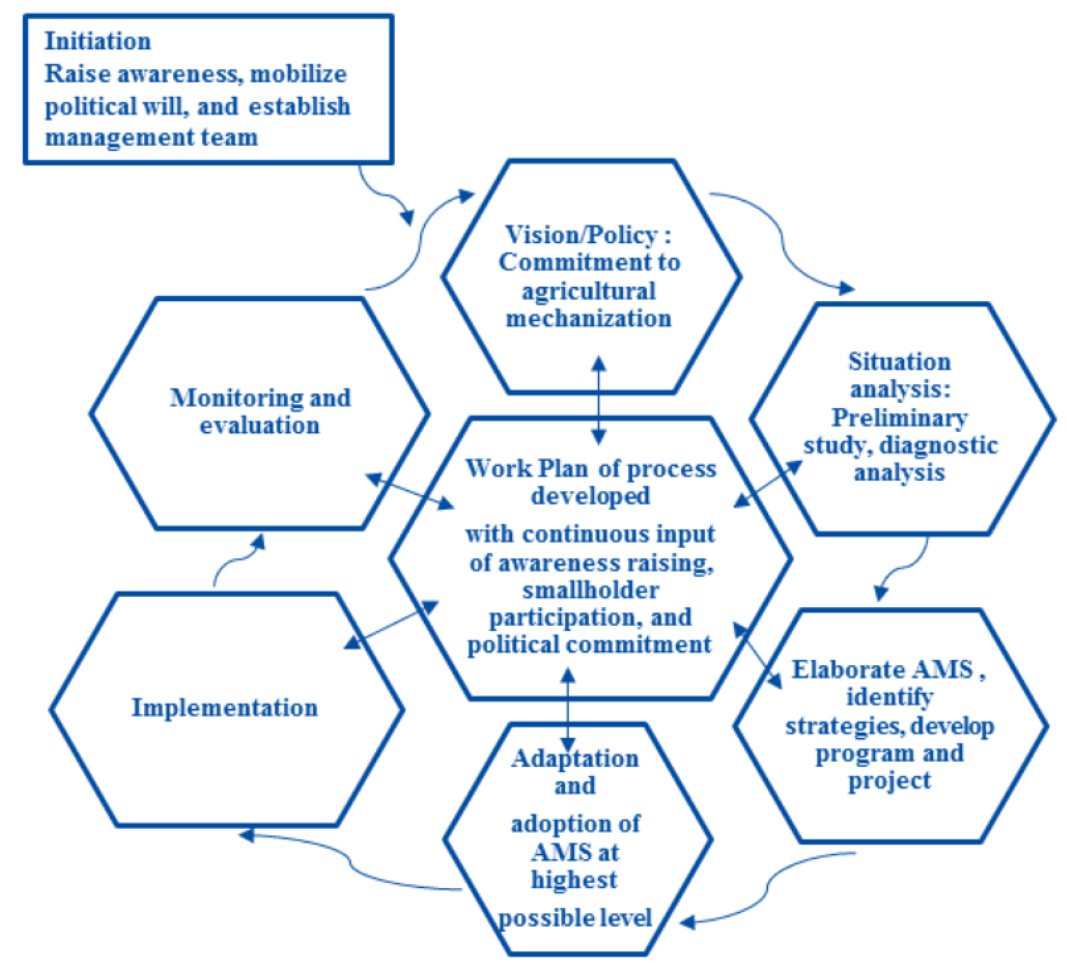
Extension and support services are essential to address these challenges and promote mechanization adoption. These services play a critical role by providing farmers with crucial information, training, and technical support. They bridge knowledge gaps and facilitate access to mechanization equipment, helping farmers overcome some obstacles associated with technology adoption. Fig. 3. below shows Process for elaboration and implementation of agricultural mechanization strategy where small holder participation and political goodwill need to be galvanized from envisioning, adoption, implementation, monitoring and evaluation in Agricultural mechanization.
Collaboration among extension services, researchers, and non-governmental organizations is vital for advancing the cause of mechanization adoption in semi-arid areas. This collaborative effort creates a supportive ecosystem that empowers farmers with the information, tools, and resources needed to embrace mechanization, improve agricultural productivity, and enhance food security in these challenging regions (Muchiri, 2012; Mutune et al., 2011).
Environmental and socioeconomic impact
Adopting mechanization in semi-arid regions of Kenya is influenced by various factors, including environmental challenges and socio-economic dynamics. These factors collectively shape the landscape of agricultural practices in these areas.
Firstly, environmental factors like low, erratic, and poorly distributed rainfall present a significant challenge. These conditions make crop production a precarious endeavor under rain-fed agriculture. Farmers in semi-arid regions often struggle with the unpredictability of weather patterns, which can impact the timing and success of their planting and harvesting. This environmental uncertainty can deter mechanization adoption, requiring consistent and timely operations for optimal results (Kalele et al., 2021).
Financial constraints and limited access to credit are additional barriers to mechanization adoption. Many small-scale farmers in semi-arid areas have limited financial resources and struggle to secure credit for investing in mechanization equipment. The high costs associated with machinery and maintenance can be prohibitive, hindering the ability of these farmers to modernize their agricultural practices (Muchiri, 2012).
Gender disparities in land ownership and land tenure security also notably impact the adoption of mechanization. Women may face challenges related to limited control over resources and decision-making power in farming activities. This can affect their ability to invest in mechanization technologies and make choices about agricultural practices (Mutune et al., 2011; Kehinde et al., 2022).
Conclusion and Policy Implications
Summarized vital findings and lessons learned on Mechanizing CA in semi-arid Kenya
Various environmental and socio-economic factors significantly influence mechanization adoption in semi-arid regions of Kenya. These factors shape the suitability of different mechanization technologies and the challenges farmers face in these areas. Environmental factors such as low rainfall and steep slopes present specific challenges for mechanization. These conditions make hand tools and tractor mechanization less suitable due to their limitations in coping with arid conditions and challenging terrain. In contrast, ox cultivation has gained wide acceptance because it excels in soil loosening, reduces labor requirements, and offers an efficient work rate, making it more appropriate for these conditions.
The availability of suitable mechanization technologies is limited, with the moldboard plow being the primary implement. However, it demands high draft requirements under hard, dry conditions, which can challenge small-scale farmers who may not have the necessary resources or access to credit to acquire such equipment. Financial constraints and limited access to credit are notable barriers to mechanization adoption, especially for small-scale farmers. The high costs associated with mechanization equipment and its maintenance can hinder their ability to invest in modernizing their farming practices.
Gender disparities in land ownership and land tenure security also affect mechanization adoption. Women may face restrictions on their control over resources and decision-making power in agricultural activities. This can limit their ability to invest in and benefit from mechanization technologies.
Extension and support services play a critical role in promoting mechanization adoption. These services provide farmers with essential information, training, and technical support, addressing knowledge gaps and facilitating access to mechanization equipment. They are instrumental in empowering farmers to overcome barriers associated with technology adoption. Collaboration among extension services, researchers, and non-governmental organizations is crucial for scaling up mechanization adoption in semi-arid areas. This collaborative effort helps create a supportive ecosystem that empowers farmers with the knowledge, tools, and resources needed to embrace mechanization, improve agricultural productivity, and enhance food security in these challenging regions.
Recommendations for policymakers, extension services, and smallholder farmers
Policymakers should place a high priority on the development and availability of mechanization technologies that are suitable for these challenging semi-arid environments. This should consider factors such as low rainfall, land fragmentation, and steep slopes, ensuring that the machinery is tailored to the specific needs of these regions. Additionally, policymakers should consider establishing the necessary support infrastructure for selecting, testing, and maintaining appropriate mechanization equipment. This can ensure that farmers have access to reliable machinery and technical assistance, further facilitating the adoption of mechanization in semi-arid areas.
Extension services play a crucial role in promoting mechanization adoption among smallholder farmers. They should provide farmers with the necessary information, training, and technical support to facilitate the successful integration of mechanization into their agricultural practices. Collaboration between extension services, researchers, NGOs, and other stakeholders is essential for scaling up mechanization adoption in semi-arid regions. This collective effort creates a supportive network that can provide farmers with the knowledge, resources, and tools needed for effective mechanization. Integrating mechanization adoption into farmer field schools and farmer business schools can enhance competency development among farmers. These programs can also serve as valuable sources of data and information for larger-scale agricultural initiatives, contributing to knowledge sharing and innovation (Mazvimavi and Twomlow, 2009).
Improving access to financial resources and credit is vital for smallholder farmers to overcome the financial barriers associated with mechanization adoption. Policymakers and financial institutions should work together to develop mechanisms that make investing in mechanization equipment easier for these farmers.
Addressing gender disparities in land ownership and land tenure security is vital to ensure equal access to mechanization resources and decision-making power. Efforts should be made to empower women in agricultural activities and promote gender equality in farming practices (Mutune et al., 2011).
Highlight of best practices for sustainable mechanization intensification
Development of Suitable Mechanization Technologies by prioritizing the development and availability of mechanization technologies tailored explicitly to smallholder farmers’ needs and the unique local conditions in semi-arid regions. This includes efficiently operating equipment under low rainfall and on steep slopes.
Extension services should play a vital role in disseminating information, providing training, and offering technical support to smallholder farmers. This educational support is crucial in promoting the adoption of mechanization practices and ensuring farmers can effectively utilize the technology. Integrating mechanization adoption into farmer field schools and farmer business schools is essential. This enhances competency development among farmers and provides valuable data and information for more extensive agricultural programs.
Collaboration among stakeholders, including policymakers, researchers, NGOs, and extension services, is essential for successfully scaling up mechanization adoption in semi-arid regions. This collaborative effort creates a comprehensive support system for farmers. Supporting the selection, testing, and maintenance of appropriate mechanization equipment by establishing the necessary infrastructure. This ensures farmers can access reliable machinery and technical assistance, crucial for successful mechanization adoption.
Improving access to financial resources and credit is critical to overcoming smallholder farmers’ financial barriers when adopting mechanization. Policymakers and financial institutions should work together to develop mechanisms that facilitate investment in machinery and technology.
Addressing gender disparities in land ownership and land tenure security is essential to ensure equal access to mechanization resources and decision-making power, empowering women in agricultural activities.