


Introduction
Wireless and remote management
Sensing modules
Wireless communication protocols
Power supply and energy harvesting
Node placement and coverage strategies
Variability assessment of environmental conditions
Sources of environmental variability and mapping
Use of statistical and machine learning methods
Impact of variability on monitoring and control
Signal preprocessing, processing, and multi-sensor integration
IoT integration in agriculture
Real-time communication protocols, synchronization, and visualization
Insights and Future Approaches
Conclusions
Introduction
With the continuous growth of the global population, the agricultural sector is under mounting pressure to meet rising food demands amid decreasing arable land, climate uncertainty, and rapid urban expansion. In response to these converging challenges, vertical farming (VF) has emerged as a transformative agricultural innovation, offering a high-yield, space-efficient, and climate-resilient solution for urban food production (Rathor et al., 2024). By relocating food systems into controlled indoor environments and using soilless methods such as hydroponics, aeroponics, and aquaponics, VF decouples food production from external climatic fluctuations and land limitations (Panotra et al., 2024). The ability of vertical farming to operate in urban spaces, including rooftops, repurposed buildings, and warehouses, enables the hyper-local cultivation of fresh produce, drastically gradually reducing food miles and associated greenhouse gas (GHG) emissions (Vatistas et al., 2022; Oh and Lu, 2023).
The integration of VF into urban infrastructure enhances food security, improves supply chain resilience, and contributes to circular economies by minimizing waste and resource use (Li et al., 2020). Since VF systems scale up, especially in a multi-tiered setup, they introduce significant microclimatic variability. Spatial heterogeneity in parameters such as temperature, humidity, CO2 concentration, and light distribution becomes more pronounced with vertical stratification (Liu et al., 2021; Rezvani et al., 2020). Without active assessment and management, these gradients can lead to non-uniform crop development, inconsistent yields, and inefficient use of inputs (Morella et al., 2023). In multilayer vertical systems, lower tiers often experience diminished airflow and light penetration, while upper layers may experience excessive heating or transpiration (Akpenpuun et al., 2023; Ahamed et al., 2023). A uniform control strategy across all layers can result in over- or under-compensation of environmental conditions, leading to wasted energy and compromised plant health (Islam et al., 2021). Therefore, variability assessment across tiers is not a minor technical refinement but a fundamental requirement for optimizing resource use and maximizing productivity in vertical farming systems (Vatistas et al., 2022).
To address these spatial challenges, smart agriculture technologies, particularly wireless monitoring and control systems, are being adopted to enable real-time, site-specific management. Internet of Things (IoT) technologies allow decentralized sensing of environmental variables and automate responses through actuators and machine learning algorithms (Rathor et al., 2024). WSNs, combined with artificial intelligence (AI) and imaging analytics, can detect localized anomalies and adaptively manage conditions such as lighting, pH, nutrient concentration, and temperature across different tiers (Saad et al., 2021; Kaur et al., 2023).
Compared to traditional wired systems, wireless technologies offer significant advantages in VF environments. Wired networks are cumbersome and impractical in tightly packed vertical stacks due to installation complexity, limited scalability, and vulnerability to corrosion and maintenance issues, especially in humid and enclosed growing conditions (Ahmed et al., 2022). Wireless systems, by contrast, enhance design flexibility, reduce infrastructure costs, and simplify deployment (Chowdhury et al., 2020). Technologies such as Low-Power Wide-Area Networks (LPWANs), notably Long-Range Wide-Area-Network (LoRaWAN), enable long-range, low-power communication, making them suitable for VF setups characterized by multiple metal-framed layers and interference-prone environments (Sanchez-Iborra et al., 2018). However, LPWAN solutions must balance energy efficiency with bandwidth limitations, especially when handling high-frequency data or image-based diagnostics (Kabir et al., 2022). Beyond communication technologies, the integration of machine learning (ML) and edge computing is pivotal to the future of smart VF systems. AI algorithms can detect and predict microclimate shifts using historical sensor data and external variables, allowing for predictive control rather than reactive adjustments (Petrariu et al., 2021).
Recent studies have demonstrated the utility of modular plug-and-play systems for real-time environmental control with minimal human intervention, highlighting their scalability and potential for commercial applications (Yusuf et al., 2022; Suresh et al., 2024). Nevertheless, the implementation of smart wireless systems in VF is not without challenges. Multi-tier, enclosed environments create signal attenuation issues, especially in dense plant canopies or when metallic enclosures are used (Singh et al., 2022). Ensuring consistent communication across layers often requires strategic sensor placement, multiple gateways, and the adoption of robust communication protocols. Furthermore, synchronization of large volumes of sensor data, reliable actuation, and energy management remain engineering bottlenecks (Rezvani et al., 2020; Ahamed et al., 2023). High initial costs, the need for skilled installation, and interoperability among heterogeneous devices also pose barriers to widespread adoption (Kabir et al., 2022; Ng et al., 2023). Against this backdrop, the motivation of this review paper is to systematically examine the current landscape of wireless environmental monitoring and control technologies in smart vertical farming. This paper explores the extent to which these systems address the challenges of spatial variability, energy efficiency, and operational scalability in multilayer vertical farm architectures. Emphasis is placed on remote management capabilities, the comparative benefits of wireless over-wired systems, and the role of AI-enabled analytics in enhancing system intelligence and adaptability. The objectives of this review study are fourfold: (i) to consolidate existing research on spatial variability in vertical farming systems and its implications for crop health and resource efficiency; (ii) to assess the performance, architecture, and communication protocols of wireless monitoring and control systems tailored for vertical farms; (iii) to explore recent integrations of AI, ML, and edge computing in enabling adaptive, predictive environmental control; and (iv) to identify technical and operational challenges in real-world deployments and propose future research directions.
Wireless and remote management
Vertical farming (VF) is an advanced method of urban agriculture that involves growing crops in vertically stacked layers within highly controlled indoor environments. These farms are typically housed in structures such as warehouses, shipping containers, or retrofitted buildings, and are equipped with artificial lighting, hydroponics or aeroponics systems, and environmental control units to maintain optimal growing conditions throughout the year (Oh and Lu, 2023; Ahamed et al., 2023). The compact, multi-layered design of VF maximizes yield per square meter, but also introduces a significant degree of spatial variability in microclimate parameters, such as temperature, humidity, CO2 concentration, and light intensity, across different vertical levels. These uneven conditions can lead to inconsistent plant growth, reduced productivity, and inefficient resource utilization if not accurately monitored and controlled (Rezvani et al., 2020). Given these challenges, there is a growing need for smart, wireless, and remotely accessible management systems in vertical farms. Traditional wired monitoring systems are often unsuitable in VF environments due to limited physical space, the complexity of installation, and high humidity levels that increase maintenance risks. As a result, wireless sensor networks (WSNs) have emerged as a more scalable and efficient alternative (Kabir et al., 2022; Ng et al., 2023).
Technologies such as LoRaWAN, known for long-range, low-power communication, and IoT-enabled microcontrollers now facilitate real-time environmental data collection and decision-making (Islam et al., 2023). These systems enable precise, tier-specific control of conditions like irrigation, lighting, and ventilation. Furthermore, remote accessibility allows operators to manage VF systems with minimal on-site labor, improving operational efficiency and sustainability (Saad et al., 2021; Kaur et al., 2023). As VF expands globally, the integration of wireless and remote systems is becoming essential to ensure uniform crop quality, resource efficiency, and the economic viability of urban agriculture.
Sensing modules
Sensing modules are a type of transducer designed to detect physical properties such as temperature, humidity, and light levels in the environment. They function by converting one form of energy into another. Due to the dynamic, non-linear, and complex nature of indoor farming, a significant number of sensors are required to effectively monitor and manage the microclimate (Bhujel et al., 2020). Sensor devices in vertical farms are crucial for monitoring air quality, water parameters, lighting conditions, and plant behavior. Acting as the nervous system of vertical farms, they help maintain optimal microclimates for crop production.
Common sensors include those for temperature, humidity, CO2 concentration, electrical conductivity (EC), pH, light intensity, and motion. According to Soussi et al. (2024), monitoring CO2 and humidity across layers is vital to prevent microclimatic heterogeneity, which can cause uneven growth and disease. Air monitoring typically uses temperature and humidity sensors (e.g., DHT22, SHT31) and CO2 sensors (e.g., MH-Z19B, SCD30), which are central to regulating thermal and gaseous conditions in plant zones. Ullo and Sinha (2021) highlight that modern smart agriculture depends on such sensors for real-time decision-making and environmental control, particularly within IoT-based systems. Water quality sensors, particularly those measuring pH and EC, are crucial in hydroponic and aeroponic systems for accurate nutrient assessment. Li et al. (2010) review the widespread use of electrochemical and optical sensors in agriculture, noting pH and EC as key indicators of plant-water interactions and nutrient uptake. They also show that these sensors are increasingly used in real-time feedback systems to improve water-use efficiency and reduce nutrient waste. Light distribution is monitored using PAR sensors or lux meters, such as TSL2561 and BH1750, which manage photoperiod and intensity in artificial lighting systems. Soussi et al. (2024) confirm that light sensors are essential for regulating growth and identifying light stress in vertically layered smart farms using WSNs.
Motion and imaging sensors, such as RGB and thermal cameras, support phenotyping, height estimation, and stress detection. Olson and Anderson (2021) emphasize the value of UAVs and ground-based imaging for precise monitoring in compact environments, such as vertical farms. Ullo and Sinha (2021) also report the growing use of RGB and multispectral sensors to monitor plant health, detect stress, and assess canopy uniformity. These optical tools enable both diagnostics and regulation, allowing for the adjustment of light quality and the early detection of anomalies. It can be suggested that integrating diverse sensor types into a modular system is not only critical for precise microclimate control but also forms the foundation for adaptive automation and intelligent farm management. Based on the reviewed studies, one promising future direction could be to further develop low-cost, energy-efficient sensing platforms that support large-scale, and high-resolution data collection across multiple layers of vertical farms. Table 1 provides a reference for selecting sensors in smart agriculture, especially for automated monitoring and control. The listed technologies represent widely adopted solutions, serving as a practical guide for both practitioners and researchers.
Table 1.
Commonly used sensing modules for automation monitoring and smart agriculture.
| Sensor type | Application area | Common models/technologies | References |
| Temperature | Environmental conditions monitoring | DH22, SHT31, DS18b20 | Islam et al. (2025); Reza et al. (2023); Bhujel et al. (2020) |
| Relative humidity | Humidity control | SHT31, DH22 | Jerszurki et al. (2021); Ogunlowo et al. (2024); Rezvani et al. (2020) |
| CO2 | Photosynthetic rate and airflow management | Mh-z19b, SCD30 | Rezvani et al. (2020); Jerszurki et al. (2021); Bhujel et al. (2020) |
| Light/illuminance | Photosynthesis/light optimization | TSL2561, BH1750, PAR sensors | Reza et al. (2023); Bhujel et al. (2020); Triana et al. (2024) |
| Soil moisture | Irrigation efficiency and soil water content | Capacitive, resistive soil probes | Bhujel et al. (2020); Li et al. (2010) |
| Soil temperature | Root zone microclimate | DS18b20, thermistors | Reza et al. (2023); Jerszurki et al. (2021) |
| PH sensor |
Assessment of nutrient solution pH in hydroponics | Glass electrode, solid-state probes | Li et al. (2010); Queiroz et al. (2021) |
| EC (electrical conductivity) | Nutrient concentration in hydroponics | Conductivity cells | Li et al. (2010); Bhujel et al. (2020) |
| Wind speed/direction | Airflow monitoring in controlled environments | Cup anemometer, ultrasonic sensors | Triana et al. (2024); Reza et al. (2023) |
Table 2 outlines the key components of a wireless remote-control system in VF. Sensor nodes collect real-time environmental data, which is processed by microcontrollers and transmitted wirelessly to a central gateway. The gateway forwards the data to a cloud platform for storage, analysis, and decision-making, often using AI or machine learning. Based on this analysis, actuators perform actions like adjusting lights, ventilation, or irrigation. A user interface or mobile app allows remote access for monitoring and manual control. Together, these components enable efficient, automated, and scalable farm management.
Table 2.
Components of a wireless remote-control system in VF.
Wireless communication protocols
Wireless communication protocols enable data exchange between sensor nodes and central controllers in smart farms. LoRa, ZigBee, bluetooth low energy (BLE), wireless fidelity(WiFi), and narrowband internet of things (NB-IoT) each offer trade-offs in range, power use, latency, and data rate. Among them, ZigBee and LoRa are most common in vertical farms, ZigBee for low power and mesh networking, and LoRa for long-range, energy-efficient communication in multi-tiered setups. BLE and Wi-Fi support mobile and imaging data, but consume more power. NB-IoT ensures strong coverage in large or underground facilities, though with higher latency. Soussi et al. (2024) highlighted LoRa suitability for layer-to-layer communication in vertical farms due to the low power draw and range.
Efficient wireless data transmission is essential where many sensors operate in electromagnetically noisy, confined environments. Soussi et al. (2024) and Ullo and Sinha (2021) provided a comprehensive comparison of these protocols. Recent studies have shown the importance of selecting the right protocol to match the scale and data needs of vertical farms. Jandl et al. (2021) demonstrated that LoRaWAN is particularly well-suited for private, low-cost, and scalable networks in VF, offering good integration with both edge and cloud platforms while minimizing reliance on external service providers.
Similarly, Ahmad et al. (2023) highlighted that the integration of low-cost Wi-Fi modules like ESP8266 in IoT-based vertical farms enables real-time control through web and mobile platforms, making them attractive for user-friendly applications where low latency is required. However, for battery-operated nodes or for farms with limited internet infrastructure, LoRa and ZigBee remain preferable. Based on these findings, it can be suggested that the protocol choices should be determined by the farm size, sensor density, need for mobility, and power budget. Abbasi et al. (2014) emphasized that protocol choice is crucial for balancing node energy life and real-time feedback bandwidth.
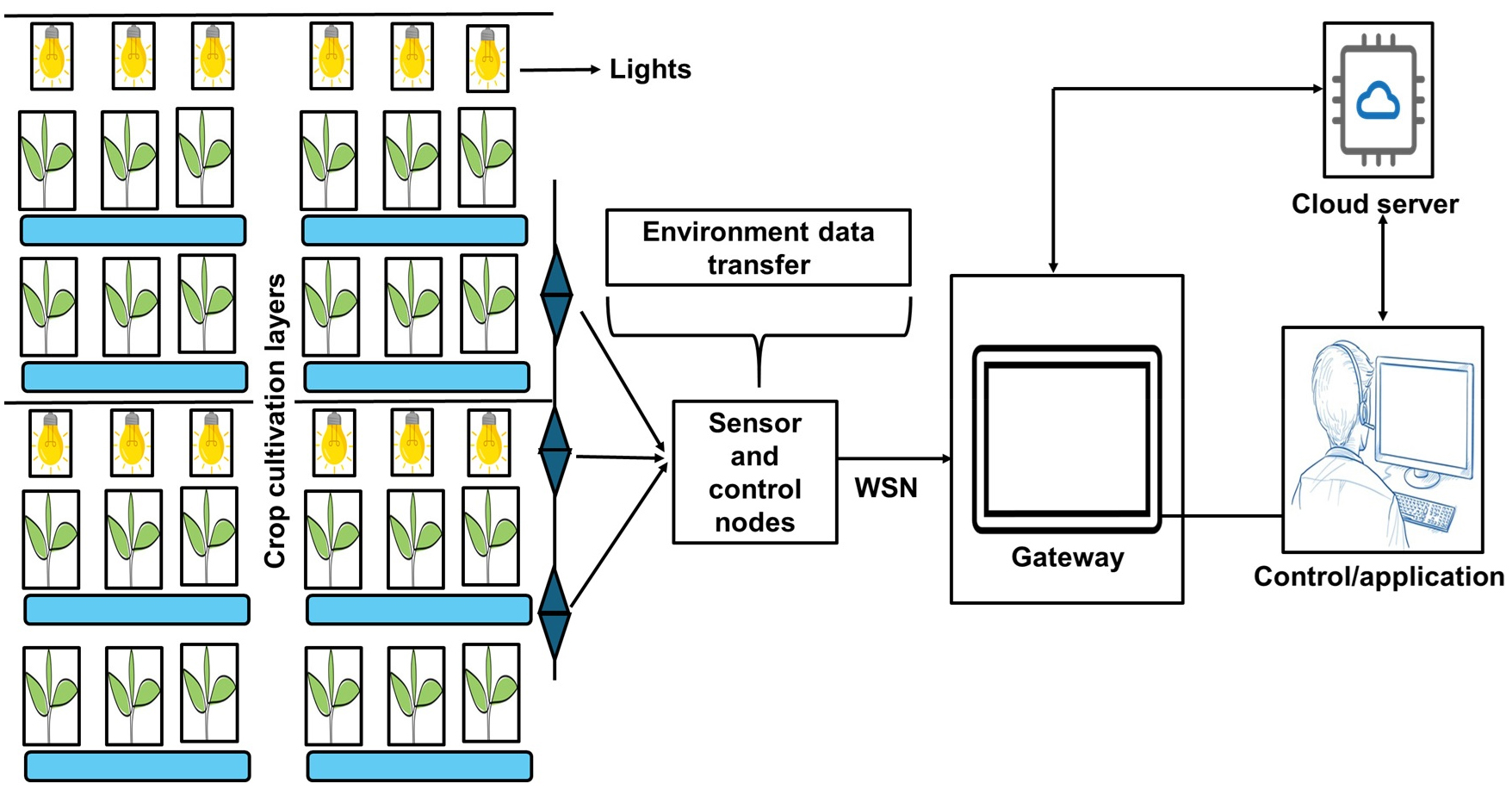
Figure 1 demonstrates a wireless remote monitoring and control system in a multi-tier vertical farm. Sensor nodes are distributed across different layers to collect environmental data (e.g., temperature, humidity, light), which is transmitted to a gateway. The gateway sends the data to a cloud platform for processing and decision-making. Actuators then adjust farm conditions accordingly, and the user can remotely monitor and control the system via a computer interface. Table 3 shows a comparison of key communication protocols used for smart and VF.
Table 3.
A comparison of key characteristics of communication protocols.
|
Protocol name | Range (m) |
Power consumption | Latency | Advantages | Limitations | References |
| LoRa | 2000 - 15000 | Very low | High |
Long-range, low Power | Low data rate | Soussi et al. (2024); Ullo and Sinha (2021); Rathor et al. (2024) |
| ZigBee | 10 - 100 | Low | Medium |
Mesh networking, Moderate range |
Limited range in Concrete structure | Soussi et al. (2024); Ullo and Sinha (2021); Rathor et al. (2024) |
| BLE | 1 - 100 | Very low | Low |
Low energy smartphone Integration | Short range | Soussi et al. (2024); Ullo and Sinha (2021); Rathor et al. (2024) |
| WiFi | 30 - 100 | High | Very low | High data rate | Power-intensive | Soussi et al. (2024); Ullo and Sinha (2021); Rathor et al. (2024) |
| NB-IoT | 1000 - 10000 | Low | Medium-high |
Wide area, good Penetration | High latency | Soussi et al. (2024); Ullo and Sinha (2021); Rathor et al. (2024) |
Power supply and energy harvesting
Energy consumption in VF is closely linked to the need for maintaining stable indoor conditions that support plant growth, maximize productivity, and off-season cultivation. Since many crops are sensitive to sudden environmental changes, a reliable and uninterrupted power supply is essential to prevent potential damage during outages (Vatistas et al., 2022). These energy demands are not limited to heating, cooling, and lighting systems, but also extend to the technology used for monitoring and control. In this context, power management becoming a central concern in vertical farm WSNs. Since many nodes are deployed in hard-to-reach or enclosed environments, they must operate autonomously for extended periods.
Traditional approaches rely on rechargeable batteries, while emerging methods incorporate solar energy harvesting and energy-aware protocols. Battery life can be significantly extended by implementing sleep modes, duty cycling, and edge computing techniques. Queiroz et al. (2021) used for these techniques in digital agriculture, particularly when deploying multi-sensor platforms in layered farms. Ullo and Sinha (2021) similarly emphasized the importance of intelligent energy management protocols to maintain long-term sensor operability in precision farms. In terms of energy saving in vertical farms, solar modules are increasingly being explored, particularly when vertical farms have transparent roofing or when artificial lights can be leveraged to power photovoltaic cells. Commuri and Watfa (2006) presented evidence that solar-powered WSNs with intelligent self-healing protocols can outperform traditional battery-only deployments in terms of longevity and resilience. Kumari and Srirangarajan (2024) showed that even in mixed WSNs where both static and mobile nodes are used, solar power combined with mobility can maintain coverage while reducing deployment costs.
Battery optimization is also addressed using predictive algorithms that estimate power consumption based on environmental conditions and data transmission frequency. Ultimately, combining efficient hardware with smart software leads to better energy profiles and longer operation times in VF WSNs. From the reviewed literature, it is evident that energy efficiency is a key concern in the deployment of WSNs for VF systems. Different studies found the limitations of battery-powered nodes, particularly in environments that are enclosed or difficult to access (Queiroz et al., 2021; Ullo and Sinha, 2021).
Node placement and coverage strategies
Node placement in vertical farms requires a distinct approach due to the three-dimensional structure of the environment. Unlike flat-field agriculture, vertical systems must optimize sensor coverage across height, width, and depth to avoid blind spots and energy waste. Younis and Akkaya (2008) showed the importance of customized node placement based on specific application needs, coverage, fidelity, or energy use, dividing methods into static, dynamic, and hybrid, with hybrids offering superior performance in vertical setups. Commuri and Watfa (2006) used geometric 3D models to show that optimal placement lowers power use and latency while enhancing data resolution, especially across vertically stacked plant beds.
Kumari and Srirangarajan (2024) showed that combining fixed sensors with mobile platforms enables adaptive coverage in response to environmental changes or plant growth, improving resolution and reducing redundancy. Sishodia et al. (2020) suggested integrating top-down and side-view sensing for near-complete coverage with fewer sensors and infrastructure, which can be enhanced by unmanned aerial vehicle (UAV) or robotic imaging. Shifting from 2D grids to adaptive 3D placement, static, dynamic, or hybrid, is vital for effective monitoring and crop management in VF. Table 4 describes various sensor layout types for smart farming systems, highlighting their structure, functionality, and suitability. It compares the 2D grid, 3D grids, and adaptive placement methods in terms of spatial coverage and application efficiency. The descriptions emphasize the trade-offs between simplicity, effectiveness, and complexity across different farming setups.
Table 4.
Comparison of sensor layout types for smart farming applications.
Variability assessment of environmental conditions
Maintaining stable and optimal environmental conditions is essential for crop productivity in controlled agricultural systems such as smart greenhouses and vertical farms. However, despite controlled settings, significant spatial, temporal, and vertical variability can exist in key environmental parameters like temperature, humidity, CO2 concentration, and light intensity. These variations directly impact plant physiology, yield, and energy efficiency. For instance, Reza et al. (2023) and Islam et al. (2025) highlighted that even within the same greenhouse structure, variations in microclimate can reach levels substantial enough to influence crop performance. In Chinese solar greenhouses, it was observed that temperature differences between vertical layers could reach up to 5oC, with distinct patterns in CO2 accumulation during nighttime. Such disparities emphasize the need for precise monitoring systems tailored to the physical layout and crop distribution.
To address this, IoT-enabled WSNs have emerged as essential tools for monitoring environmental variability. These networks enable the real-time collection of high-resolution data across multiple points within a greenhouse, supporting responsive environmental control (Islam et al., 2025; Reza et al., 2023). Moreover, advanced communication protocols like LoRaWAN have enabled long-range, low-power data transmission, making them suitable for multilayered or expansive greenhouse environments (Bicamumakuba et al., 2025). Spatial variability assessment using distributed sensors not only improves environmental regulation but also helps in identifying microclimatic zones, enabling zone-specific interventions.
Accurate variability assessment is therefore crucial for achieving uniform growth, optimizing resource use, and developing adaptive control strategies. As agriculture shifts toward high-tech, climate-resilient solutions, understanding and managing environmental heterogeneity will be central to improving crop outcomes and operational sustainability.
Sources of environmental variability and mapping
Environmental variability in VF systems challenges uniform crop growth, efficient resource use, and sustainable productivity. These variations arise from inconsistent lighting, uneven airflow, and irregular nutrient distribution, all interacting within the farm vertical structure. Lighting inconsistency is a primary contributor to spatial heterogeneity. Even standardized artificial lighting can produce uneven intensities across tiers due to obstruction, LED degradation, or light dispersion. Reza et al. (2023) and Islam et al. (2025) observed significant variation in light intensity across layers in Chinese solar greenhouses, affecting photosynthesis and plant morphology. Zakir et al. (2022) found that the angle and orientation of thermal screens altered solar radiation distribution, impacting strawberry growth. Similarly, Jerszurki et al. (2021) reported that lighting-related microclimate variation affected tomato yield uniformity in semi-closed greenhouses.
Airflow variation is another major factor. Vertical farms use passive and force ventilation, which can unevenly distribute air across layers. This impacts heat, moisture, CO2 levels, and dew formation. Rezvani et al. (2020) and Bhujel et al. (2020) noted that unbalanced ventilation causes microclimate layering, resulting in suboptimal temperature and vapour pressure deficit (VPD). Reza et al. (2023) recorded temperature differences exceeding 2°C between top and bottom layers due to airflow disparities. Nutrient delivery in hydroponic and aeroponic systems also contributes to variability. Li et al. (2010) emphasized that pH and EC inconsistencies lead to uneven nutrient uptake and crop stress. These issues worsen in multi-layered setups where water pressure, gravity, and emitter function vary. Villagran and Bojacá (2020) confirmed such irregularities compromise root-zone uniformity. To address these issues, sensor-based spatial variability mapping is widely used. Triana et al. (2024) showed that edge zones and upper corners often deviate from average environmental conditions. Bhujel et al. (2020) reviewed the use of kriging and geostatistical interpolation for visualizing temperature and humidity distributions.
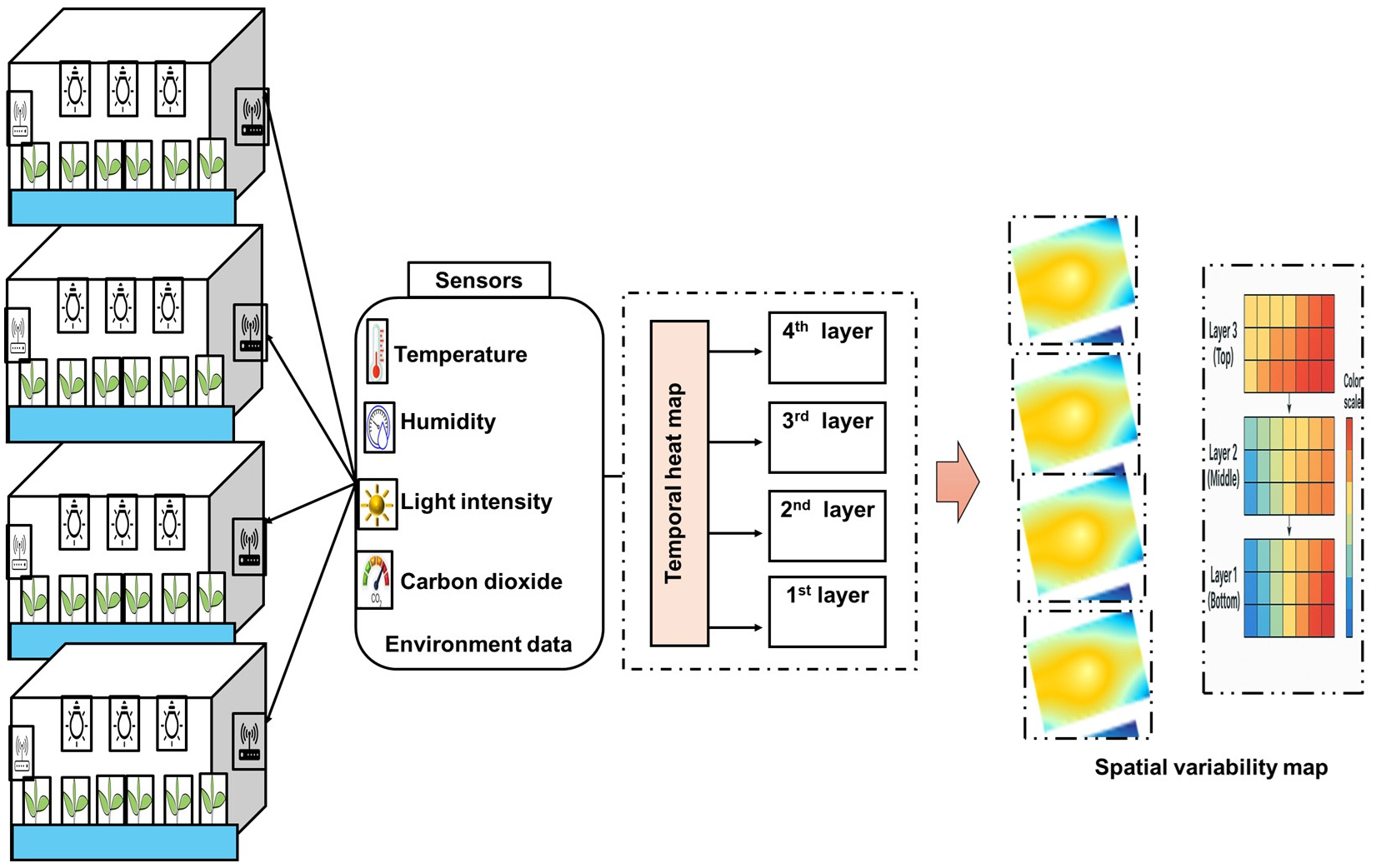
Temporal-spatial analysis further reveals dynamic microclimates. Chang (2021) reported diurnal shifts in temperature and CO2 that varied across layers due to delayed air mixing. Ogunlowo et al. (2024) observed similar vertical differences in relative humidity (RH) and temperature in poultry housing. Integrating multi-sensor platforms and spatial-temporal analytics enhances environmental monitoring, enabling precise climate control and resource targeting, ultimately improving crop uniformity and minimizing waste. Environment control systems are effective in maintaining consistent climate conditions year-round, which helps achieve higher crop yields compared to traditional methods. To do this efficiently and minimize energy waste, it is important to continuously monitor key factors like temperature, humidity, vapor pressure deficit, CO2 levels, and light intensity, and respond appropriately to the automation system of the farm when needed (Vatistas et al., 2022). Fig. 2 shows the spatial variability assessment process in VF. Climate data such as temperature, humidity, light intensity, and CO2 is collected from sensors installed at multiple layers. Temporal heat maps are generated for each layer, which are then used to develop spatial variability maps. These maps help identify microclimatic differences across vertical levels, supporting precise environmental control and uniform crop management.
Use of statistical and machine learning methods
Statistical and ML methods have become essential tools for analyzing complex datasets from vertical farms, enabling real-time decision-making, optimization, and automation. These methods support a variety of functions, including spatial interpolation, environmental clustering, and anomaly detection. Interpolation is one of the most fundamental techniques for constructing spatial maps of environmental variables such as temperature, humidity, and light intensity from limited sensor points. Villagran and Bojacá (2020) used kriging interpolation to generate horizontal microclimate maps in a carnation-producing greenhouse, revealing substantial spatial heterogeneity and allowing informed placement of actuators.
Similarly, Triana et al. (2024) applied spatial interpolation methods to create high-resolution maps of temperature, RH, and VPD for tropical greenhouses cultivating pepper. These maps were then utilized to identify poorly ventilated or excessively warm zones. Clustering algorithms, such as k-means and hierarchical clustering, have been employed to group similar environmental zones or crop behavior patterns within greenhouses and vertical farms. Rezvani et al. (2020) implemented unsupervised clustering of sensor data to evaluate patterns of optimality for temperature and humidity, ultimately producing zone-specific control recommendations based on sensor feedback. Anomaly detection, the process of identifying unexpected sensor readings or system behavior, is also gaining traction. Bhujel et al. (2020) emphasized that sensor systems are prone to drifts or interference, which can produce false alerts or mislead control systems if not corrected.
ML based anomaly detection, often built on autoencoders or time-series models, is being employed to flag outliers in real time. For instance, Akpenpuun et al. (2023) discussed the use of temporal trends and pattern recognition to differentiate between sensor faults and genuine environmental anomalies. The integration of these methods provides a scalable and intelligent backbone for real-time environmental monitoring and predictive control, crucial for high-performance VF systems. Fig. 3 presents a structured taxonomy of ML algorithms applied in smart farming prediction models.
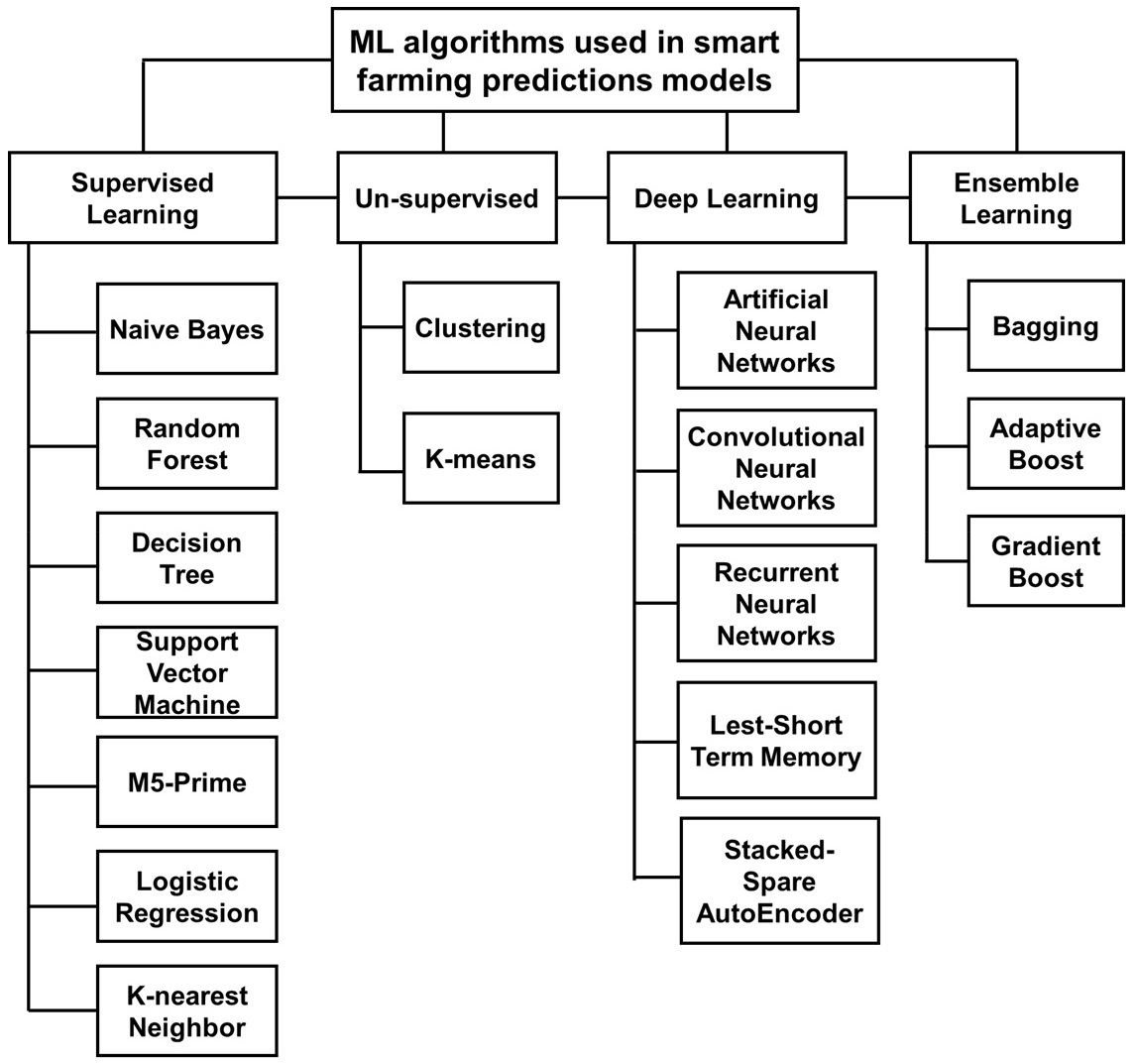
Fig. 3
Classification of ML algorithms used in smart farming prediction models (adopted from Kwaghtyo and Eke, 2022).
This framework categorizes the models into supervised, unsupervised, deep learning, and ensemble learning, highlighting their specific roles in precision agriculture for tasks such as yield prediction, anomaly detection, and climate response modeling. This classification provides a clear framework for selecting appropriate ML techniques based on the nature of agricultural data. In reviewing this structure, the diversity of algorithms emphasizes the importance of aligning model choice with prediction goals, data availability, and system complexity in vertical and smart farming contexts.
Impact of variability on monitoring and control
Environmental variability, if left unaddressed, can significantly undermine the performance and reliability of monitoring and control systems in vertical farms. From sensor degradation to control algorithm instability, the implications extend across crop health, system sustainability, and resource use. One immediate concern is sensor performance degradation in high-humidity or fluctuating environments. Ogunlowo et al. (2024) reported that sensors installed in poultry houses, comparable in thermal and humidity stress to vertical farms, experienced significant accuracy drift over time, particularly in relative humidity and temperature readings. Similar findings were echoed by Bhujel et al. (2020), who stressed the importance of sensor recalibration and protective enclosures to prolong reliability in greenhouse environments. This degradation contributes to reduced control precision, especially in systems relying on feedback loops for temperature or humidity regulation. Rezvani et al. (2020) observed that uncalibrated or drifting sensors skewed Optimality Degree (OptDeg) models, leading to improper actuation of fans and heaters.
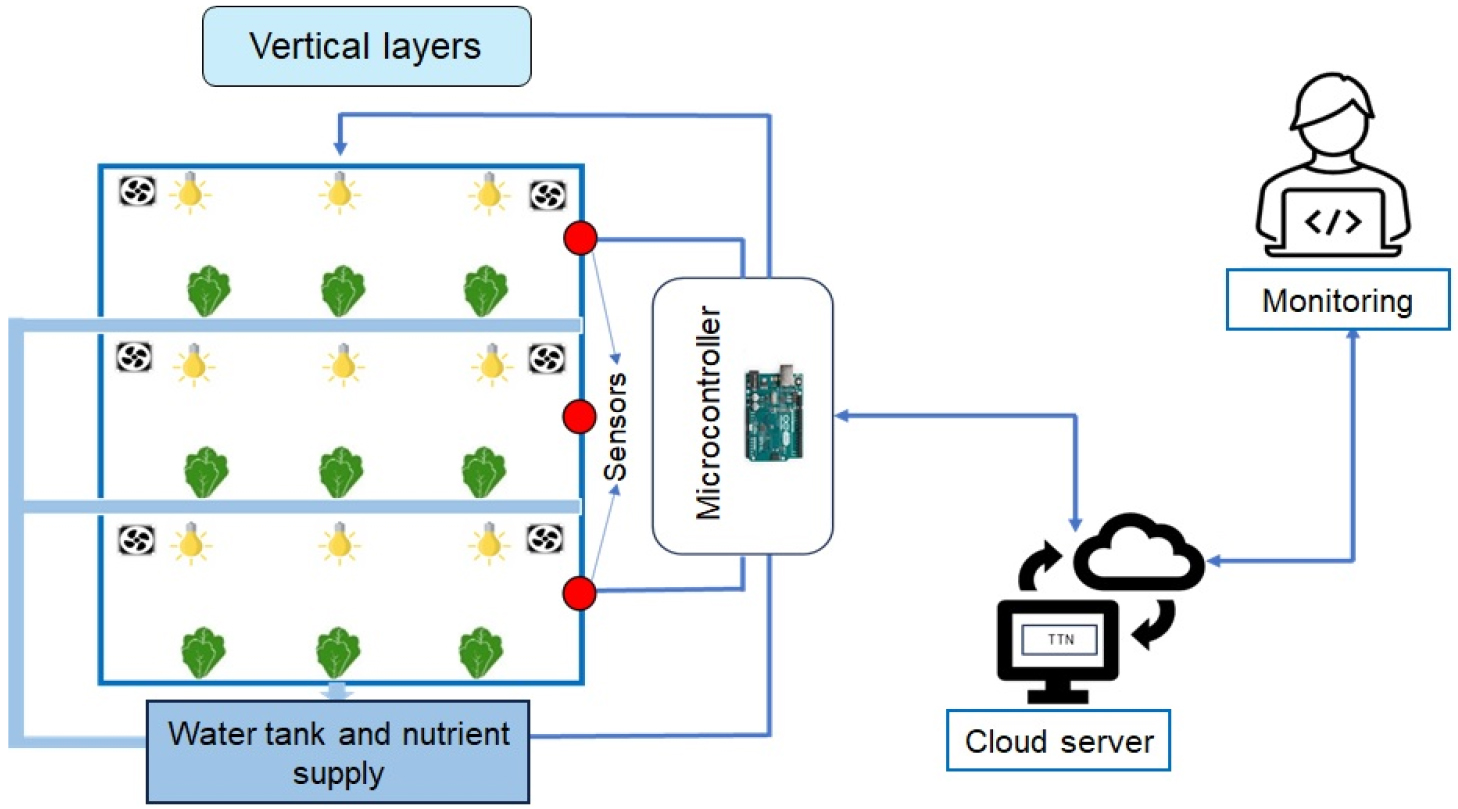
When spatial variability is not captured accurately, control algorithms operate on misleading averages, often overcompensating or undercompensating for actual needs. In turn, this leads to algorithm instability in automated systems. Jerszurki et al. (2021) demonstrated how microclimate variability caused misfiring of irrigation and ventilation systems, as algorithms failed to stabilize around desired setpoints. Inconsistent performance can also introduce oscillations or delays in achieving optimal climate conditions. Crop-level effects are equally pronounced. Spatial variability in light, CO2, or nutrient supply leads to challenges in achieving crop uniformity. As shown by Triana et al. (2024), even slight deviations in environmental parameters produced noticeable disparities in pepper plant height and biomass across the same greenhouse zone. Similar crop inconsistencies were found in strawberry production studies by Zakir et al. (2022), where light and temperature variations due to thermal screen positioning affected both yield and fruit quality. Finally, these inefficiencies culminate in resource wastage, particularly in energy and water. Akpenpuun et al. (2023) warned that uncontrolled variability often triggers excessive heating or irrigation cycles, contributing to high operational costs and environmental impact. Mitigation strategies are thus essential. These include using higher-resolution sensor arrays, regular calibration, zonal climate control, and advanced anomaly detection methods. Triana et al. (2024) and Rezvani et al. (2020) both provided spatial modeling and sensor fusion as proactive steps toward reducing the variability impact on control performance. Fig. 4 Illustrates a typical IoT based architecture used in vertical farms, where sensor data from multiple layers is collected by a central controller and transmitted wirelessly to a cloud server. The system enables remote monitoring and control via a user interface, integrating actuators for lighting, airflow, and nutrient supply based on sensor feedback.
Signal preprocessing, processing, and multi-sensor integration
In advanced vertical farms, high-resolution sensor data forms the foundation of system responsiveness and adaptability. However, this data is often compromised by electromagnetic interference, calibration drift, and hardware limitations (Ranganathan and Nygard, 2010). To ensure reliability, preprocessing stages typically use noise reduction methods, such as moving average filters, wavelet denoising, or adaptive filtering. Wavelet-based denoising methods, such as Discrete Wavelet Transform (DWT), are particularly effective at filtering out unwanted noise in IoT sensor data while preserving signal integrity (Faria et al., 2018). These methods significantly improve sensor signal quality by reconstructing accurate signal representations from noisy measurements.
Signal normalization and calibration are equally crucial, especially in multilayered environments like vertical farms, where environmental gradients may exist. Sensors across layers often operate under varying microclimatic conditions, and aligning their data to a common baseline through calibration ensures valid comparisons and aggregation (Krishnamurthi et al., 2020). Real-time signal calibration using known references or baseline trends helps maintain consistency and accuracy in sensor readings across different locations and modalities. Error detection and correction are essential components of preprocessing frameworks. Techniques such as Principal Component Analysis (PCA), Statistical Time Series Analysis, and cross-correlation are widely used to identify anomalies and outliers in sensor readings (Mahmud et al., 2017). For instance, Mahmud et al. (2017) implemented a Butterworth filter followed by cross-correlation to detect structural anomalies, an approach that can be adapted for identifying sensor faults or environmental anomalies in VF systems.
The integration of multiple sensors across vertical layers introduces challenges in synchronization and alignment. Multi-sensor data fusion techniques have been developed to consolidate disparate inputs into coherent outputs (Ahmed et al., 2022). Algorithms such as weighted averaging, Kalman filtering, and Dempster–Shafer theory are commonly employed to fuse environmental, imaging, and actuation data. Kalman filtering, in particular, enables real-time tracking and prediction of environmental trends, supporting precise actuation control (Krishnamurthi et al., 2020; Hernandez et al., 2022). Multi-modal fusion becomes essential when combining data types beyond scalar measurements, such as integrating RGB and thermal images with environmental sensors (Bhawiyuga et al., 2019). Fuzzy logic-based decision fusion or ML driven feature-level fusion have been proposed in smart workplace monitoring systems, and these approaches are directly applicable to controlled environment agriculture (CEA) (Silva et al., 2024; Lee et al., 2023). Additionally, compressed sensing approaches reduce the sampling burden without sacrificing data richness, allowing for the efficient reconstruction of fused signals (Lee et al., 2023; Li et al., 2012).
IoT integration in agriculture
An efficient IoT integration framework is fundamental to remote VF monitoring. Node-to-gateway architectures are preferred for their scalability and modularity (Wu et al., 2023). Each sensor node communicates with a central gateway, typically via low-power wide-area network (LPWAN) protocols such as LoRa, Zigbee, or BLE, depending on distance and power requirements (Haseeb et al., 2020). In scenarios with real-time constraints, mesh topologies enhance robustness by providing alternative communication paths. Middleware platforms act as a bridge between the physical layer and application logic. These platforms abstract the hardware and provide standardized application programming interface (APIs) for configuration, querying, and control. Hernandez et al. (2023) demonstrated that an edge-based middleware system running on ESP32 microcontrollers could process channel state information (CSI) and execute lightweight ML models locally. Middleware also supports essential services like device discovery, session management, and secure communication. Encryption and authentication are typically managed using lightweight protocols optimized for IoT environments. Haseeb et al. (2020) proposed a security layer utilizing linear congruential generators to protect WSN data transmissions from adversarial attacks, an approach relevant for preserving sensor data integrity in agricultural deployments. Additionally, data-centric middleware platforms facilitate flexible data routing and semantic interpretation of sensor readings (Sasirekha et al., 2020). These systems can enable task delegation to cloud or fog layers based on computation and latency requirements, optimizing both performance and energy usage in large-scale VF infrastructures. It demonstrates how environmental data from multiple layers, captured by distributed sensors, is transmitted through WSN to a centralized gateway.
Real-time communication protocols, synchronization, and visualization
Timely data delivery is crucial in smart farms, where sensor triggers drive system actuation. Wireless communication protocols, such as Wi-Fi, Zigbee, and LoRa, facilitate seamless data transmission in these setups. Depending on the application, a trade-off is often made between data rate, range, and energy consumption (Jaladi et al., 2017). Time synchronization across sensor nodes ensures coherent interpretation of temporal trends, especially in dynamic environments. Techniques such as Reference Broadcast Synchronization (RBS) and Timing-Sync Protocol for Sensor Networks (TPSN) reduce jitter and phase drift across distributed systems (Ranganathan and Nygard, 2010). Accurate time stamping allows for reliable multi-sensor fusion and event correlation, both of which are crucial for decision-making in controlled environments.
On-device edge processing has emerged as a powerful paradigm, reducing latency and bandwidth usage. As demonstrated by Hernandez et al. (2023), ESP32 microcontrollers can handle CSI sampling, signal denoising, and ML inference in real time, making edge-based processing an ideal solution for time-sensitive VF operations. Data visualization is another critical component of VF management systems. Web-based dashboards allow farm operators to monitor real-time trends, analyze historical data, and receive alerts (Ahmed et al., 2022). Dashboards typically feature modular components such as heat maps, time-series graphs, and event logs. These are designed to be user-friendly and customizable to the specific needs of different stakeholders. Real-time notification systems are essential for operational safety and responsiveness. These systems alert users via short message service (SMS), email, or push notifications when anomalies (e.g., CO2 over-threshold events) are detected (Suko et al., 2018). Visualization platforms can also incorporate predictive models trained on historical data to forecast conditions and suggest proactive interventions (Silva et al., 2024). Cloud platforms support long-term data analytics, such as ML model training for disease forecasting or trend analysis (Li et al., 2012; Krishnamurthi et al., 2020). In contrast, fog computing offers a middle-ground solution, processing data closer to the source while relieving the cloud of latency-sensitive tasks. Together, these layers form a distributed computing architecture suitable for scalable VF systems. Time-series analysis techniques and anomaly detection frameworks thus play a dual role, supporting both current system control and future planning (Ranganathan and Nygard, 2010; Song, 2025). Integrating these systems ensures that smart VFs are not only reactive but also predictive and adaptive.
Insights and Future Approaches
The review provides an extensive examination of methods for assessing environmental variability, highlighting advances in sensor deployment, multi-layered data integration, anomaly detection, and IoT-based control in vertical farms and smart greenhouses. Its strengths lie in its breadth, covering a wide range of tools such as WSN, IoT, and ML, making it highly relevant for complex environments, and in its focus on statistical and ML-based analyses, ensuring a data-driven approach to precision agriculture. The review also shines in addressing hardware constraints and signal processing strategies, including DWT, PCA, and Kalman filtering, which lend it a strong engineering foundation. However, despite its richness in technological details, the review lacks clear guidance for selecting the right solution based on operational context, especially for low-tech versus high-tech farms.
The comparative benefits and trade-offs between methods (e.g., Kriging versus deep learning for spatial mapping) are stated but not clearly structured, and environmental constraints (such as high humidity, lighting inconsistencies, and restricted airflow) are acknowledged but not prioritized in terms of long‑term cost and data quality impacts. Table 5 shows a comparison aligning sensor and algorithm choices with specific working environments, their advantages and limitations with the implications across farms of varying sizes and technical capabilities, and best practice recommendations for multi‑layer sensor placement and data fusion approaches.
Table 5.
Comparison of environmental monitoring methods and their applications in vertical farms.
To optimize environmental monitoring and control in vertical farms, it is crucial to match the technology with the complexity and variability of the environment. In highly dynamic, multi-layer setups, IoT-based multi‑sensor platforms combined with advanced techniques like Kalman filtering or deep learning enable seamless data fusion and accurate prediction of environmental changes. In moderately variable environments, spatial interpolation and clustering techniques can effectively highlight microclimate differences and guide targeted interventions. Meanwhile, for low‑tech farms or constrained budgets, simpler approaches such as fuzzy logic or rule‑based controls can still deliver satisfactory results when precision demands are moderate.
Overall, while the review captures state‑of‑the‑art advances in precision agriculture, it would benefit from more targeted recommendations and comparative analyses to guide practitioners and researchers in selecting the right methods for specific environmental and operational constraints.
Conclusions
The adoption of VF represents a critical innovation for meeting future food security challenges amid rapid urbanization, land scarcity, and climate uncertainty. However, the multi-tiered and enclosed nature of VF systems introduces spatial and temporal environmental variability that can compromise crop uniformity, resource efficiency, and system stability. This review has demonstrated that smart wireless monitoring and control systems offer powerful tools to overcome these challenges by enabling real-time, site-specific environmental regulation.
The integration of WSN), IoT platforms, and low-power communication protocols such as LoRa, ZigBee, and BLE has revolutionized data collection and management in VF. These technologies support the continuous monitoring of key parameters temperature, humidity, light intensity, CO2 concentration, pH, and electrical conductivity across vertical layers. Additionally, the use of modular sensing platforms and low-power microcontrollers has allowed for scalable and energy-efficient deployments. Advanced signal preprocessing techniques, including wavelet denoising and Kalman filtering, further ensure high-fidelity data acquisition.
ML and edge computing have emerged as critical enablers of predictive and adaptive environmental control. By leveraging historical and real-time data, ML algorithms facilitate anomaly detection, spatial interpolation, and zone-based climate optimization. These capabilities enhance crop uniformity, reduce energy waste, and support automated control of irrigation, ventilation, and lighting systems. Despite these technological strides, several operational challenges persist. These include signal attenuation in metal-framed and plant-dense environments, sensor drift in high-humidity conditions, energy constraints in battery-operated nodes, and interoperability issues among heterogeneous devices.
To fully realize the potential of smart VF systems, future research should prioritize the development of self-calibrating, energy-harvesting sensor nodes, multi-modal data fusion techniques, and standardized IoT architectures that facilitate plug-and-play interoperability. Moreover, spatial variability mapping and real-time environmental analytics must be further refined to support more granular and autonomous climate control. Cloud and fog computing integration, coupled with intuitive user interfaces and predictive alert systems, will be instrumental in ensuring system resilience and user accessibility.