


Introduction
Cabbage characteristics and field condition
Cabbage harvesting practices
Cabbage harvesting mechanisms and field performance
Technological trends of cabbage harvester
Advancements in cabbage mechanization
Global overview of cabbage harvesting mechanization
Overview of leading commercial cabbage harvesters
Limitations in cabbage harvesting
Commercialization direction of mechanized cabbage harvesting systems
Conclusion and recommendations
Introduction
Cabbage (Brassica oleracea L. var. capitata) is a well-known leafy and economically important vegetable cultivated worldwide (Fahey, 2003). The origin of cabbage is unknown, but likely to have originated from the southern and western coasts of Europe or the Eastern Mediterranean, specifically the Asia Minor region or ancient Greece (Maggioni et al., 2010; Maggioni, 2015). The cabbages and other Brassicas market size is projected to reach USD 40.59 billion in 2024 and is expected to reach USD 47.08 billion by 2029 (MI, 2024). The market expansion of cabbage is anticipated due to its versatility in various culinary applications, including salads and fermented products like kimchi and sauerkraut. Nutritionally, cabbage offers significant health benefits, being rich in essential nutrients such as vitamin C, vitamin K, dietary fiber, and others (Šamec et al., 2017). These nutrients contribute to supporting the immune system, promoting bone health, aiding digestion, and providing antioxidant effects (Yu et al., 2022).
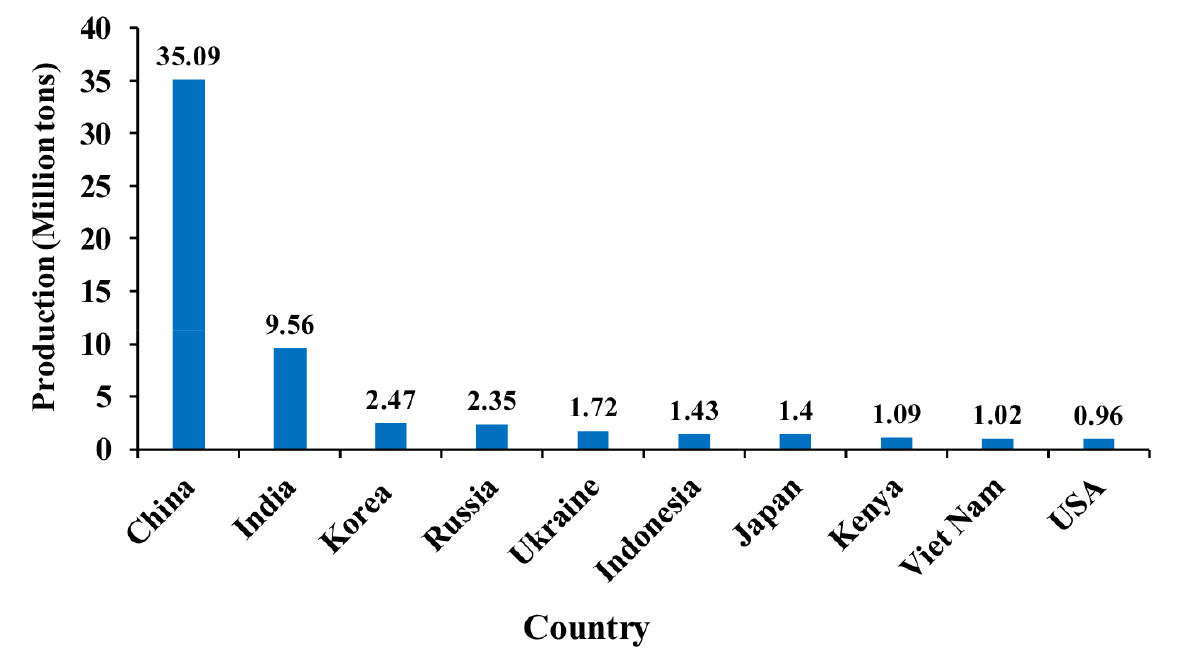
Mechanization advances in cabbage harvesting procedures have resulted in higher global cabbage production, which formed 1.56% million metric tons from 2019 to 2021 (MI, 2024). Producers cultivate cabbages across a range of climates, with major production regions including the Asia, Europe, and USA. China is by far the largest producer, accounting for nearly half of the global cabbage supply. Fig. 1 highlights the significant disparity in production levels between China and other major cabbage-producing countries.
Mechanization of the cabbage cultivation process is essential to improve the efficiency of the cabbage harvesting systems. As global demand for cabbage increases, farmers need reliable and efficient harvesting methods to keep up with production needs. Advanced machinery plays a key role in meeting these demands by minimizing labour costs and speeding up the cabbage harvesting. However, for these systems to be effective, the design of key components, such as the cabbage cutting and conveying part, is crucial to avoid damage to the cabbage during harvesting practices. Currently, a few mechanized harvesters are available on the market with limited advanced cabbage harvesting features. The efficiency and adoption of these systems are further hindered by seasonal variations, challenging working conditions, and factors such as limited manpower, repetitive tasks, low wages, and topographical barriers, all of which significantly impact the effectiveness of cabbage harvesting systems. Labor shortages are common in this sector, largely due to the declining involvement of younger generations, as well as the effects of industrialization and capitalization (Vrochidou et al., 2022). China, the major cabbage producer, still employs manual harvesting methods, leading to increased labor demands, workload, and higher production expenses (Tong et al., 2023; Yang et al., 2021). Efficient harvesting methods become increasingly vital for farmers seeking to optimize costs and meet market demands, as handpicking of cabbage heads involves half of the total labour as well as 77.7% of the total labour costs required in cabbage production (Chagnon et al., 2004). Over the year, Russia, USA, Europe, and other developed countries like China, Japan, and Korea have made significant progress in developing diverse technical methods for cabbage harvesting (Kanamitsu and Yamamoto, 1998; Alatyrev et al., 2020). Researchers developed harvesting aid conveyors to expedite the harvesting process. While this semi-automatic and automatic approach enhanced efficiency, it still necessitated a sizable workforce for cabbage cutting and picking (Du et al., 2019).
The soft and easily damaged characteristics of cabbage cause their mechanized harvesting quality to fluctuate during actual production (Tong et al., 2023). Therefore, during the 1960s, USA developed cabbage harvesters that integrated mechanical picking with lifting, cutting, and trimming to reduce the reliance on manpower. Significant harvest losses rendered those prototypes impractical for widespread operation, prompting subsequent improvements and commercial production. However, while the large tractor-mounted harvesters are appropriate for large fields, they are less effective for smaller, individually cultivated plots with narrow pathways (Du et al., 2019). China, Japan, Korea, and India lead the research on cabbage harvesters in Asia, with a primary focus on developing small self-propelled harvesters due to the prevalence of small and separated lands under cabbage cultivation (Sarkar and Raheman, 2021; Sarkar and Raheman, 2024; El Didamony and El Shal, 2020). To address the cabbage harvesting practices, the agricultural industry has experienced a significant increase in technological advancements focused on upgrading the harvesting process. Mechanization, automation, and precision agriculture are among the major trends that are reshaping the way of cabbage harvesting. Mechanized harvesting equipment is a significant advancement to identify and cut cabbage heads precisely, minimizing waste and damage. The technologies have been used in various forms, from simple tractor-mounted cutters to fully automated models. Advanced systems, equipped with sensors, can assess cabbage head size and maturity ensuring only those that meet the desired criteria are harvested. It reduces labour requirements, making it a cost-effective solution for small and large-scale farming operations. Mechanical harvesting is faster and more consistent than traditional methods, increasing productivity and profitability. Nowadays, researchers are developing artificial intelligence and machine learning algorithms for cabbage harvesting to autonomously identify, cut, and collect heads. Post-harvest handling and logistics are integrating technology, leading to advancements in packing, chilling, and shipping. These advances are increasing the shelf life of cabbage and lowering losses that occur after harvesting. The industry has used the integration of internet of things devices to facilitate regular monitoring of temperature, humidity, and other environmental variables during transportation. This technology minimizes waste and guarantees the delivery of fresh, quality products to the customers.
Researchers identified challenges in different mechanical properties and engineering issues in the cutting process due to different patterns of cabbage cultivation, such as variation in crop maturity, vinyl, mountainous and slope areas. The pulling and cutting part of the harvester experienced missed grabbing and cutting of the cabbage, including side cut and overcut of the stem, because of the cutting attitude of the cabbage cutter. To address these challenges, Park and Son (2022) developed a sensor-fusion-based cutting attitude control system for Korean cabbage by maintaining the level, height of cutting, and angle for minimizing the cutting damage and improving the harvesting efficiency. However, for the system to perform optimally, proper sensor installation is crucial. Sensors must be robust enough to withstand environmental factors such as dust, water, and mud, while also accurately detecting the cabbages’ varying geometric shapes to ensure precise cuts. Cabbage cutting blade speed, sliding angle, and cutting diameter all have an impact on harvesting performance (Dongdong et al., 2015). Kanamitsu and Yamamoto (1996) state that the puling mechanism, which includes a pair of bidirectional screw augurs and a set of feeding belts, requires proper maintenance to enhance the performance of the walking-type harvester. A tractor-mounted cabbage harvester faces several challenges in terms of design, manpower, and efficiency, particularly in multi-row operations. Moreover, stability and vibration can be significant issues for tractor-mounted and self-propelled harvesters, affecting the performances and the quality of the harvested cabbages (Jang et al., 2021). A new technology for cabbage harvesting reduces damage by using an elastic tray, apron, and flexible flooring, minimizing the impact of falling heads. Theoretical studies identified optimal parameters, and production tests confirmed the reduction of head damage to 5-7% of the total mass (Alatyrev et al., 2020).
To prevent damage during the harvesting process, it is important to identify critical conditions and analyze the movement behavior of cabbage throughout the process. This article focuses on the physical and mechanical properties of cabbage, followed by the methods of cabbage harvesting and the various mechanisms employed in cabbage harvesters to improve the operational performance of the cabbage harvester and minimize harvesting damage. The review provides advanced mechanical and automated solutions to enhance harvesting equipment efficiency and overall productivity, addressing the limitations of the mechanization.
Cabbage characteristics and field condition
Understanding the physical characteristics of cabbage is essential for the design of cabbage harvesting equipment, as well as the subsequent stages of handling, transporting, cleaning, grading, packing, storing, and processing. Geometric characteristics, such as head size, stem length, and root diameter, and other factors like weight, and density of the cabbage heads, in addition to their firmness and external texture are essential considerations in the design of harvesting equipment (Swe et al., 2022). Understanding these attributes is important to design machinery and systems that can efficiently harvest cabbage without damage. Cabbages exhibit significant variability in size and weight depending on the cultivar and growing conditions. While regular cabbage is cultivated worldwide, Napa cabbage is primarily grown in countries like China, Japan, and Korea. Due to differences in land size and cultivation practices, harvesting strategies for these two types of cabbages can vary. Table 1 highlights the key characteristics that distinguish Napa cabbage from regular cabbage (Clifton seed, 2024; FDL, 2024). Typically, cabbage heads have diameters ranging from 10 to 30 cm and heights between 10 and 25 cm, with weights varying from 30 to 50 N. These dimensions are crucial for designing transport and handling systems that can accommodate such variability without causing damage. The moisture content of cabbages, around 90-95%, contributes to their density and firmness, making them susceptible to mechanical damage during handling and harvesting. For instance, the forces required to uproot cabbage range from 155.68 to 418.2 N vertically and 186.88 to 498.35 N horizontally, with maximum horizontal pulling forces reaching up to 792.65 N in sandy loam soil. These mechanical properties are important for optimizing cutting positions and techniques in mechanical harvesters. On the other hand, in many cases the farmhouses do not standardize the ridge and row distances for cabbage production (Lee et al., 2018). However, variations in field conditions, including inter-row and inter-plant spacing, can influence the harvesting process. In Korea, cabbage fields typically feature ridge heights of 100-300 mm, ridge widths of 500-900 mm, and furrow widths of 200-630 mm. Cabbages vary significantly in size and weight based on cultivar and growing circumstances (Ali et al., 2019). Fig. 2 showed the geometric characteristics of cabbage, and cabbage field scenario in Korea.
Table 1.
Characteristics of the different types of cabbages.
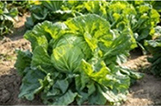
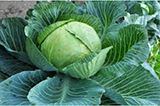


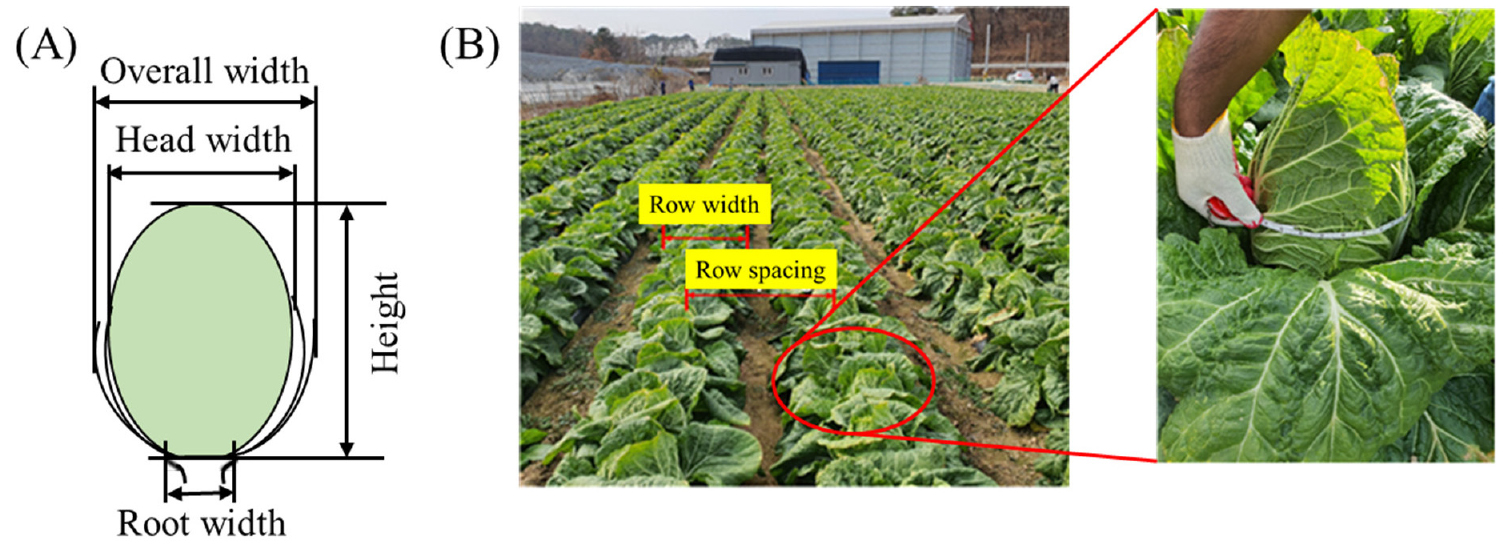
Fig. 2.
Physical characteristics of cabbage (A), and Korean field pattern and measurement procedure of cabbage diameter (B) (Reza et al., 2021).
Cabbage harvesting practices
Cabbage harvesting practices are important to ensure the quality and maximize yield of cabbages. Timely harvesting of cabbages is essential to maintain their size and firmness, since starting the harvest too early might result in undeveloped heads, while delayed harvesting can lead to splitting and rotting. The harvesting period of cabbages varies depending on the variety, with some varieties available throughout the year (RHS, 2024). Additionally, some studies emphasize the importance of timing in harvesting, suggesting that optimal harvest periods can significantly affect post-harvest quality and shelf life (Zheng et al., 2023). Various studies have documented the common practice of manual harvesting techniques, where workers cut the heads from the stem, leaving some outer leaves to protect the cabbage during handling. The common approach includes hand-cutting the cabbage heads at the base using a sharp knife or sickle, ensuring minimal damage. This method allows for careful selection of mature heads, which is important for maintaining quality and market value (Alatyrev et al., 2024). Furthermore, some regions use simple tools like hoes or spades to help loosen the soil around the roots, allowing for easier extraction of the cabbage heads. Conversely, manual harvesting remains prevalent, particularly in regions where labor is abundant and machinery is limited. Additionally, elderly workers face limitations in this practice due to posture issues, and prolonged labor for harvesting cabbage from a large-sized field area may have negative health effects. To solve the issues, the application of mechanization can be beneficial; for example, using mechanical harvesters for cabbage collection followed by manual selection can optimize both efficiency and quality (Sarkar and Raheman, 2023; Alatyrev et al., 2024).
Cabbage harvesting methods vary significantly, reflecting advancements in agricultural mechanization and traditional practices, despite the application of some mechanization methods. Fig. 4 presents the trends from manual to mechanical cabbage harvesting practices. Studies show a growing preference for mechanical harvesting because of its efficiency and potential to lower labor costs. Research revealed that a mechanized cutting system can increase efficiency by 50% faster than manual labor. For instance, studies highlight the development of specialized harvesting machines that minimize damage to the crop while maximizing yield (Bhagwan et al., 2023). In addition to handheld and simple mechanized methods, a variety of common harvesting practices exist, including semi-automatic and automatic methods. Semi-automatic practices primarily involve tractor-mounted, walking models, each with a unique design. Among these, tractor-mounted cabbage harvesting is very common in many countries, such as Korea. A tractor powers the cabbage harvesting equipment in this system. The cabbage harvesting equipment automatically harvests and cuts the cabbages from their roots, then transports them through a conveyor and into the collection box. In contrast, the harvesting equipment functions as a cabbage collector, manually cutting the cabbages before placing them on the conveyor, which then transports them to the collection box. This system eliminates the grabbing and cutting step, manually cutting the cabbage before placing it onto the conveyor. Despite the tractor-mounted cabbage harvester effectiveness for large-scale harvesting, its application in small, fragmented fields poses significant challenges. The fractured nature of these areas limits the efficiency and practicality of mechanical harvesting practices, making it difficult to fully utilize the capabilities of such equipment in smaller-scale operations. Korea is still using a tractor-mounted cabbage collector, and research is underway to develop a self-propelled automatic harvester. Japan and China are also actively implementing automatic harvester practices. However, in most cases, due to the variation of the planting area and variety of cabbage, it is difficult to uniformly design the automatic cabbage harvester.
Proper harvesting practices not only improve the cabbage quality, but contribute to overall farm productivity and profitability. The mechanization of cabbage harvesting has significantly advanced with the development of various commercial cabbage harvesters. A self-propelled harvester for high-capacity operations, integrating advanced navigation and control systems to move through fields autonomously or with minimal operator input. These machines often feature comprehensive systems, including conveyor belts, cutting heads, and storage bins, to efficiently cut, clean, and store cabbages in a single pass. Fig. 3 depicts the process of harvesting and collecting cabbages as it is designed in the cabbage harvester. To enhance the understanding of mechanized cabbage harvesting practices, it is essential to discuss the technical advancements made in mechanism design and software algorithms, as well as the limitations associated with the developed systems. Table 2 provides an overview of mechanized cabbage harvesting practices, detailing the harvesting systems, their technical features, design or mechanism changes, and limitations (Chagnon et al., 2004; Bergerman et al., 2016; El Didamony and El Shal, 2020; Chowdhury et al., 2023; Sarkar and Raheman, 2024; Gao et al., 2024).

Fig. 3.
Cabbage harvesting practices trends from the manual to the self-propelled methods; A: (YNA, 2008); B: (Reza et al., 2021); C: (Hachiya et al., 2004); and D: (Asano et al., 2023).
Table 2.
Overview of mechanized cabbage harvesting systems.
Cabbage harvesting mechanisms and field performance
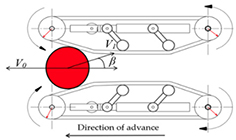
A self-propelled cabbage harvester primarily relies on crawler wheels to bear loads, while the cabbage conveyor, along with the pulling, cutting, and conveying devices, plays a crucial role in efficiently collecting and harvesting cabbages. Different shapes of belts, root-cutting blades, and spindles for cabbage picking vary the performance of the cabbage harvester. Furthermore, root-holding plates and guide wings are crucial for successful operation, as grabbing tools lift cabbages from the ground and feed them to the root-cutting knives. These knives use single or dual disc blades designed mechanisms according to the specific working environment. A rotating toothed and sharpened disc, with a diameter of 200 to 260 mm and rotational speeds of 400 to 1750 rpm, was used to effectively cut cabbage stems and roots at a harvesting angle of 25 to 35°, depending on the cabbage variety and harvester design (Du et al., 2016; Yang et al., 2022). In the conveying system, the shape and speed of the belt are crucial. These belts are typically made of rubber, PVC RT, or silicone rubber in various shapes, with most researchers using V-shaped or fork-shaped belts to guide and convey cabbages. Some systems also utilize roller chain drives or biaxial augers beneath the feed belts, applicable to walking, automatic, and tractor-mounted cabbage harvesters (Albarran et al., 2017; Bolhuis et al., 2007; Kanamitsu and Yamamoto, 1996). The research on cabbage harvesting mechanisms has undergone several theoretical analyses. Ali et al. (2019) conducted a kinematic analysis to optimize cabbage harvesting and ensure effective operation. They investigated various design parameters, including cabbage variety, transfer speed, transportation width, and the sizes of cabbage-holding links. The study focused on the impact of link lengths on the mechanism’s position, velocity, and acceleration. The simulation determined that the recommended and effective cabbage transfer speed, link length, and transportation width should be 0.2 m/s, 190 to 200 mm, and 500 to 600 mm, respectively.
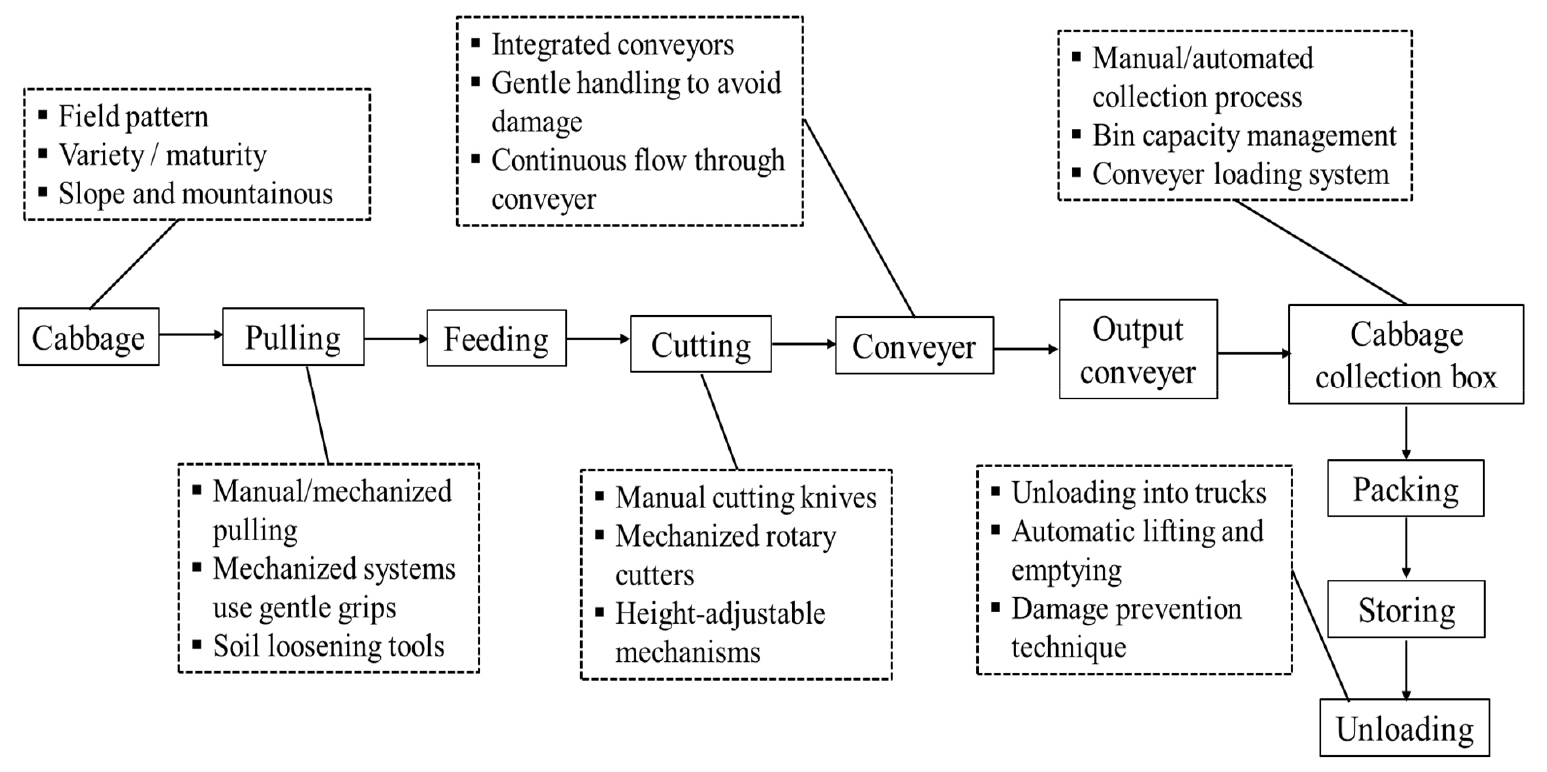
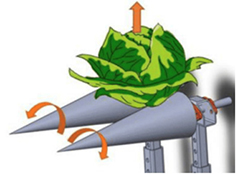
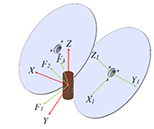
Yang et al. (2022) developed a prototype self-propelled cabbage harvester and tested the performance of various harvesters, specifically focusing on the cutting, pulling, and conveying unit. The experiment conducted on various cabbage varieties and fields with vinyl-mulched ridges. The experiment found that the harvesting practices on vinyl-mulching are critical, and the performance is poor compared to the field without vinyl. In addition to testing the harvester in the field, researchers have also carried out an experiment in a laboratory setting to enhance the efficiency of the cabbage harvesting mechanisms. Park et al. (2021) carried out a laboratory-based experiment, utilizing a simulator and a 3D-printed model of cabbage, to increase the conveying speed of the cabbage relative to working speed. The results showed that the conveyor speed should be 1.11~1.22 times higher than the working speed. Later, validated the experiment using actual cabbage, achieving a success rate of 83.3% was validated. These findings align with the advancements seen in major cabbage-producing countries, where harvesters have been successfully developed and implemented in field conditions. However, in the majority of cases, it is crucial to carefully consider the factors associated with the mechanization of the cabbage harvester, and to persist in conducting research on harvesting techniques to ensure the effective development of the cabbage harvester in countries developing automatic harvesters. Due to the improper design and practices of the cabbage harvesting mechanisms, the problems occurred in the field during the experiment, leading to variation in cabbage quality (Figs. 5 and 6). In addition to global cabbage harvesting practices, which are often specifically designed for various cabbage types, these systems commonly utilize rotating cutting discs or oscillating blades, with cutting forces adjusted according to the specific variety of cabbage. Conveying systems typically employ chain or belt conveyors, featuring mesh-web or clamping belts to securely transport the cabbages. Harvesters also incorporate scraper rollers, enhancing the overall quality of the cabbage. While existing systems in Korea generally remain semi-automated and require manual assistance, there has been a noticeable shift toward fully automated solutions in advanced practices. To provide a clearer understanding, Table 3 includes illustrations and diagrams that highlight the unique challenges associated with the key mechanisms for pulling, root cutting, and conveying, showcasing examples of the units used for various cabbage types and local agricultural practices (Zhou et al., 2017; Zhang et al., 2022; Tong et al., 2023).

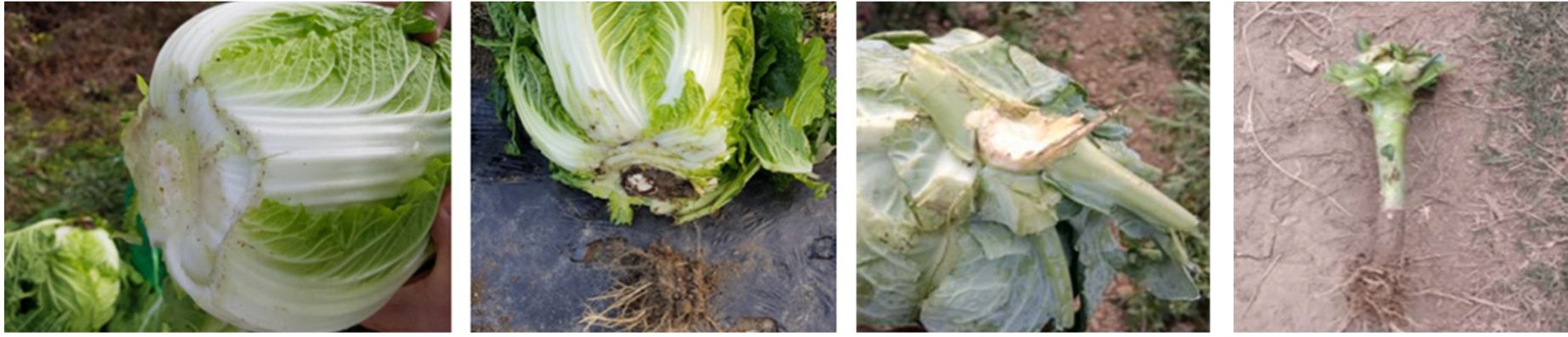
Fig. 6.
Cutting quality variations in different cabbage varieties using a mechanical harvester (Yang et al., 2022; Sarkar and Raheman, 2024).
Table 3.
Overview of available pulling, cutting, and conveying mechanisms used in cabbage harvesters.
Technological trends of cabbage harvester
Advancements in cabbage mechanization
Research on cabbage mechanization practices has been conducted in the 20th century with the introduction of basic cutting and collecting for evaluating the working performance of the harvester (Xiao et al., 2019). Traditional labor-intensive practices have been transformed into more efficient and automated processes. Recent innovations include the development of high-precision cutting mechanisms, sophisticated mechanical harvesters, and advanced automation and control systems. For instance, the integration of GPS guidance, robotic arms, and real-time monitoring systems in harvesters like the Ploeger AR-4W and DeWulf RA3060 has significantly improved harvesting accuracy and efficiency. These technologies ensure minimal crop damage, higher yields, and reduced labor costs, making cabbage harvesting more sustainable and profitable. The use of autonomous vehicles in agriculture is another emerging trend that promises to revolutionize cabbage harvesting. Autonomous harvesters can operate continuously and adapt to varying field conditions without human intervention, leading to significant reductions in labor requirements and operational costs. Considering the advancement of agricultural mechanization and automation technologies on a worldwide scale, artificial intelligence has emerged as an essential approach e.g., e Single Shot MultiBox Detector (SSD) (Liu et al., 2016); R-CNN (Ren et el, 2015) YOLO (Redmon et al., 2016) to enhance the efficiency of agricultural output. According to Qiu et al. (2024), a deep learning method that combines traditional image processing with the YOLOv5 model to recognize cabbage root posture, reducing inaccuracies in root cutting and achieving high precision and recall, thereby enhancing cabbage harvesting efficiency. Accelerometers, gyroscopes, and linear potentiometers were used by Park and Son (2022) to measure cabbage cutting height, angle, and location. Kalman filters were applied to forecast tilt posture, but it was found that precision deteriorated over time. The study by Asano et al. (2023) focuses on autonomous cabbage harvesting using deep learning techniques, addressing challenges such as backlight exposure and the selection of unsuitable cabbages in the rear row. To overcome these issues, the study introduces novel recognition methods that detect cabbages using their lower portion and employ an RGB-D camera for accurate selection. Additionally, sliding-mode control is utilized to enhance the automated harvesting process in sandy loam soil. The empirical findings demonstrate the effectiveness of these methodologies. Sarkar and Raheman (2024) developed and tested a cabbage harvester prototype on three Indian cabbage varieties. The harvester includes cutting, pushing, conveying, and propelling units, along with a storage bin and handle. Optimal settings were determined as 590 rpm cutting speed, 0.25 m/s forward speed, and 0.1 cm cutting position. A YOLOv8 model with 0.938 precision controlled the pusher via Arduino. Powered by multiple batteries, the harvester achieved 77.5% cutting efficiency, 7.5% damage rate, and met ergonomic safety standards. Cutting mechanisms are critical for ensuring clean cuts and minimizing damage to cabbage heads during harvesting. Advanced cutting systems use high-precision blades and sensors to identify the optimal cutting points. For example, the Oxbo 6420 employs automated cutting heads that adjust in real-time based on the size and position of the cabbage, ensuring uniformity and reducing waste. Vision technology often integrates with these systems to scan the field, enabling precise cuts that adjust to varying plant heights and densities.
Mechanical harvesters have evolved from basic designs to sophisticated machines capable of handling large-scale operations. The Grimme RH 24-20 and ASA-LIFT CM 100 are contemporary examples that offer efficient and consistent harvesting solutions. The Grimme RH 24-20 features robust frames and efficient conveyor systems that transport harvested cabbages with minimal damage, ensuring high productivity and reduced crop loss. Similar to the Grimme RH 24-20, the ASA-LIFT CM 100 boasts versatility and ease of maintenance, ensuring its suitability for a wide range of field conditions and crop types. These advancements in mechanical harvesters contribute to cost-effectiveness and operational efficiency in large-scale farming operations (GRIMME Tech) (Grimme) (ASA Lift). Automation in cabbage harvesting has brought substantial advancements in labor reduction and operational efficiency. Advanced harvesters like the Ploeger AR-4W and DeWulf RA3060 integrate automation and control systems to manage various aspects of the harvesting process. These systems often include GPS guidance for precise navigation, robotic arms for accurate cutting, and real-time monitoring for performance optimization. The incorporation of these features enhances the speed and accuracy of harvesting while allowing for continuous operation with minimal human intervention, thus reducing labor costs and increasing productivity.
Global overview of cabbage harvesting mechanization
Early in the 1930s, Russia invented the first cabbage harvester, making a significant contribution to agricultural mechanization (Du et al., 2016). Over an extended period of time, there was significant focus on the advancement of several technological methods for cabbage harvesting worldwide (Alatyrev et al., 2018). Later, Europe, USA, and other advanced nations achieved significant accomplishments in this domain (Zhou et al., 2017). Furthermore, there has been an increased focus on the development of cabbage harvesting machinery in China, Japan and Korea in recent years (Song et al., 2000; Gao et al., 2015; Lee et al., 2020; Kiraga et al., 2021; Swe et al., 2021). Cabbage harvesting technology has evolved significantly, focusing on mechanization to enhance efficiency and reduce labor costs. Recent advancements include the development of multivariate cabbage harvesters, which allow for various harvesting schemes tailored to specific agro-technical conditions. These harvesters can reduce labor and operational costs while maintaining quality, keeping damage to cabbage heads below 4% during harvesting processes (El Didamony and El Shal, 2020).
China has made significant developments in advancing mechanization in cabbage harvesting, driven by the high demand for cabbage production nationwide. Despite considerable efforts by the government and research centres to mechanize the process, cabbage harvesting has largely remained dependent on manual labour. Previous studies by Wang (2011) and Li et al., 2013 proposed enhancements to the 4YB-1 type harvester, however, these proposals remained largely conceptual and did not include the development of physical prototypes. For the successful harvesting of cabbage, conveyor mechanism is important to reduce the mechanical damage. Therefore, various conveyor mechanisms, including chain clamping, screw conveyors, and clamping conveyors, have been studied conveyor. Based on the importance, China has been conducting the research on to develop the conveyor mechanism for single row to multi-row harvesters. Zhou (2013) developed a double-helix conveyor method to reduce potential damage, while Du (2017) introduced a self-propelled cabbage harvester with a caterpillar-like design, though they did not address significant damage rates. Other researchers also conducted studies on a coping-type harvester limited to uniformly sized cabbages, ball-clamp structure with a wavy conveyor belt to wrap the cabbages, which remains in the testing or development phase. Even though the test results are not satisfactory but it could be reduced by changing the belt materials and tensioning mechanisms (Cai et al., 2020). The device is designed to fulfil the requirements for cutting cabbage roots. Li et al. (2023) designed a root cutting devices and conducted a theoretical simulation to minimize the miss cutting by suitable combinations among the parameters. Compared to the traditional methods, the the maximum cutting stress and specific cutting energy can be reduced 40% under the optimal parameter combination that might help to design the cabbage cutting equipment (Wang et al., 2022). Henan Province recently introduced a self-developed cabbage harvester, which significantly improved operational efficiency in cabbage cultivation. This automated system, capable of collecting, measuring, and storing, processes five to eight tons per hour, surpassing manual labour by more than ten times. The harvester integrates innovative features like CR sponges to reduce potential damage to the produce. Developed by an institute under the Ministry of Agriculture and Rural Affairs, this harvester is priced at a fraction of the cost of similar imported models and is currently being implemented in 11 provincial-level regions in China (SM, 2024).
In recent years, technological advancements in Japanese cabbage harvesting have seen significant development, primarily motivated by the urgent need to decrease labor scarcity, enhance operational effectiveness, and uphold quality production standards within the agricultural industry. In Japan, technological advancements in cabbage harvesting methods have emerged as a direct response to the demographic shift toward an elderly farming population and the growing need for agricultural automation (Mulgan, 2000). Furthermore, Japanese researchers and engineers have actively developed novel harvesting systems specifically tailored to meet the unique requirements of cabbage production. The advent of robotic harvesters has emerged as a significant paradigm shift in Japanese cabbage harvesting technology (Shah et al., 2023). The aforementioned systems commonly include sensing technologies, such as RGB-D cameras, in order to precisely identify and determine the precise location of cabbage heads. The findings presented in this study illustrate the capacity of automated systems to achieve or surpass the efficiency levels of manual harvesting. Future projections suggest further advancements in Japanese cabbage harvesting technology. Researchers primary areas of interest include improving grabbing mechanisms, increasing system speed, and improving harvesters adaptation to diverse field circumstances. It is predicted that the integration of artificial intelligence and machine learning approaches will play a progressively significant role in enhancing the efficiency of harvesting operations.
Due to the recent demand for advancements in cabbage harvesting, Korea is playing a major role in the development of cabbage harvesters (Ali et al., 2021). Despite the increase in production and cultivated area, the methods of harvesting and collecting cabbage remain unmechanized. Besides, labor scarcity is one of the big issues in Korea, where the mechanization of upland farming urgently requires considerable labor to cope with the reduction in agricultural workforce, as well as rapid aging and the continuous rise in rural wages. The national demand has prompted a variety of research endeavors in this sector, including the development of automatic and semi-automatic tractor-implemented Chinese cabbage harvesters and prototypes (Ali et al., 2019; Song et al., 2000). These studies focused on the direction of Chinese cabbage cultivation style, harvesting, and post-harvesting working systems (Kabir et al., 2024; Han et al., 2021). Nevertheless, Hong et al. (2015) reported an insufficient mechanization status for harvesting for upland crops, including cabbage harvesters. Dongdong et al. (2015); Du et al. (2016) have mechanized in advance to meet the functional requirements for both small and large fields. Hence, the development of machinery for upland crops, such as the tractor-mounted Chinese cabbage collector, is necessary to make the cabbage-collecting process easier for farmers. Driven by the demand for enhanced mechanization in upland crop cultivation, particularly in cabbage harvesting, both government and private companies in Korea have focused on developing solutions for a self-propelled cabbage harvester that aligns with Korean cabbage cultivation trends. Research on this topic began long ago, leading to the successful development of several prototypes. Notably, these prototypes often feature a multi-row compatible cabbage collector that eliminates the need for cutting. Instead, workers manually feed the cabbages onto the conveyor, which transports them to the collection box, thereby significantly reducing labor involvement and overall harvesting costs. However, due to the complexity of designing efficient pulling and cutting mechanisms, most cabbage harvesters used in Korea are tractor-mounted. Currently, several companies and universities are actively developing self-propelled cabbage harvesters, which incorporate sensor-based systems to avoid incomplete or excessive cabbage cutting. The future direction of Napa cabbage harvesting equipment in Korea will likely incorporate AI-based tools, enabling harvesters to adapt to different cabbage varieties and field patterns with automatic pulling, cutting, conveying, loading, and unloading functions. This advancement would further optimize harvesting efficiency and reduce labor dependency.
Europe, USA, and other developed countries have already developed a relatively stable mechanized cabbage production system and auxiliary tools (Gao et al., 2015). After forming the basic structure of a cabbage harvester worldwide, a research on to develop cabbage harvesters has reached its peak in Europe, USA, and Japan. Europe and USA have historically marketed the cabbage harvester, primarily offering trail-type or suspension-type models. Some models come with a cabbage head conveyor, enabling them to collaborate with a transport vehicle. In Asia, Japan spearheaded the research, and their products are mainly small and compact self-propelled harvesters (Du et al., 2016).
Overview of leading commercial cabbage harvesters
The VITUS Brassica Industry is an advanced commercial cabbage harvester designed to eliminate manual labour and maximize efficiency. Capable of speeds up to 6 km/h, it excels in challenging weather and tough field conditions. The harvester uses a combination of torpedoes, guide rods, and soft clip bindings to gently handle cabbages, protecting their delicate tops while efficiently removing them from the field. A stainless-steel blade ensures precise cutting of the roots and outer leaves, with an optional synchronization feature to maintain cutting accuracy regardless of speed. The ingenious leaf removal system and automatic filling mechanism further streamline the harvesting process. With the capacity to replace up to 15 workers, the VITUS Brassica Industry offers a quick return on investment, making it an ideal solution for high-volume cabbage harvesting under varying field conditions (VME, 2024).
ASA-LIFT MK & TK Series cabbage harvesters are designed for multi row operations for both fresh market and industrial cabbage harvesting, offering robust solutions tailored to growers needs. The MK1000 (lift-mounted) and TK1000 (trailed) models efficiently handle cabbage sizes from 1 to 8 kg, with a daily capacity of up to 1.5 hectares. These machines feature innovative designs, including adjustable rubber belts, torpedoes for guiding cabbages, and a unique double-disc cutting system that ensures precise stalk cutting. The TK150B model includes a 5-ton bunker and advanced cleaning and sorting systems for optimal processing, making ASA-LIFT a world leader in cabbage harvesting technology (Zonna BV, 2017).
Taylor Farms has significantly advanced its harvesting operations by incorporating automated systems, particularly for crops like cabbage. The company has developed and fine-tuned cabbage harvesters that allow for direct cutting, reducing the need for manual labor and enhancing efficiency. These machines are designed to improve product quality by minimizing mechanical damage during harvesting, which is critical for maintaining the integrity and shelf life of the cabbage. By automating the process, Taylor Farms has been able to reallocate workers to other tasks, optimizing overall productivity. The engineering team continuously works on refining these machines to ensure they meet high standards of cleanliness and quality, crucial for downstream processing. While the development of such technology is time-intensive and costly, the investment typically pays off within two to three years, with the machines capable of operating efficiently for up to a decade, depending on maintenance (Calif, 2017).
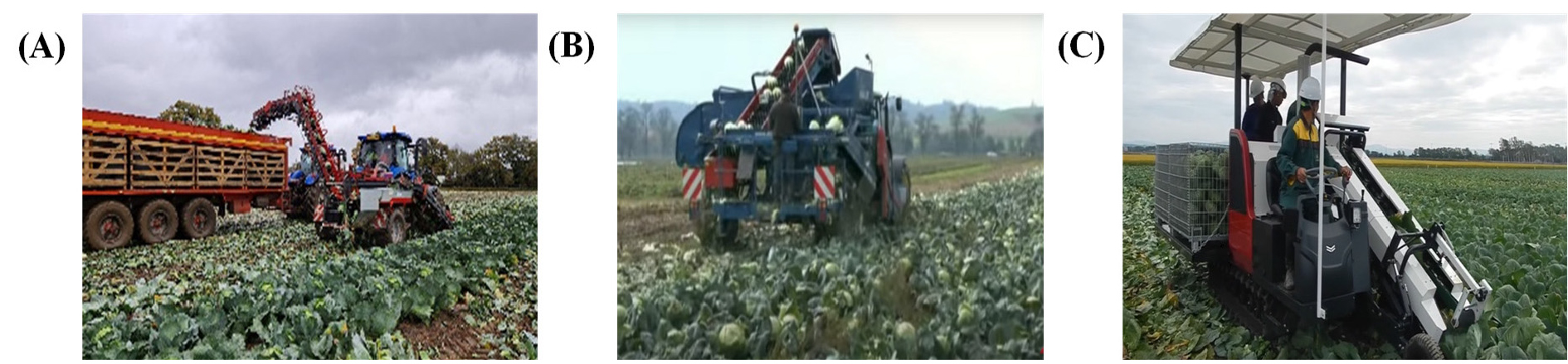
Commander I cabbage harvester by Univerco is designed to harvest cabbages gently, allowing them to be stored for up to 9 months without damage. This machine stands out by minimizing mechanical bruising, making it ideal for long-term storage. The cutting discs height is adjustable on-the-go, ensuring precise cuts based on cabbage type and ground conditions. Features include damage-free harvesting, adjustable leaf retention, and lateral picker control from the cab. The harvester can replace 15 to 20 workers, with a capacity of approximately 250 boxes per day. Various loading conveyors are available to suit long-term storage needs (Univerco, 2024). Additionally, other notable cabbage harvesters in the industry include models from Yanmar, Verhoest, John Deere, and innovations like the Koolrooier and Raven - SBGuidance on self-propelled cabbage harvesters. Startup in France and automated cabbage farming in Hokkaido further demonstrate the global advancements in this sector, continuously pushing the boundaries of efficiency and technology in cabbage harvesting. Fig. 7 illustrates an example of existing commercial cabbage harvesters from different companies.
Limitations in cabbage harvesting
• Mechanized cabbage harvesters require a significant initial investment and skilled labour to operate. These machines can be challenging to use on small, fragmented land, and there is a shortage of farmers with the necessary expertise.
• Mechanized harvesting can lead to higher rates of crop damage due to mechanical errors. This can negatively impact the quality and market value of the harvested cabbages.
• Cabbage comes in various shapes, sizes, and densities depending on the variety, making it difficult for harvester to adapt to all types. Some harvesters are designed for specific varieties, limiting their overall utility and effectiveness.
• Efficiency and effectiveness of mechanized harvesters are highly dependent on field conditions, including terrain, soil type, and moisture levels. Poor conditions can significantly reduce the performance and productivity of these machines.
• Repeated use of harvesters in cabbage fields can lead to soil compaction, reducing soil fertility and adversely affecting future cabbage production.
Commercialization direction of mechanized cabbage harvesting systems
For the commercialization of mechanized cabbage harvesting systems, several key factors need to be addressed to enhance their scalability and widespread adoption. First, cost-efficiency must be improved (Shettima et al., 2016), especially in systems like vision-guided and robotic harvesters, which currently face high development and maintenance costs (Lowenberg-DeBoer et al., 2020). Reducing these expenses through streamlined design (Li et al., 2023), better material selection, and efficient manufacturing processes will make them more accessible to small- and medium-sized farms. Additionally, improving system robustness and adaptability to diverse field conditions—such as varying terrain, weather, and crop sizes—will enhance their performance across different agricultural environments.
Another area for development is user-friendliness. Many systems, particularly those that rely on advanced sensors and AI, require skilled operators and complex setup procedures (Mahmud et al., 2023). Simplifying the interface, automating more processes, and offering better technical support could make these systems easier to use for non-expert farmers. Furthermore, reliability under different environmental conditions is crucial, particularly for vision-based systems that can struggle in poor lighting or adverse weather.
Integration with existing farm management tools, such as GPS-based precision farming and data analytics platforms, can further enhance system efficiency by enabling data-driven decision-making (Schumacher et al., 2023). Moreover, to make these systems commercially viable, after-sales service, technical support, and training for farmers must be prioritized to ensure long-term usability and minimize downtime. Finally, government incentives or subsidies could play a significant role in promoting the adoption of these technologies, particularly for smaller farms, which may find it difficult to justify the upfront investment without financial assistance.
Conclusion and recommendations
Cabbage is a highly valuable leafy crop, with global demand driving the need for increased production efficiency. Currently, cabbage farming heavily relies on manual labor, which limits productivity and exposes the industry to challenges such as labor shortages. The adoption of mechanized cabbage harvesters presents a promising solution to these issues, offering significant benefits in terms of labor reduction, increased harvesting speed, and enhanced crop quality. Continuous operation of mechanized harvesters for extended periods enables rapid harvesting, minimizing crop losses due to adverse weather conditions and ensuring the collection of cabbages at their peak ripeness. This not only preserves the nutritional value of the produce but it also aligns with market standards and consumer expectations. Although the initial investment in these machines is high, the long-term savings on labor costs and the potential for increased yield make mechanized harvesting a financially viable option for many farmers. The integration of advanced technologies, such as robotics, computer vision, and artificial intelligence, has further transformed cabbage harvesting. Japanese advancements in this area serve as a model for agricultural automation, addressing labor scarcity while maintaining stringent quality standards. The ongoing development of these technologies, including the use of machine learning algorithms and sensor technologies, continues to enhance the precision and adaptability of harvesters. Additionally, the integration of drones equipped with multispectral imaging for crop monitoring and yield estimation provides valuable data that harvester systems can integrate for improved decision-making. Given these advancements, farmers should carefully consider economic factors, crop quality, and local labor availability before adopting mechanized harvesting systems. By leveraging these technologies, farmers can significantly boost productivity, reduce labor dependency, and ensure consistent quality, thereby enhancing global cabbage production and enabling higher efficiency, improved crop quality, and more sustainable agricultural practices.