


Introduction
Methodology
Occurrence, Health Risks, and Regulatory Limits of CBZ and CPF in Apples
Occurrence of CBZ and CPF residues in apples
Human health risks associated with CBZ and CPF exposure
Regulatory limits and monitoring requirements
Sensor technologies for CBZ and CPF detection
Working principles of electrochemical and optical sensors
Sensors for chemical residue detection
Sensors for CBZ and CPF Detection in Apples
Analytical performance and detection limits of electrochemical and optical sensors
Categories of sensors involved in CBZ and CPF detection
Multi-chemical detection sensors
Nanomaterial-enhanced sensors with low detection limits for CBZ and CPF detection
Characteristics and advantages of the nanomaterials-based sensors
Detection limits relative to MRLs
Current challenges and future perspectives
Conclusions
Introduction
Global fruit and vegetable production reached approximately 2.1 billion tons in 2023, highlighting the growing importance of horticultural crops in food security and human nutrition (FAO, 2024). Fruits are rich sources of essential vitamins, minerals, dietary fiber, and antioxidants, contributing significantly to healthy diets and reducing the risk of chronic diseases (Aune et al., 2017). Global fruit production exceeded 880 million metric tons in 2022 and continues to increase as economic development improves access to nutritious foods worldwide (Aung and Chang, 2014; FAO, 2023; Our World in Data, 2024). Consequently, the fruit industry has become an important contributor to agricultural economies in both developed and developing countries.
The expansion of global fruit production has been accompanied by increased use of agricultural inputs, particularly fertilizers and pesticides, to improve crop yield and quality. According to FAO (2024), fertilizers and pesticides contribute to approximately 30% of agricultural production gains, while studies estimate that fruit losses could reach 78% in the absence of pesticide applications (Tudi et al., 2021) (Fig. 1(a)). Although these chemicals play a critical role in protecting crops from pests and diseases, their extensive use has raised concerns regarding food safety and environmental contamination (Tudi et al., 2021). Agricultural practices account for an estimated 65% of chemical contamination in fruits while the remainder originates from contaminated soil and water, post-harvest treatments, and environmental pollutants (Tudi et al., 2021; EFSA, 2020) (Fig. 1(b)). Because fruits are frequently consumed fresh or undergo only minimal processing, pesticide residues can persist and enter the human food chain.
Among fruit crops, apples (Malus domestica) are among the most economically important and widely consumed worldwide. Global apple production reached approximately 97.34 million metric tons (Fig. 1(c)), ranking third after bananas and watermelons (FAO, 2020). China is the leading producer, followed by India, Russia, Turkey, Poland, and the United States. Apples are consumed both fresh and in processed products such as juice, puree, vinegar, and sauces. However, apple orchards are highly susceptible to fungal diseases and insect infestations, resulting in substantial pesticide use to maintain productivity and fruit quality (Chen et al., 2024).
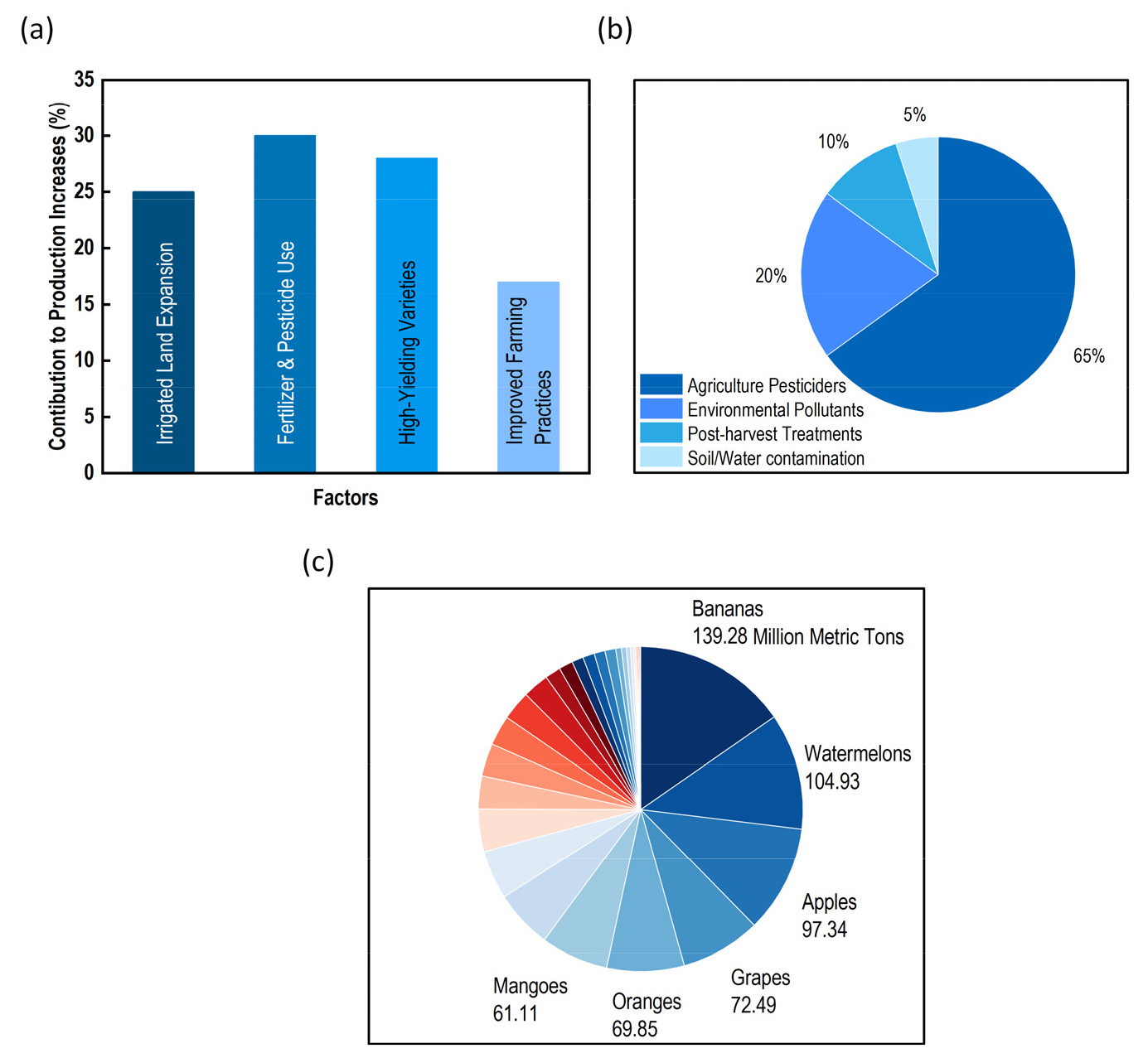
Fig. 1.
Factors influencing fruit production and sources of chemical contamination. (a) Major factors contributing to increased agricultural production include the expansion of irrigated land, fertilizer and pesticide use, high-yielding varieties, and improved farming practices. (b) Primary sources of chemical contamination in fruits, showing contributions from agricultural pesticide applications, environmental pollutants, post-harvest treatments, and soil/water contamination. (c) Global fruit production in 2023, highlighting the leading fruit crops by production volume (million metric tons). Data sources: FAO (2024, 2025).
Among the pesticides commonly used in apple production, carbendazim (CBZ) and chlorpyrifos (CPF) have attracted considerable attention due to their widespread use, environmental persistence, and potential health risks. CBZ is a broad-spectrum benzimidazole fungicide used to control fungal diseases, whereas CPF is an organophosphate insecticide used against a wide range of agricultural pests. Numerous monitoring studies have reported residues of both compounds in apples and apple-derived products (Chen et al., 2024). Concerns regarding their toxicity have led to increasing regulatory restrictions. The European Food Safety Authority (EFSA) identified genotoxic and developmental risks associated with CPF, resulting in its ban in the European Union in 2020. Similarly, CBZ has been classified as a possible human carcinogen and has been banned or restricted in several regions, including the European Union, the United States, and Australia (Goodson et al., 2015). Nevertheless, both pesticides continue to be used in several countries, including China, India, Brazil, and parts of Africa, making residue monitoring an ongoing food safety priority (Song et al., 2022).
Reliable monitoring of CBZ and CPF residues is therefore essential to ensure regulatory compliance and protect public health. Conventional analytical techniques, including high-performance liquid chromatography (HPLC), gas chromatography–mass spectrometry (GC–MS), and enzyme-linked immunosorbent assays (ELISA), remain the reference methods for pesticide residue analysis because of their high analytical sensitivity and accuracy (Sánchez-Bayo and Hyne, 2014). However, these techniques require expensive instrumentation, skilled personnel, extensive sample preparation, and centralized laboratory facilities, limiting their suitability for rapid field-based applications. Although analytical performance indicators such as limit of detection (LOD), limit of quantification (LOQ), recovery, and precision ensure reliable measurements (Díaz-García and Badía-Laíño, 2021), the high cost and limited portability of conventional methods remain significant barriers to routine on-site monitoring (Manning and Soon, 2016).
Recent advances in sensor technologies have provided promising alternatives for rapid pesticide detection. Electrochemical, optical, biosensor, and paper-based analytical devices offer advantages such as low cost, portability, rapid response, and minimal sample preparation requirements. Furthermore, integrating nanomaterials, metal–organic frameworks (MOFs), aptamers, and other advanced recognition elements has significantly enhanced the analytical performance and selectivity of sensors, enabling the detection of pesticide residues at trace levels. These developments are particularly valuable for developing countries, where affordable and user-friendly technologies are needed for routine food safety monitoring.
Although CBZ and CPF differ substantially in chemical structure and mode of action, reviewing them together provides an opportunity to examine how analyte properties influence sensor design strategies. CBZ is a benzimidazole fungicide that exhibits electroactive behavior and can undergo direct electrochemical oxidation, making it particularly suitable for electrochemical sensing platforms. Consequently, many CBZ detection systems employ modified electrodes incorporating nanomaterials such as MOFs, graphene derivatives, and carbon nanostructures to enhance electron transfer and signal generation. In contrast, CPF is an organophosphate insecticide with relatively weak electrochemical activity and therefore often requires indirect detection approaches based on selective molecular recognition. As a result, aptamer-based sensors, immunosensors, fluorescence sensors, and SERS platforms are more commonly reported for CPF detection. These differences illustrate how the physicochemical properties of target analytes influence the selection of sensing mechanisms, recognition elements, and transduction strategies. Furthermore, several studies have reported platforms capable of simultaneously detecting CBZ and CPF, highlighting the growing interest in multi-residue monitoring systems for food safety applications.
Therefore, this review provides a broad assessment of sensor-based technologies for detecting CBZ and CPF residues in apples, with particular emphasis on sensor categories, sensing materials, detection mechanisms, analytical performance, and sensitivity, as reflected in their limits of LODs. The review also discusses residue occurrence, regulatory requirements, and future perspectives on the development of portable, high-performance pesticide monitoring systems.
Methodology
A systematic literature review was conducted in accordance with established guidelines for evidence synthesis and reporting (Moher et al., 2015). Relevant publications were identified through widespread searches of major scientific databases, including Web of Science, Scopus, ScienceDirect, PubMed/MEDLINE, and Google Scholar. To ensure inclusion of regulatory and policy-related information, additional data were obtained from official sources, including the European Food Safety Authority (EFSA), the United States Environmental Protection Agency (EPA), the Food and Agriculture Organization (FAO), and the Codex Alimentarius Commission.
The literature search covered the period from January 2010 to December 2024 and focused on studies related to carbendazim (CBZ) and chlorpyrifos (CPF) residues in apples. Various combinations of keywords and Boolean operators were used, including terms such as “carbendazim,” “CBZ,” “chlorpyrifos,” “CPF,” “apple,” “Malus domestica,” “sensor,” “biosensor,” “electrochemical sensor,” “optical sensor,” “aptasensor,” “electrochemiluminescence,” “metal–organic framework,” “MOF,” “nanomaterial,” “surface-enhanced Raman scattering,” “SERS,” “detection limit,” “LOD,” and “maximum residue limit (MRL).” Reference lists of relevant articles were also screened to identify additional studies that met the review criteria.
Studies were included if they were peer-reviewed English-language articles published between January 2010 and December 2024 that reported sensor-based detection of CBZ and/or CPF in apples or apple-derived samples. Studies providing quantitative analytical performance data, including detection limits, linear ranges, sensitivity, recovery rates, and validation results, were considered eligible. Regulatory reports and official documents containing information on maximum residue limits (MRLs), occurrence data, toxicity, and risk assessment of CBZ and CPF were also included. Publications were excluded if they were conference abstracts without full-text availability, duplicate reports, non-English articles, studies unrelated to CBZ or CPF, or studies lacking sufficient analytical performance data.
Data extraction was performed using a standardized protocol to ensure consistency across studies. Information collected included publication details, sensor type, sensing materials, transduction mechanism, LOD, linear detection range, sample matrix, recovery performance, and key analytical characteristics. Regulatory information, including MRL values established by different jurisdictions, as well as data on the occurrence, toxicity, and health risks of CBZ and CPF, were compiled and analyzed. Following the screening and eligibility assessment, 45 studies were selected for inclusion in this review and subsequently categorized by sensor type, analytical performance, and application in pesticide residue monitoring in apples.
The performance data summarized in this review were extracted directly from the original studies and compared descriptively. A formal quality assessment was not performed. Therefore, comparisons of LODs and other analytical parameters should be interpreted with caution, as differences in sample matrices, validation procedures, calibration methods, and experimental conditions may influence the reported sensor performance.
Occurrence, Health Risks, and Regulatory Limits of CBZ and CPF in Apples
Occurrence of CBZ and CPF residues in apples
CBZ and CPF are among the most frequently detected pesticide residues in apples worldwide. Although both compounds have been widely used to protect apple crops against fungal diseases and insect pests, growing concerns about their persistence, toxicity, and environmental impacts have led to stricter regulations and enhanced residue monitoring programs. Their continued occurrence in apples highlights the need for effective surveillance and risk assessment to ensure food safety and regulatory compliance.
CBZ is a systemic benzimidazole fungicide that controls fungal diseases by inhibiting β-tubulin polymerization and disrupting fungal cell division (Tudi et al., 2021). Due to its extensive use and environmental persistence, CBZ residues are frequently detected in apple products. In China, CBZ remains one of the six most commonly registered pesticides for apple disease management (ICAMA, 2022). A market survey reported CBZ residues in 61.7% of apple samples, although all concentrations were below the national MRLs. In contrast, studies conducted in Turkey detected CBZ in approximately 10% of apple samples, with some concentrations exceeding both Turkish and European Union (EU) regulatory limits (Tudi et al., 2021).
CPF is an organophosphate insecticide that acts by inhibiting acetylcholinesterase, a critical enzyme involved in nervous system function. Because of its neurotoxic effects, particularly in children, CPF has been restricted or banned in many countries. Nevertheless, residue monitoring studies continue to report its presence in fruits and vegetables. In Austria, CPF accounted for approximately 6% of insecticides used in apple production, corresponding to about 1.83 tons annually (Zaller et al., 2023). In Poland, CPF residues were detected in 10.2% of analyzed fruit and vegetable samples, with concentrations in apples ranging from 0.005 to 1.514 mg kg-1 and 2.9% to 7.0% of samples exceeding applicable MRLs (Mojsak et al., 2018). Residue distribution studies further indicate that CPF accumulates predominantly in apple peels, with concentrations up to 0.77 mg kg-1 reported (Bempah and Donkor, 2009).
Human health risks associated with CBZ and CPF exposure
The frequent detection of CBZ and CPF residues in apples has raised significant food safety concerns, as both compounds have been linked to adverse health effects. CBZ has been linked to reproductive and developmental toxicity, endocrine disruption, and potential carcinogenicity, whereas CPF exposure has been associated with neurotoxicity, endocrine dysfunction, reproductive effects, and impaired cognitive development (Farkhondeh et al., 2019; Taheri et al., 2022; Zhou et al., 2022; Wang et al., 2024). Consequently, regulatory agencies have established MRLs to minimize dietary exposure and protect consumer health.
CBZ and CPF are widely used pesticides that have raised significant public health concerns because of their potential adverse effects on multiple biological systems. Exposure to these compounds has been associated with reproductive, developmental, neurological, endocrine, and organ-specific toxicities, highlighting the need for effective monitoring and regulatory control.
CBZ, a broad-spectrum fungicide, has been banned or restricted in several regions, including the European Union, the United States, and Canada, due to its toxicological risks (Zhou et al., 2023). Its primary mechanism of toxicity involves binding to β-tubulin, thereby inhibiting microtubule formation and disrupting cell division and normal cellular development (Fan et al., 2021). As a result, CBZ exposure has been linked to reproductive and developmental toxicity, endocrine disruption, hepatocellular dysfunction, hematological abnormalities, infertility, embryotoxicity, teratogenicity, and mutagenicity (Koukouvinos et al., 2021) (Fig. 2). Although the US EPA recently reclassified CBZ as having “Suggestive Evidence of Carcinogenic Potential,” indicating reduced concern regarding human carcinogenicity, regulatory measures remain necessary to mitigate its non-cancer health risks (US EPA, 2025).
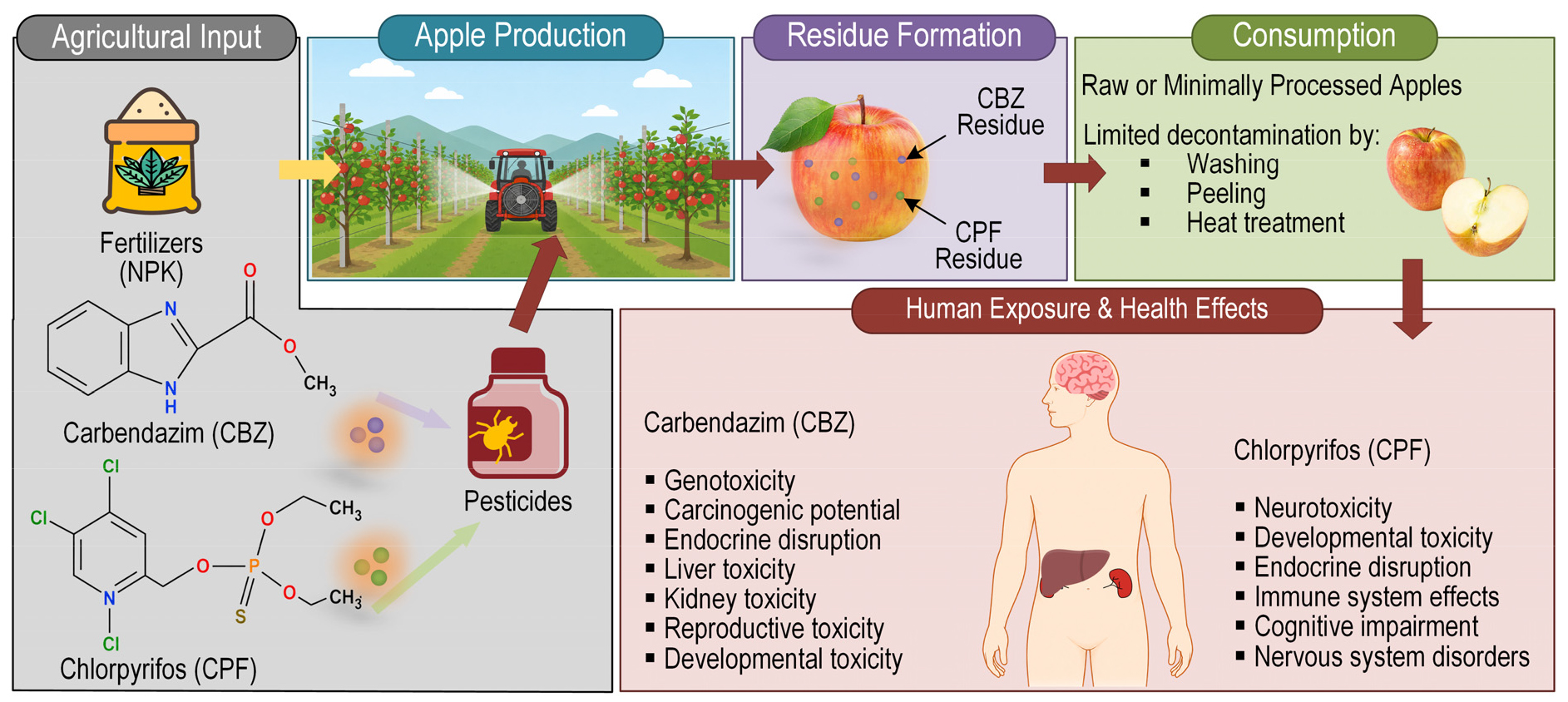
Fig. 2.
Schematic illustration of the pathway of CBZ and CPF residues from agricultural application to human exposure. Fertilizers and pesticides are used during apple production, resulting in pesticide residues on apples. Because apples are often consumed raw or minimally processed, CBZ and CPF residues may enter the human body and cause adverse health effects.
Similarly, CPF, a widely used organophosphate insecticide, poses substantial health risks through both acute and chronic exposure. Acute exposure can cause gastrointestinal disturbances and neurological symptoms, whereas long-term exposure has been associated with neurotoxicity, endocrine disruption, reproductive toxicity, and potential carcinogenic effects (Farkhondeh et al., 2019). Increasing evidence suggests that CPF may impair cognitive development in children, leading to deficits in intelligence, learning, and memory, while prenatal exposure has been linked to an elevated risk of autism spectrum disorder (ASD) (Wang et al., 2024). Additional adverse outcomes include acute cholinergic syndrome, musculoskeletal disorders, kidney damage, pregnancy complications, and disruption of placental development, which may negatively affect fetal growth and contribute to the developmental origins of adult diseases (Nandi et al., 2022).
Collectively, the documented toxic effects of CBZ and CPF underscore the importance of stringent residue monitoring, regulatory oversight, and the development of rapid and sensitive detection technologies to minimize human exposure and ensure food safety.
Regulatory limits and monitoring requirements
MRLs for CBZ and CPF in apples vary considerably among regulatory jurisdictions. In the EU, both pesticides are currently subject to a default MRL of 0.01 mg kg-1, reflecting their non-approved status and the default limit of quantification for pesticide residues. In the United States (US), the Environmental Protection Agency (EPA) revoked all food tolerances for CPF in 2021, making detectable CPF residues in food commodities unlawful after February 2022, whereas CBZ remains regulated under commodity-specific tolerances. In China, MRLs for CBZ in apples generally range from 0.5 to 1.0 mg kg-1, while CPF is regulated at 0.01 mg kg-1 (ICAMA, 2022; Odabas et al., 2024). Codex Alimentarius has historically adopted less restrictive limits, including 2 mg kg-1 for CBZ and 0.5 mg kg-1 for CPF, which are still referenced in some countries. These substantial differences in regulatory limits reflect variations in risk assessment approaches and pesticide registration policies among countries. The lack of harmonized standards creates challenges for international apple trade and food safety management. Therefore, reliable analytical and sensor-based detection methods capable of monitoring CBZ and CPF at concentrations well below regulatory thresholds are essential to ensure compliance, protect public health, and support global food safety programs.
The occurrence of CBZ and CPF residues in apples, their associated health risks, and increasingly stringent regulatory requirements collectively highlight the need for rapid, sensitive, and cost-effective analytical technologies. Consequently, sensor-based detection platforms have emerged as promising alternatives to conventional laboratory-based methods for pesticide monitoring. The following sections review recent advances in sensor technologies for detecting CBZ and CPF residues in apples, with particular emphasis on sensing mechanisms, analytical performance, and practical applications in food safety monitoring.
Sensor technologies for CBZ and CPF detection
Working principles of electrochemical and optical sensors
Electrochemical and optical sensors are among the most widely used analytical platforms for pesticide residue detection because of their strong analytical performance, rapid response, portability, and compatibility with field-based applications. Both approaches convert interactions between the target analyte and the sensing interface into measurable signals; however, they differ in their signal transduction mechanisms.
Electrochemical sensors generate analytical signals through changes in electrical properties occurring at the electrode–electrolyte interface. When a target analyte interacts with the sensing surface, measurable variations in current, potential, conductivity, or impedance are produced. Depending on the transduction mechanism, electrochemical sensors can be classified as amperometric, voltammetric, potentiometric, electrochemical impedance spectroscopy (EIS), and electrochemiluminescence (ECL) sensors. Amperometric and voltammetric sensors measure current generated by oxidation or reduction reactions of electroactive analytes at the electrode surface. The magnitude of the current is proportional to analyte concentration and can therefore be used for quantitative determination. Potentiometric sensors monitor changes in electrode potential resulting from analyte interactions, whereas EIS sensors measure changes in charge-transfer resistance and interfacial capacitance caused by molecular binding events. ECL sensors combine electrochemical excitation with light emission, enabling highly sensitive detection through simultaneous electrochemical and optical signal generation.
Electrode materials and surface modifications strongly influence the analytical performance of electrochemical sensors. Nanomaterials such as graphene, carbon nanotubes (CNTs), metal nanoparticles, and metal–organic frameworks (MOFs) are frequently incorporated into sensing interfaces to increase electroactive surface area, enhance electron-transfer kinetics, and improve analyte adsorption. These modifications contribute to lower detection limits, broader linear ranges, and improved selectivity. In addition, biological recognition elements such as antibodies, aptamers, enzymes, and molecularly imprinted polymers (MIPs) can be integrated with electrochemical transducers to provide highly selective analyte recognition.
Optical sensors operate by detecting changes in optical properties generated by interactions between the analyte and the sensing platform. These changes may involve variations in absorbance, fluorescence intensity, color, refractive index, or Raman scattering. Because optical measurements do not require direct electrical contact with the sample, optical sensors often exhibit excellent selectivity and are particularly suitable for portable and non-destructive analysis.
Among optical sensing approaches, fluorescence sensors detect analytes via fluorescence quenching, enhancement, or wavelength shifts following molecular recognition. Colorimetric sensors rely on visible color changes generated by chemical reactions or nanoparticle aggregation. They can often be interpreted by the naked eye or quantified using smartphone cameras and portable imaging devices. Surface-enhanced Raman scattering (SERS) sensors utilize plasmonic nanostructures, typically gold or silver nanoparticles, to dramatically amplify Raman scattering signals and enable ultra-sensitive detection of trace analytes. Immuno-optical sensors and aptamer-based optical sensors employ highly specific biological recognition elements that selectively bind target molecules and generate optical responses proportional to analyte concentration.
Recent advances in nanotechnology have significantly improved both electrochemical and optical sensing platforms. The integration of MOFs, covalent organic frameworks (COFs), graphene derivatives, metallic nanoparticles, quantum dots, and hybrid nanocomposites has enhanced signal amplification, analyte enrichment, and molecular recognition capabilities. Consequently, modern electrochemical and optical sensors can detect CBZ and CPF residues at concentrations well below regulatory limits, making them promising alternatives to conventional chromatographic techniques for rapid food safety monitoring.
For the purposes of this review, sensor technologies are primarily classified according to their signal transduction mechanisms, including electrochemical and optical sensing platforms. Recognition elements such as aptamers, antibodies, enzymes, and molecularly imprinted polymers (MIPs) are considered functional components that provide analyte selectivity within these transduction systems. Because modern sensing platforms frequently combine different recognition elements with a common signal transduction mechanism, the categories discussed in this review are not mutually exclusive. Therefore, studies were grouped by their primary transduction mechanism, and the corresponding recognition elements and sensing materials were discussed within each category.
For the purposes of this review, sensor technologies were primarily classified according to their signal transduction mechanisms, including electrochemical and optical sensing platforms. Recognition elements such as aptamers, antibodies, enzymes, and MIPs were considered functional components that provide analyte selectivity within these transduction systems. Because modern sensing platforms frequently combine different recognition elements with a common transduction mechanism, these categories are not mutually exclusive. Therefore, studies were grouped by their primary transduction mechanism, and the associated recognition elements and sensing materials were discussed within each category.
Sensors for chemical residue detection
The detection of chemical residues in fruits, particularly pesticides, is essential for ensuring food safety and protecting public health (Han et al., 2021). To address this challenge, a wide range of sensor technologies has been developed for the rapid, sensitive, and reliable detection of trace contaminants (Guan et al., 2022). Sensor performance largely depends on both the transduction mechanism and the materials used, which influence sensitivity, selectivity, response time, and detection limits (Huo et al., 2026).
Based on their signal transduction mechanisms, chemical residue sensors can be broadly classified into electrochemical, optical, biosensor, and nanomaterial (NMs)-based sensors (Peng et al., 2022). Electrochemical sensors detect analytes by measuring changes in electrical signals, such as current, potential, or impedance, generated during electrochemical reactions (Dey et al., 2025). Optical sensors, including fluorescence, colorimetric, and SERS platforms, rely on changes in optical properties to identify target compounds (Patel et al., 2014). Biosensors incorporate biological recognition elements, such as enzymes, antibodies, or aptamers, to provide high specificity toward target analytes (Wei et al., 2024). In addition, NMs-based sensors utilize advanced nanostructured materials to improve signal amplification and analytical performance.
The choice of sensing material is a key factor affecting sensor efficiency. MOFs, CNTs, COFs, and metallic nanoparticles are among the most widely used materials for pesticide sensing applications. For example, cobalt-based and nickel–iron bimetallic MOFs are frequently employed in electrochemical sensors because of their high catalytic activity, large surface area, and favorable electrical conductivity (Peng et al., 2022). Similarly, branched gold nanoparticles (BGNPs) and multi-walled carbon nanotubes (MWCNTs) enhance electron transfer and signal amplification in both electrochemical and optical sensing platforms (Guan et al., 2022). COFs offer tunable pore structures and abundant functional sites, facilitating selective analyte recognition and improving the limit of detection (Wei et al., 2024).
Overall, integrating advanced functional materials with appropriate transduction mechanisms has significantly enhanced the analytical capabilities of modern chemical residue sensors, enabling rapid, highly sensitive, and selective detection of pesticide residues in food products.
Sensors for CBZ and CPF Detection in Apples
Analytical performance and detection limits of electrochemical and optical sensors
Table 1 summarizes 45 sensors reported in 45 independent studies for the detection of carbendazim CBZ and chlorpyrifos CPF residues in apple samples. The dataset includes information on sensor type, sensing materials, LODs, and corresponding references. Based on their transduction mechanisms, the sensors can be broadly classified into electrochemical sensors (n = 24), optical sensors (n = 20), and hybrid biosensing platforms. These categories encompass a variety of detection approaches, including NMs-based sensors, SERS sensors, MOF-based amperometric sensors, fluorescent and colorimetric sensors, immunosensors, glassy carbon electrode (GCE)-based sensors, screen-printed electrode (SPE)-based sensors, and molecularly imprinted polymer (MIP)-based sensors. Optical platforms primarily consist of fluorescent, colorimetric, and SERS-based systems, many of which incorporate nanomaterials to enhance analytical performance.
Table 1
Comparison of recently reported different sensors for the determination of CBZ and CPF in apple-derived samples.
| Sl. No. | Sensor Category | Sensing Material |
Limit of Detection (LOD) | Linear Detection Range |
Target Analyte | Sample Matrix | Reference |
| 1 | Electrochemical (Amperometric) | Co-MOFs / Carbon Nanohorns (CNHs) | 0.2 nM | 0.5 to 20,000 nM | CBZ | Fruit | Peng et al., 2022 |
| 2 |
Electrochemical (GCE) | MBC@CTS/GCE | 20 nM | - | CBZ | Juice | Liu et al., 2022 |
| 3 | Electrochemical (NMs) | β-CD/CNS@CNT nanocomposite | 9.4 ;nM | 0.03 to 30 ;μM | CBZ | Juice | Liu et al., 2022 |
| 4 | Electrochemical (NMs) |
Carbon nanofibers (CNFs), β-cyclodextrin (β-CD), and hematite (α-Fe2O3) nanoparticles | 1 ;nM | - | CBZ | Fruit | Sebastian et al., 2022 |
| 5 | Electrochemical (NMs) | FeSbO4/GCE | 5.4 ;nM/L | 0.01 ;µmol/L to 64.3 ;µmol/L | CBZ | Juice | Yamuna et al., 2022 |
| 6 | Electrochemical (NMs) | SnS2 in SGCN | 3×10⁻⁸ mol/L | 0.002 to 416 ;µmol/ L | CBZ | Peel | Shanmugam et al., 2022 |
| 7 | Electrochemical (NMs) | Fe-CuV/GCE | 5 nM | 0.01 to 83.1 μM | CBZ | Juice | Yamuna et al., 2021 |
| 8 | Electrochemical (NMs) | CoOx/ERGO | 0.01 nM | 0.01 nM to 10 μM | CBZ | Fruit | Elshafey et al., 2022 |
| 9 |
Electrochemical Screen-printed Electrode (SPE) | Three glove-embedded sensors printed on three fingers of a rubber glove. | 4.7×10⁻⁸ mol/L | - | CBZ | Fruit | Raymundo et al., 2020 |
| 10 | Electrochemical (NMs) | Silver nanoparticles modified fumed silica (FS@Ag) | 9.4 ×10⁻¹⁰ mol/L |
5.0 × 10⁻⁸ M to 3.0 × 10⁻⁶ M | CBZ | Fruit | Özcan et al., 2021 |
| 11 | Electrochemical Immunosensor | AuNPs | 10 fM | 1fM to 1uM | CPF | Fruit | Talan et al., 2018 |
| 12 |
Electrochemical (Electrochemiluminesc-ence, aptasensor) | Aptamer (a short DNA or RNA sequence that specifically binds CPF) | 0.35 fM | 10 nM∼1.0 fM | CPF | Fruit | Liu et al., 2020 |
| 13 |
Electrochemical (Sers-aptasensor) | Aptamer-based biochemical sensor | - | - | CPF | Fruit | Zhang et al., 2023 |
| 14 | Electrochemical (SPE) | Screen-printed carbon electrodes on kraft and parchment papers | 0.06 ;µM | - | CBZ | Peel | Martins et al., 2023 |
| 15 | Electrochemical (NMs) | Super-P carbon (SPCN) black@zeolitic-imidazolate-framework-8 (SPCN@ZIF-8) nanocomposite modified glassy carbon electrode (SPCN@ZIF-8/GCE) | 7.79 ;nM | - | CBZ | Fruit | Liu et al., 2022 |
| 16 | Electrochemical SPE /PLA | PLA/SPE sensors | 42 nM | - | CBZ | Peel | Paschoalin et al., 2022 |
| 17 | Electrochemical (Aptasensor) |
Polymer-aptasensor based on hemin-Al-metal organic framework@gold nanoparticles (H-Al-MOF@AuNPs) |
DPV 80 amol/ L CA 300 ;amol ;/L |
DPV 0.3 fmol /L to 10 pmol/ L CA 0.7 fmol /L to 10 pmol /L | CBZ | Juice | Khosropour et al., 2023 |
| 18 | Electrochemical (Amperometric) | Nickel–iron bimetallic metal-organic framework (MOF) anchored graphite rod | 2.3 nM | 0.05 to 320 µM | CBZ | Juice | Dey et al., 2025 |
| 19 | Electrochemical (Amperometric) | TT-COF/GCE sensor | 2.21 nM | 0.005 to 5 μM | CBZ | Fruit | Wei et al., 2024 |
| 20 | Electrochemical (GCE) | Composite material, Co (OH)2/TiO2-GCE | 0.007 ;μM | 0.039 to 2630.1 ;μM | CBZ | Fruit | Tharuman et al., 2025 |
| 21 | Electrochemical (NMs) | Poly(L-serine)/reduced graphene oxide with AuNP-modified glassy carbon electrode | 0.27 nM | 1 nM to 1 µM | CBZ &CPF | Fruit | Yola, 2019 |
| 22 | Electrochemical (Amperometric) | Zr-MOF/ZrO2/MWCNT | 2.8 nM | - | CPF & CBZ | Fruit | Gokila et al., 2024 |
| 23 |
Electrochemical (Amperometric) | Ce-MOF@PANI | 12.6 ;nM | 0.1 to 80 μM | CBZ | Fruit | Zhou et al., 2024 |
| 24 |
Electrochemical (Amperometric) | Co,N-HC@CNTs | 1.67 ;pmol/L | - | CBZ | Fruit | Xue et al., 2024 |
| 25 |
Optical (SERS-aptasensor) | Mesoporous silica (MSNs) with aptamer-functionalized silver nanoparticles (AgNPs) | 3.82 ng/mL | 3.82 to 122.5 ng/mL | CPF | Fruit | Dong et al., 2022 |
| 26 | Optical (SERS) | Gold nanostars | 1 ppb | - | CBZ & CPF | Peel | Wang et al., 2022 |
| 27 | Optical-(Colorimetric MIP-SERS) | MIPs and AgNPs |
0.01 mg/L (SERS); ≥5 mg/L (Colorimetric) |
0.1 to 10 mg/L (UV-Vis); Validated 0.01 to 30 mg/L with SERS | CPF | Juice | Feng et al., 2016 |
| 28 |
Optical (Fluorescent) | Innate fluorescence of CBZ, fluorescent UiO-67 | 3.0 × 10⁻³ μmol/L | 0 to 47.6 μmol/L. | CBZ | Fruit | Han et al., 2021 |
| 29 | Optical (SERS) | Gold nanoparticles | - | - | CPF | Fruit | Chen et al., 2015 |
| 30 | Optical SERS | Silver colloid |
CPF: 1.28 × 10⁻⁹ mol/L CBZ: 2.47 × 10⁻¹⁰ mol/L | LOQ: CPF = 4.27 × 10⁻⁹ mol/L; 2,4-D = 8.23 × 10⁻¹⁰ mol/L | CPF & CBZ | Fruit | Wang et al., 2022 |
| 31 | Optical (SERS) | AuNP on halloysite nanotubes (HNT) | 7.9 × 10⁻⁹ M | - | CPF | Fruit | Zhang et al., 2022 |
| 32 | Optical (Colorimetric) | ABT-Ag NPs | 1.04 μM | 10 to 100 μM | CBZ | ; | Patel et al., 2014 |
| 33 | Optical (SERS) | Gold nanoparticle-based SERS substrate | - | - | CPF | Fruit | Chen et al., 2023 |
| 34 | Optical (SERS-aptasensor) | AuNS@4-MBN@Ag, Fe3O4@AuNPs |
220.35 pg/mL (0.629 nM) | 2.5×10² to 5.0×10⁴ pg/mL | CPF | Fruit | Ma et al., 2024 |
| 35 | Optical (Fluorescent) | Glutathione-stabilized gold nanoclusters (GSH-Au NCs) | 0.12 μM | 0.5 to 20 μM. | CBZ | Fruit | Guan et al., 2022 |
| 36 | Optical (Fluorescent) | 2D Tb-MOF nanosheets | 17.95 ;ng/mL |
0.06 to 4 and 4 to 40 ;µg/mL | CBZ | Fruit | Wang et al., 2023 |
| 37 | Optical (NMs) | γ-cyclodextrin-capped nanoparticles | - | 10 ppb | CPF | Fruit | Chadha et al., 2022 |
| 38 | Optical (Fluorescent) | Photoswitchable polymer dots (Pdots) and carbon dots (CDs) with aptamers and Fe3O4 nanoparticles. | 0.40 ng/mL | 1 to100 ng/mL | CBZ | Fruit | Huo et al., 2025 |
| 39 | Optical (SERS) | TiO2@AgNPs |
2.55 × 10⁻⁵ μg/mL (0.133 nM) | - | CBZ | Juice | Li et al., 2025 |
| 40 | Optical (SERS-aptasensor) | PVDF/CQDs/AuNS@Ag | 1.20 ng/cm2 | - | CBZ | Peel | Wei et al., 2024 |
| 41 | Optical (SERS) | SERS substrate: CNF/GNR@Ag membrane | - | - | CBZ | Peel | Park et al., 2025 |
| 42 | Optical (SERS) | Au@Ag NRs on PVDF/PVP polymer | 0.037 ng/cm2 | - | CPF | Peel | Chen et al., 2024 |
| 43 | Optical (Colorimetric) | α-Cyclodextrin functionalized Silver Nanoparticles (α-CD-AgNPs) | - | 4.0 ng/mL | CPF | Fruit | Sahu et al., 2022 |
| 44 | Optical (Immunosensor) | Si/SiO2 chip functionalized with a benzimidazole conjugate |
20 ng/mL (0.1046 μM) | - | CBZ | Fruit | Koukouvinos et al., 2021 |
| 45 |
Biosensor (Lfia) | Branched gold nanoparticles (BGNPs) | 0.14 ng/mL | - | CBZ | Fruit | Chen et al., 2024 |
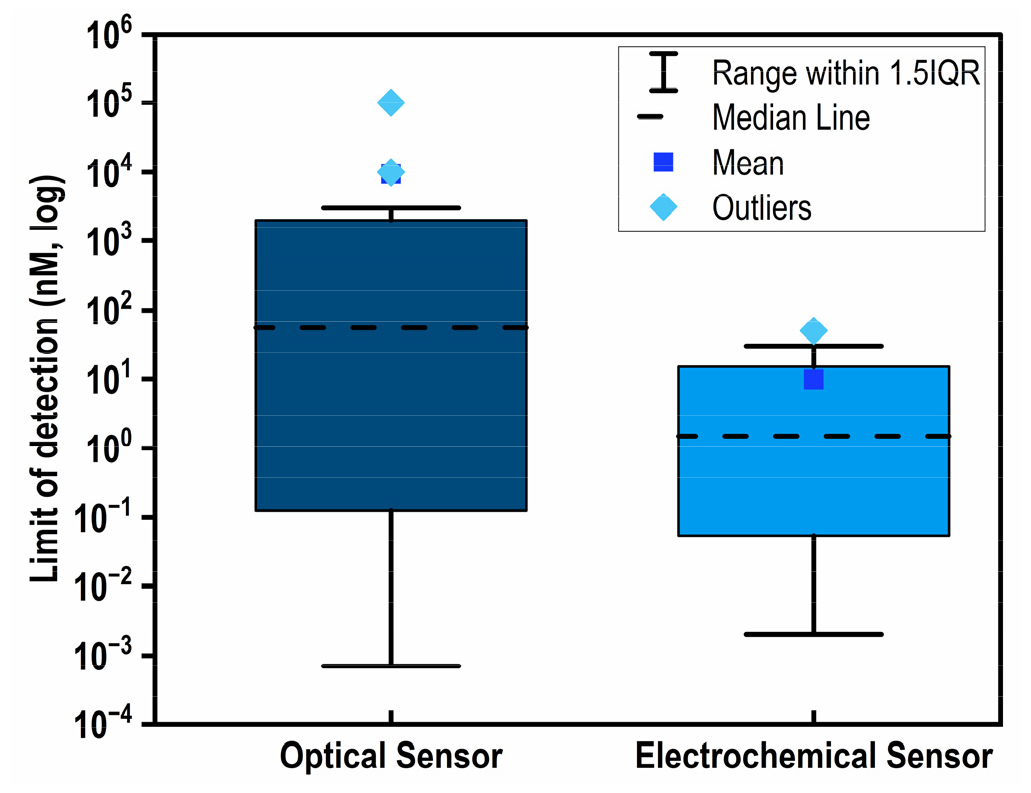
A clear distinction is observed in the preferred sensing strategies for the two pesticides. Electrochemical sensors are more frequently employed for CBZ detection, whereas optical and biosensing platforms are widely used for CPF determination. Overall, the electrochemical sensors reviewed in this study exhibited lower reported detection limits, ranging from 0.08 fM to 0.06 μM. In contrast, optical sensors exhibited detection limits ranging from 220.35 pg mL-1 to 17.95 μg mL-1 (Fig. 3). Although optical sensors generally cover a broader detection range, the electrochemical sensors reviewed here exhibited substantially lower reported detection limits than the optical sensors. The lowest reported detection limit in the dataset was 0.08 fM, achieved by the polymer-aptasensor reported by Khosropour et al. (2023) for CBZ detection. For CPF detection, the lowest reported detection limit was 0.35 fM, achieved by an electrochemiluminescence (ECL) aptasensor. In contrast, the lowest reported detection limit among the optical sensors was 220.35 pg mL-1.
These findings demonstrate that electrochemical sensors are particularly advantageous for ultra-trace pesticide detection because of their low reported detection limits and efficient signal transduction. In contrast, optical sensors offer broader applicability, simple operation, and versatile detection formats, making them attractive for rapid screening applications. Collectively, both sensing approaches play important roles in pesticide monitoring, with electrochemical platforms showing greater potential for highly sensitive quantification, while optical platforms provide flexible and practical alternatives for routine analysis of CBZ and CPF residues in apples.
Although the present review focuses on apple-based applications, many of the sensing platforms developed for CBZ and CPF detection have also been successfully applied to other agricultural products. CBZ sensors have been successfully applied to a variety of agricultural commodities, including strawberries, grapes, tomatoes, cucumbers, and leafy vegetables, demonstrating their applicability across diverse food matrices (Han et al., 2021; de Amorim et al., 2024; Xu et al., 2024; Kaewarsa et al., 2025; Shen et al., 2026; Wu et al., 2026). In contrast, CPF sensors have been evaluated in citrus fruits, cabbage, vegetable samples, and fruit juices, demonstrating their applicability across diverse food matrices (Sun et al., 2013; Navarro et al., 2013; Talan et al., 2018; Lu et al., 2021; Wang et al., 2024). In many cases, similar analytical performance was achieved after appropriate sample extraction procedures. These studies demonstrate that the sensing principles discussed in this review are broadly applicable across diverse food matrices. However, matrix composition can significantly influence sensor performance because pigments, sugars, organic acids, and other naturally occurring compounds may interfere with analyte extraction or signal generation. Therefore, future studies should focus on validating sensor performance across a wider range of fruits and vegetables to facilitate practical implementation in food safety monitoring programs.
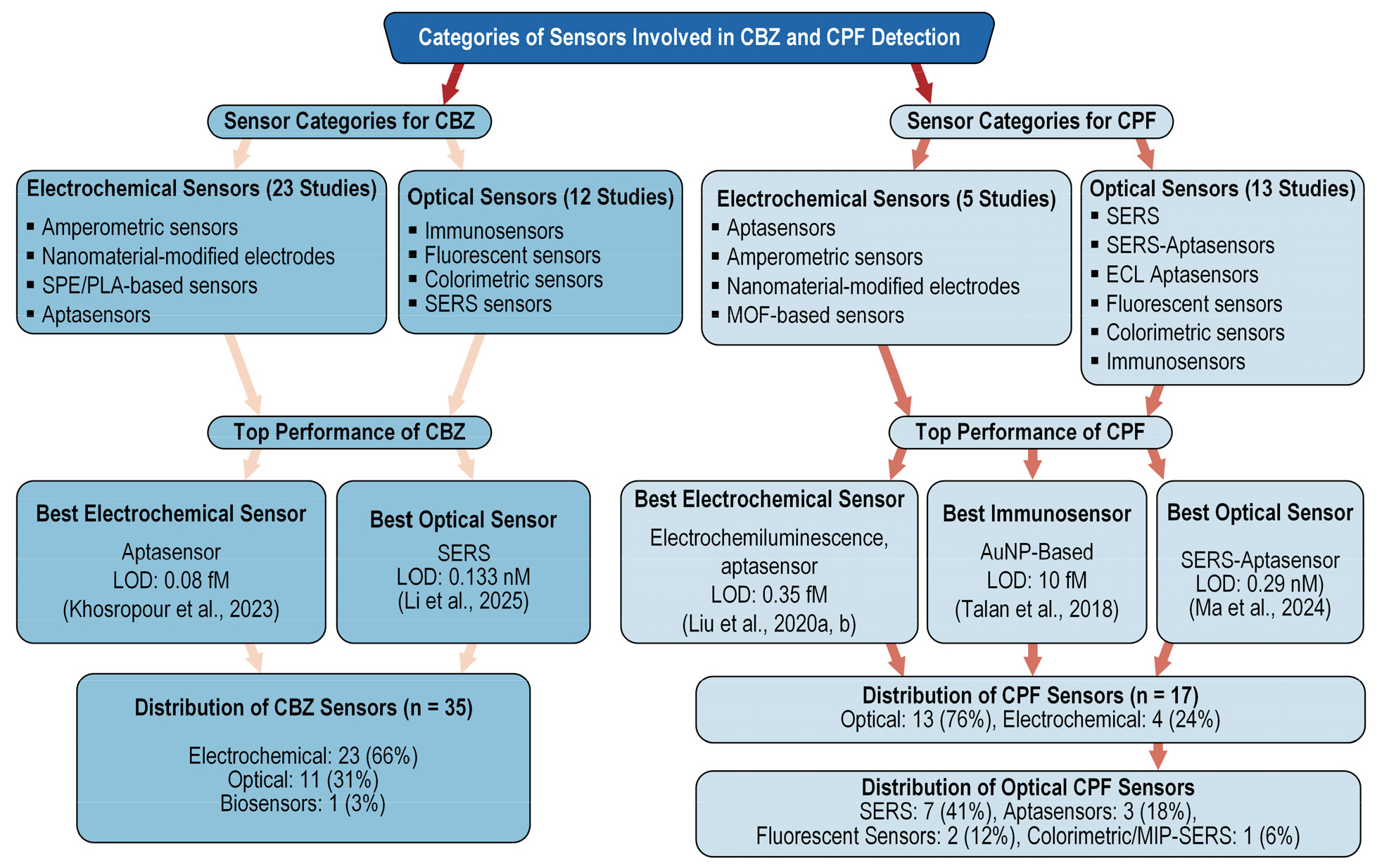
Categories of sensors involved in CBZ and CPF detection
Fig. 4 shows that a wide range of sensor technologies have been developed for detecting CBZ and CPF residues in apples, with electrochemical and optical sensing platforms being the most widely reported approaches. These sensors frequently incorporate advanced functional materials, including MOFs, carbon nanomaterials, metallic nanoparticles, aptamers, antibodies, and molecularly imprinted polymers, to improve analytical sensitivity, selectivity, and signal transduction (Chadha et al., 2022; Gokila et al., 2024; Wei et al., 2024).
For CBZ detection, electrochemical sensors are the predominant technology reported in the literature. Their superior analytical performance is mainly attributed to the use of conductive and catalytic nanomaterials such as CNTs, carbon nanofibers, carbon nanosheets (CNSs), β-cyclodextrin (β-CD), and MOF-based composites, which provide high surface area and facilitate rapid electron transfer (Peng et al., 2022; Guan et al., 2022). Cobalt-based metal–organic frameworks (Co-MOFs) have demonstrated strong analytical performance for CBZ detection owing to their excellent electrocatalytic activity and abundant adsorption sites for CBZ molecules (Gokila et al., 2024). Other electrochemical platforms incorporating CNTs, graphene derivatives, and metallic nanoparticles have also shown excellent analytical performance for CBZ determination. Although optical approaches, including immunosensors and fluorescence-based sensors, have been applied to CBZ detection, they generally exhibit higher detection limits than electrochemical platforms (Koukouvinos et al., 2021).
In contrast, CPF detection is more frequently achieved using optical and biosensing platforms, particularly aptamer-based sensors, immunosensors, and SERS systems (Talan et al., 2018; Chadha et al., 2022). Aptamers provide highly specific molecular recognition of CPF, enabling sensitive and selective detection. Among the reported CPF sensors, the ECL aptasensor developed by Liu et al. (2020) achieved an ultralow detection limit of 0.35 fM with a linear detection range of 1.0 fM–10 nM, representing one of the most sensitive CPF detection platforms reported to date. Similarly, an AuNP-based immunosensor reported by Talan et al. (2018) achieved a detection limit of 10 fM, demonstrating the effectiveness of combining biological recognition elements with nanomaterials for signal amplification. Furthermore, hybrid nanocomposites, such as Zr-MOF/ZrO₂/MWCNTs and cyclodextrin-functionalized materials, have been employed to enhance electrical conductivity, molecular recognition, and analytical sensitivity through synergistic interactions between nanomaterials and biorecognition elements (Chadha et al., 2022; Gokila et al., 2024).
Overall, the results indicate that electrochemical sensors are particularly effective for CBZ detection because of their high catalytic activity, rapid electron transfer, and low detection limits, whereas CPF detection is dominated by aptamer-based optical and biosensing platforms that offer high selectivity and femtomolar-level detection limits (Liu et al., 2020; Talan et al., 2018). The integration of nanomaterials, MOFs, aptamers, and antibodies has significantly enhanced sensor performance by improving signal amplification, molecular recognition, and LOD, thereby supporting the development of highly reliable tools for monitoring pesticide residues in apples and ensuring food safety.
Multi-chemical detection sensors
In addition to single-analyte sensing platforms, several multifunctional sensors have been developed to simultaneously detect CBZ and CPF, offering a practical approach to multi-residue monitoring in food samples. These platforms reduce analysis time, simplify sample preparation, and enable the concurrent determination of multiple pesticide residues using a single sensing interface.
Among the reported dual-analyte systems, the electrochemical sensor based on poly(L-serine)/reduced graphene oxide (rGO)/gold nanoparticles (AuNPs) demonstrated the lowest reported detection limits. Yola (2019) reported detection limits of 0.25 nM for CBZ and 0.27 nM for CPF, with a linear detection range of 1 nM–1 μM for both analytes. The improved analytical performance of this sensor was attributed to the synergistic effects of rGO and AuNPs, which enhanced electrical conductivity, increased the electroactive surface area, and accelerated electron-transfer kinetics. The poly(L-serine) film further improved analyte adsorption and electrocatalytic activity, thereby enhancing analytical performance.
Another promising multifunctional platform was developed using Zr-MOF/ZrO₂/MWCNT nanocomposites, which combined the high porosity and adsorption capacity of MOFs with the excellent conductivity of MWCNTs. This sensor achieved a detection limit of 2.8 nM for CPF and demonstrated applicability for CBZ detection, highlighting the potential of MOF-based hybrid materials for multi-residue analysis (Gokila et al., 2024).
Optical sensing approaches have also been explored for simultaneous pesticide detection. For example, a SERS sensor based on gold nanostars enabled the detection of both CBZ and CPF at concentrations around 1 ppb (Wang et al., 2022). Although SERS platforms offer rapid, label-free, and non-destructive analysis, their reported detection limits are generally higher than those of advanced electrochemical sensors. Nevertheless, their capability for rapid screening and multiplex detection makes them attractive for field-based applications.
Overall, multifunctional sensing platforms demonstrate significant potential for simultaneous pesticide monitoring. Among the reported systems, the poly(L-serine)/rGO/AuNP electrochemical sensor demonstrated low reported detection limits for the concurrent detection of CBZ and CPF (Yola, 2019). These findings highlight the growing importance of nanocomposite-based sensing materials that combine high conductivity, large surface area, and enhanced molecular recognition, thereby facilitating efficient multi-residue detection for food safety and environmental monitoring.
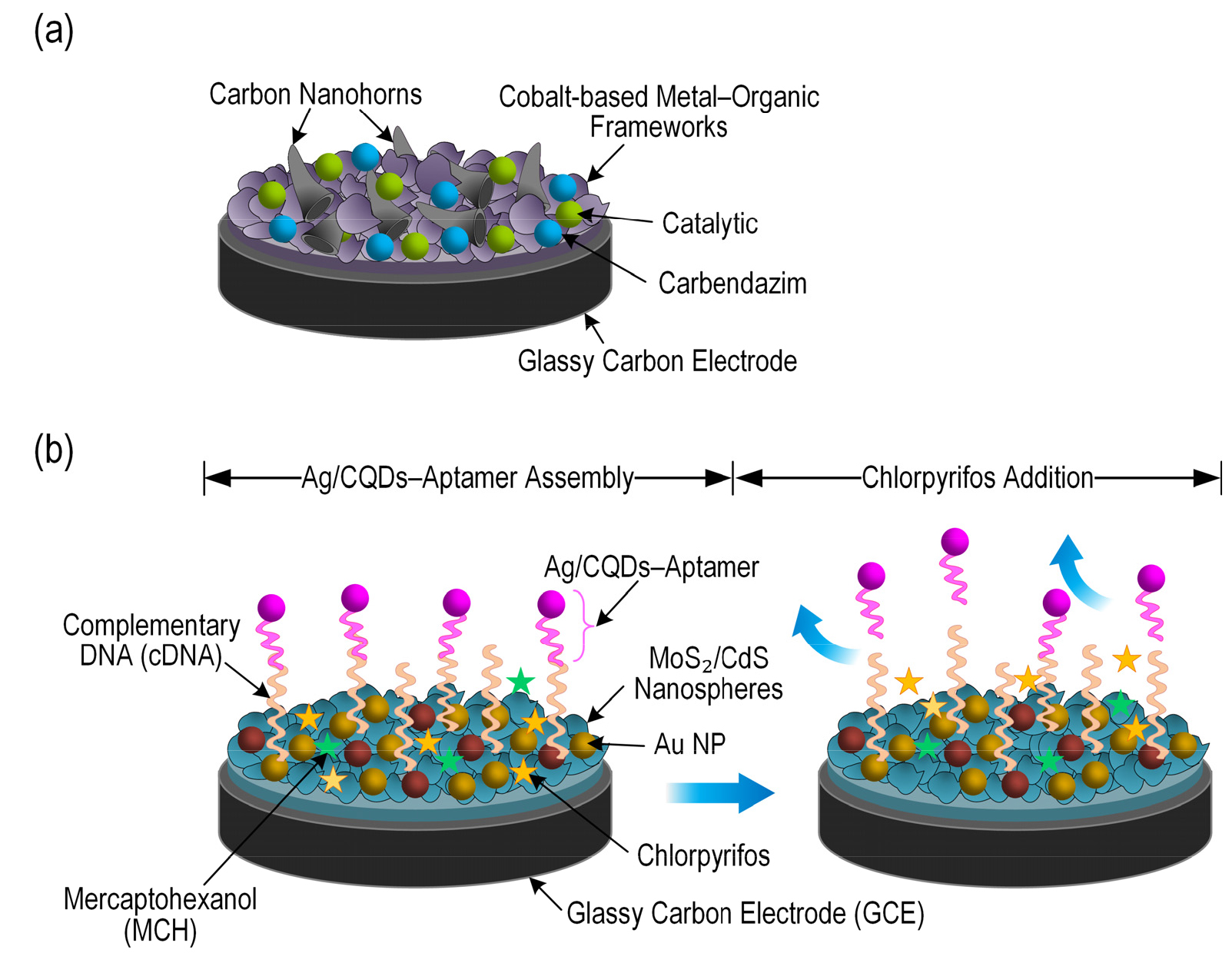
Fig. 5.
Working principles of ultra-sensitive sensors for pesticide detection. (a) Co-MOF/CNHs/GCE electrochemical sensor for CBZ detection, illustrating CBZ adsorption on Co-MOFs supported by CNHs on a glassy carbon electrode. (b) Aptamer-based ECL sensor for CPF detection, showing the assembly of the Ag/CQDs–aptamer recognition layer on an Au NPs@MoS2/CdS-modified GCE and the sensing response following CPF binding.
Nanomaterial-enhanced sensors with low detection limits for CBZ and CPF detection
Nanomaterial-enhanced sensors have significantly improved the analytical performance of pesticide detection platforms by increasing active surface area, accelerating electron transfer, and enhancing target recognition. Among the sensors reported for CBZ and CPF detection in apples, MOF-based electrochemical sensors and aptamer-functionalized ECL sensors exhibited low reported detection limits.
For CBZ detection, the Co-MOF/CNH/GCE electrochemical sensor (Fig. 5(a)) reported by Peng et al. (2022) achieved a detection limit of 0.2 nM. The sensor combines cobalt-based MOFs with carbon nanohorns (CNHs) deposited on a glassy carbon electrode (GCE). The porous Co-MOF structure provides abundant active sites for CBZ adsorption and electrocatalytic reactions, while CNHs facilitate rapid electron transfer owing to their high conductivity. The combination of the high-surface-area MOF and conductive CNH network enhances analyte accumulation and charge transport, contributing to the reported analytical performance (Peng et al., 2022).
In comparison, the lowest reported detection limit among the reviewed CBZ sensors was achieved by the polymer-aptasensor developed by Khosropour et al. (2023), with an LOD of 0.08 fM using differential pulse voltammetry (DPV). The sensor was based on a hemin–Al metal–organic framework decorated with gold nanoparticles (H-Al-MOF@AuNPs) and incorporated molecularly imprinted and aptamer-based recognition. The reported detection limit was substantially lower than that of the Co-MOF/CNH/GCE platform, although the two sensors employ different sensing architectures and recognition mechanisms. Therefore, their analytical performance should be compared primarily based on the reported detection limits and experimental conditions, rather than interpreting the LOD as a direct measure of sensitivity (Peng et al., 2022; Khosropour et al., 2023).
For CPF detection, the lowest reported detection was achieved by an ECL aptasensor reported by Liu et al. (2020), with a low detection limit of 0.35 fM and a linear range of 1.0 fM–10 nM (Fig. 5(b)). The sensor combines the high specificity of DNA aptamers with the signal amplification capability of electrochemiluminescence. Aptamer–target recognition provides selective CPF binding, while nanomaterial-assisted electron transfer and the inherently low background noise of ECL measurements contribute to its appreciable analytical performance. As a result, this platform achieved a substantially lower reported detection limit than many conventional electrochemical and optical sensors.
Another highly sensitive CPF detection platform was the AuNP-based immunosensor reported by Talan et al. (2018), which achieved a detection limit of 10 fM. The incorporation of gold nanoparticles enhanced signal amplification and antibody immobilization, resulting in improved analytical performance and selectivity toward CPF.
For simultaneous detection of both pesticides, the poly(L-serine)/rGO/AuNP electrochemical sensor developed by Yola (2019) exhibited the best dual-analyte performance, achieving detection limits of 0.25 nM for CBZ and 0.27 nM for CPF. The combination of reduced graphene oxide (rGO), AuNPs, and poly(L-serine) provided enhanced conductivity, large electroactive surface area, and efficient electrocatalytic activity, enabling highly sensitive multi-residue detection. Overall, the results demonstrate that nanomaterial-enhanced sensors can achieve low detection limits and broad linear ranges. However, direct comparisons of analytical performance should be interpreted with caution, as experimental conditions and sample matrices differ across studies. Co-MOF-based electrochemical sensors have reported low detection limits for CBZ, whereas aptamer-based ECL sensors have reported ultralow detection limits for CPF. The integration of nanomaterials, MOFs, aptamers, antibodies, and conductive carbon nanostructures continues to drive advances in ultra-sensitive pesticide detection, supporting the development of next-generation monitoring systems for food safety applications (Talan et al., 2018; Yola, 2019; Liu et al., 2020; Peng et al., 2022).
Characteristics and advantages of the nanomaterials-based sensors
The analytical performance of modern pesticide sensors is strongly influenced by the type of nanomaterial used within the sensing platform. Different nanomaterials contribute to sensor performance through distinct mechanisms, including signal amplification, enhancement of electron transfer, increased adsorption capacity, and improved molecular recognition.
MOFs are among the most widely utilized materials because of their extraordinarily high surface area, tunable pore structures, and abundant active sites. These properties facilitate efficient analyte adsorption and increase the number of accessible recognition sites, thereby enhancing analyte capture and improving overall analytical performance. MOF-based electrochemical sensors have consistently demonstrated low detection limits for both CBZ and CPF.
Carbon-based nanomaterials, including CNTs, graphene, reduced graphene oxide (rGO), CNHs, and CNFs, are frequently employed to enhance electrical conductivity and accelerate electron transfer. Their large specific surface area enhances analyte accumulation and promotes efficient charge transport, thereby increasing signal intensity and reducing detection limits.
Metallic nanoparticles, particularly AuNPs and AgNPs, provide excellent signal amplification capabilities. AuNPs are commonly used in electrochemical sensors and immunosensors because they facilitate electron transfer and enable efficient immobilization of antibodies, aptamers, and other recognition molecules. AgNPs exhibit strong localized surface plasmon resonance and are therefore widely employed in SERS-based sensing platforms to enhance Raman scattering signals. COFs represent an emerging class of porous materials characterized by high chemical stability, tunable functionality, and ordered structures. Their adjustable pore architecture enables selective interaction with target analytes, thereby improving sensor selectivity.
Overall, MOFs primarily enhance analyte adsorption and catalytic activity; carbon nanomaterials improve conductivity and electron transfer; metallic nanoparticles provide signal amplification; and COFs offer selective molecular recognition. The synergistic integration of these materials has been a major driving force behind the substantial improvements in sensor performance reported in recent years.
Detection limits relative to MRLs
Fig. 6. presents a comparison of reported sensor LODs with corresponding MRLs, showing that most of the reviewed sensing platforms have detection limits below the selected regulatory benchmarks for CBZ and CPF residues in apples. The ability to detect pesticide concentrations well below established MRLs is essential for ensuring food safety, regulatory compliance, and early detection of contamination. The MRL values used for comparison were selected from regulatory limits reported in the literature and are intended solely as benchmark values for evaluating sensor performance.
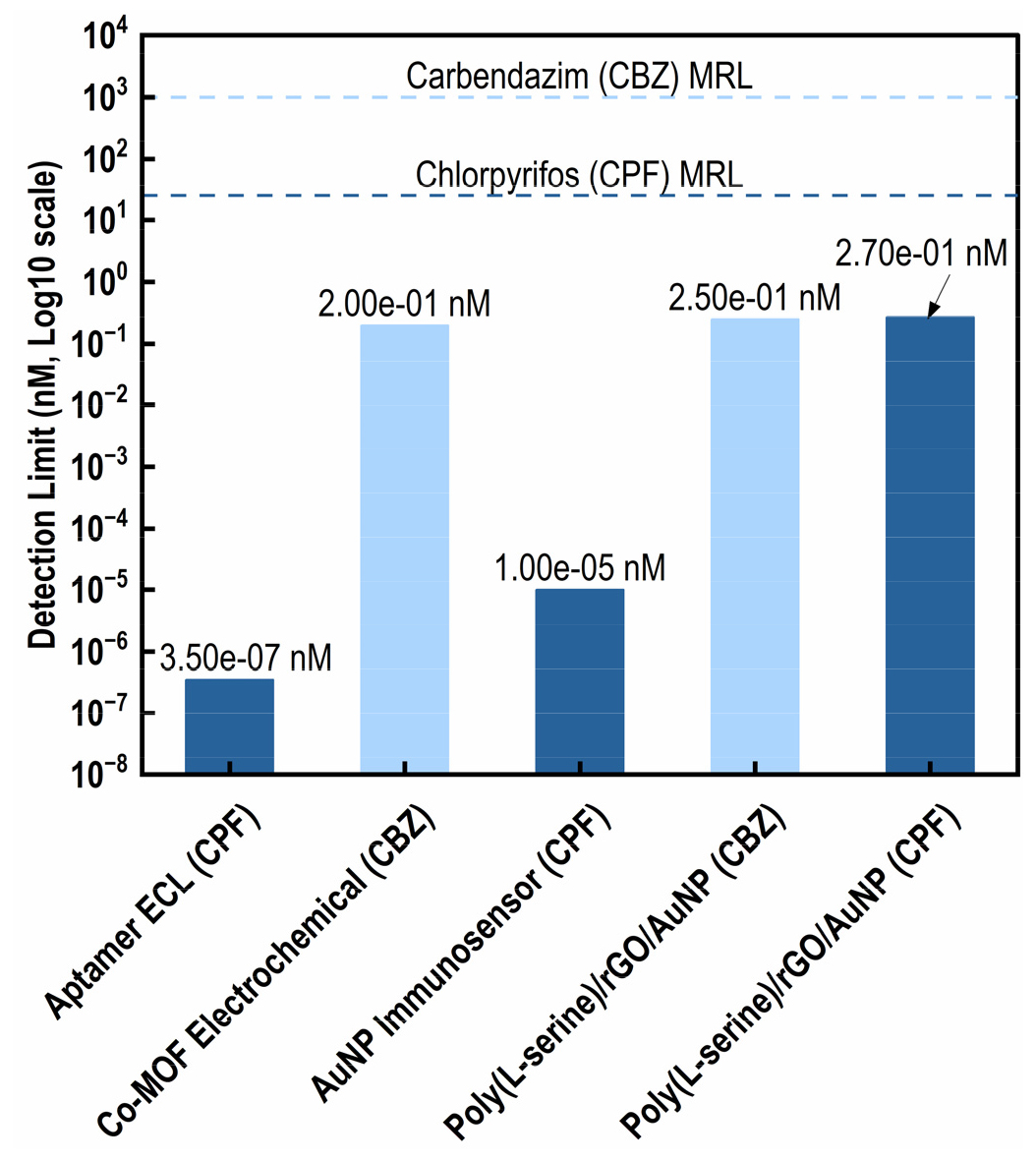
For CBZ, using the selected reference MRL of approximately 1046 nM (equivalent to 0.2 mg kg-1), all reported electrochemical, optical, and biosensing platforms exhibited detection limits substantially below the regulatory threshold Kowalska et al. (2022). Among the 31 CBZ-related sensor records included in this review, the platform with the lowest reported detection limit was a polymer-aptasensor integrated with H-Al-MOF@AuNPs, which achieved an ultralow detection limit of 0.00008 nM (80 amol L-1) (Khosropour et al., 2023). Other high-performance sensors included Co-MOF/CNH/GCE electrochemical sensors (Peng et al., 2022), COF-based sensing platforms (Wei et al., 2024), nanomaterial-enhanced electrochemical sensors (Sebastian et al., 2022; Yamuna et al., 2022), fluorescence sensors (Han et al., 2021), colorimetric sensors (Patel et al., 2014), and SPE-based devices (Raymundo-Pereira et al., 2020; Martins et al., 2023). These results indicate that the reviewed CBZ sensing platforms generally achieved detection limits below the selected regulatory benchmark, supporting their potential for residue monitoring.
For CPF, which has a lower reference MRL of approximately 28.5 nM, sensor performance remains highly satisfactory, although fewer platforms achieved detection limits substantially below the regulatory threshold. Of the 17 CPF-related sensor records analyzed, eight sensors exhibited LODs below the selected MRL. The lowest detection limit was achieved by the ECL aptasensor reported by Liu et al. (2020), at 0.00035 nM (0.35 fM). Other highly sensitive systems included the AuNP-based immunosensor developed by Talan et al. (2018), MIP-SERS hybrid sensors (Feng et al., 2016), and nanomaterial-enhanced electrochemical sensors incorporating graphene, MOFs, and carbon nanostructures (Zhao et al., 2017; Gokila et al., 2024).
Overall, the majority of sensors reviewed demonstrated detection capabilities well below the selected MRLs for both pesticides, highlighting the appreciable progress achieved in pesticide sensing technologies. In particular, nanomaterial-enhanced electrochemical sensors and aptamer-based biosensors consistently delivered the lowest detection limits, confirming their suitability for ultra-trace pesticide monitoring in apple products. These findings demonstrate the strong potential of modern sensor technologies to support food safety surveillance, regulatory compliance, and rapid on-site screening of pesticide residues.
When comparing the analytical performance of pesticide sensors, the measurement medium should also be considered. Although many studies report LODs obtained under controlled laboratory conditions, others evaluate sensor performance using spiked apple samples, apple juice, or real apple matrices. The presence of sugars, organic acids, pigments, and other matrix components may influence analyte extraction, sensor response, and signal stability. Consequently, LOD values obtained in buffer solutions may not directly reflect performance in complex food samples. Therefore, differences in reported LODs among studies may result from both sensor design and matrix-related effects, and direct comparisons should be interpreted with caution.
Current challenges and future perspectives
Despite the remarkable progress achieved in sensor-based detection of CBZ and CPF residues, several challenges continue to limit the widespread adoption of these technologies for routine food safety monitoring. Although many sensors exhibit excellent analytical performance under laboratory conditions, their performance may be affected when applied to complex food matrices. Matrix components such as sugars, organic acids, pigments, and naturally occurring electroactive compounds can interfere with analyte extraction and signal generation, potentially affecting accuracy, selectivity, and reproducibility.
Another important challenge is the reproducibility and long-term stability of sensor platforms. Many high-performance sensors rely on complex nanomaterial synthesis procedures, including the preparation of MOFs, nanocomposites, aptamers, and molecularly imprinted polymers. Variations in material synthesis, electrode fabrication, and surface modification can lead to batch-to-batch variability, which may hinder large-scale manufacturing and commercialization. Furthermore, sensor performance is often evaluated under controlled laboratory conditions, while validation under real-world operating environments remains limited.
Standardization also remains a significant challenge. Differences in sample preparation protocols, calibration procedures, validation methods, and performance metrics make direct comparison among studies difficult. The establishment of standardized testing protocols and validation criteria would facilitate more reliable evaluation of sensor performance and accelerate regulatory acceptance.
Cost and portability are additional considerations for practical deployment. Although many sensor platforms are designed for rapid and low-cost analysis, some systems require expensive nanomaterials, sophisticated instrumentation, or specialized fabrication processes. Future research should focus on simplifying sensor fabrication, reducing production costs, and improving device robustness for field applications.
Future developments are expected to focus on portable and user-friendly sensing systems capable of real-time, on-site pesticide monitoring. The integration of smartphones, wireless communication technologies, microfluidic devices, and artificial intelligence-based data analysis may improve accessibility and analytical reliability. In addition, multiplex sensing platforms capable of simultaneously detecting multiple pesticide residues are likely to play an increasingly important role in food safety monitoring. Continued efforts toward standardization, large-scale validation, and commercial translation will be essential for transforming laboratory-scale sensing technologies into practical tools for routine agricultural and food safety applications.
Conclusions
This review highlights the growing importance of rapid, highly sensitive monitoring of pesticide residues in fruit supply chains, particularly for CBZ and CPF, which remain among the most frequently detected pesticide residues in apples. Recent advances in nanomaterial-enabled sensing technologies have improved analytical performance, enabling the detection of pesticide residues at concentrations far below regulatory limits. Among the reviewed platforms, the lowest reported detection limit for CBZ was achieved by the polymer-aptasensor developed by Khosropour et al. (2023) (0.08 fM), whereas the Co-MOF/CNH/GCE platform reported by Peng et al. (2022) represented one of the most sensitive electrochemical sensors for CBZ detection. The analytical performance of these sensors is attributed to the synergistic integration of nanomaterials, MOFs, aptamers, antibodies, and other functional nanostructures that enhance analyte recognition, signal amplification, and electron-transfer efficiency.
Comparative analysis of reported sensors showed that most platforms achieved detection limits below the selected benchmark MRLs for both CBZ and CPF, demonstrating their suitability for food safety monitoring and regulatory compliance. Furthermore, multifunctional sensing platforms capable of simultaneously detecting multiple pesticide residues have emerged as promising tools for efficient multi-residue screening in agricultural products.
Future research should focus on validating sensor performance across diverse sample matrices, including fresh fruits, juices, and processed products, using standardized testing protocols. In addition, integrating high-performance sensing materials with low-cost, portable platforms, such as screen-printed electrodes, paper-based devices, and smartphone-assisted detection systems, will facilitate real-time, on-site monitoring. Such developments are expected to accelerate the commercialization and widespread adoption of next-generation sensor technologies for food safety surveillance and environmental monitoring.